
VU meter: Function, 0-VU reference and difference to LUFS
How a VU meter works
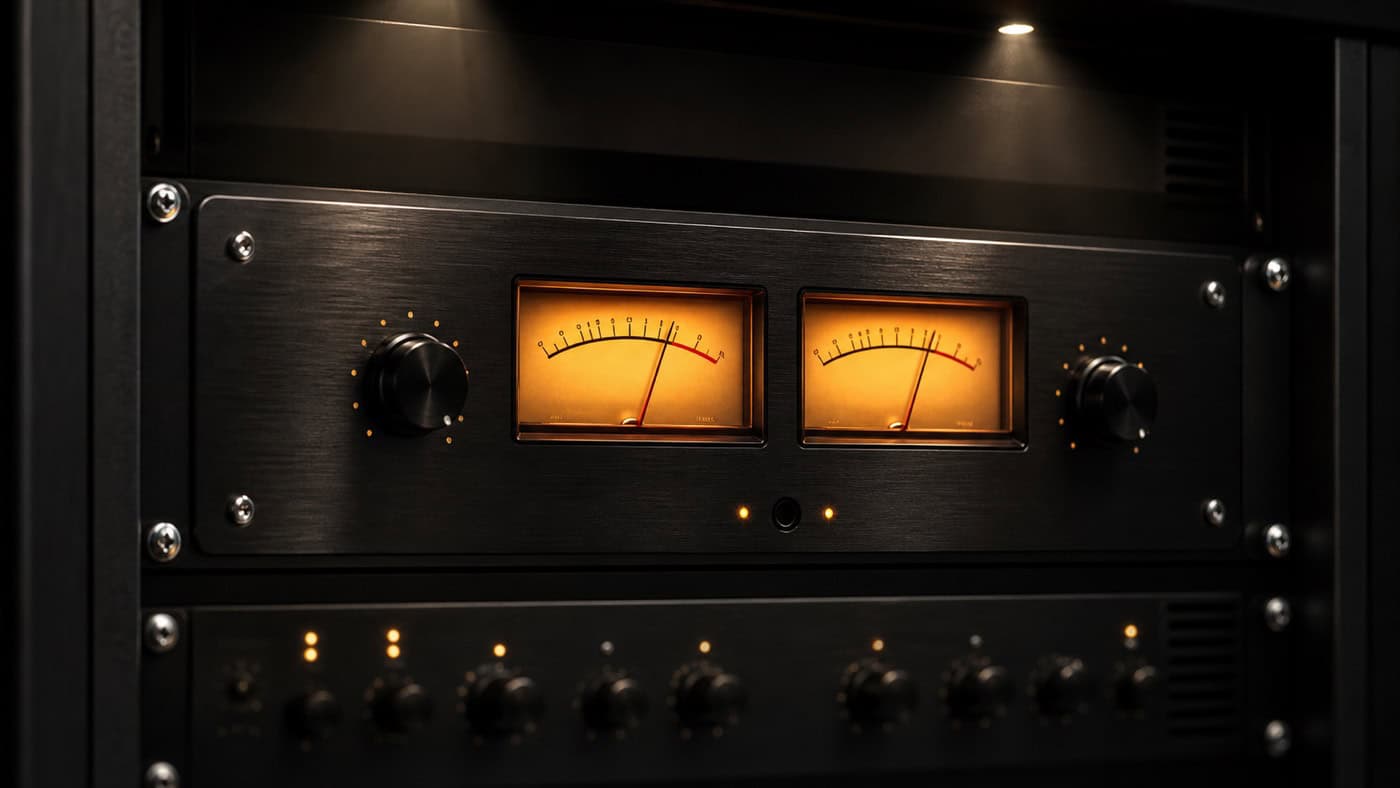
The classic VU meter is a Moving-coil instrument with standardized ballisticsIt integrates the signal over approximately 300 milliseconds and oscillates accordingly slowly. transients The impact of a snare drum hit, for example, is therefore long over before the meter could register it. What sounds like a disadvantage is actually the core concept: the display approximates the loudness perception of the ear, which also barely registers short peaks. Anyone wanting to see true peak levels, however, needs a peak meter.
0 VU: What the reference level means
The scale of a VU meter is relative: 0 VU marks the reference level to which the device is calibrated – typically +4 dBu in professional analog setups. In hybrid studios, 0 VU is additionally mapped to a digital level, often -18 dBFS (EBU recommendation). By setting your tracks to an average level of 0 VU, you automatically maintain a healthy signal level. headroom Free for summing, analog hardware and subsequent mastering – the level system behind it is explained in our glossary entry on Decibel.
VU vs. PPM vs. LUFS meter
| Meter | Measures | Integration period | Typical use |
|---|---|---|---|
| VU Meter | Average level (near RMS) | ~300 ms | Gain staging, analog chain, mix balance |
| PPM / Peak Meter | peak level | a few milliseconds | Overload protection, broadcast |
| True Peak Meter | Intersample peaks | Oversampling | Digital Masters, streaming delivery |
| LUFS meter | Program loudness (K-weighted, gated) | Momentary 400 ms / Short-Term 3 s / Integrated | Streaming normalization, loudness settings |
The different meter families answer different questions: The VU meter shows how loud a signal feels on average – related to the RMS-value. The peak or True PeakThe -meter, on the other hand, shows whether it's technically overloaded. And that... LUFS-Meter ultimately assesses how streaming platforms rate the loudness of an entire track.
Why mastering engineers love the sluggish pointer
In mastering, this sluggish classic remains a working tool to this day: it makes mix balance and density visible at a glance, reacts similarly to the ear, and forces consistent gain staging across the entire analog chain. Many Mastering engineers They therefore use the steady pointer as a counterweight to nervous digital meters – if the display constantly oscillates around 0 VU, the operating levels and dynamic relationship Mostly, too. In professional settings. Audio Mastering VU, True Peak and LUFS metering therefore belong together, not in competition.
VU meters today: Plugins and digital workflows
In the DAW, VU meter plugins adopt the standardized ballistics and can be freely calibrated to digital reference levels – thus preserving the proven workflow even without hardware. The stereo image is also handled by the... Goniometer the same role as an analog instrument of trust. However, for loudness control of the finished master, there's still no way around LUFS metering: With our Loudness meter in the browser Measure LUFS, True Peak and dynamics of your track for free and without installation – including a preview of how streaming platforms will calibrate your song.
FAQ – Frequently Asked Questions about the VU Meter
What does a VU meter show?
The display shows the average level of a signal with a delay of approximately 300 milliseconds – thus approximating the perceived loudness. Short peaks (transients) are largely ignored by the display; a peak or true-peak meter is responsible for that.
What does 0 VU mean?
0 VU is the reference level to which the meter is calibrated – typically +4 dBu in analog, and often -18 dBFS in digital studios. Working at an average level of around 0 VU automatically provides enough headroom for the mix, hardware, and mastering.
What is the difference between a VU meter and a peak meter?
The VU meter displays the average level slowly (close to perceived loudness), while the peak meter reacts to peak values in milliseconds (overload protection). Only together do both provide the complete picture of a signal.
Is a VU meter still useful today?
Yes – especially for gain staging and mix balance. The slower display corresponds better to perceived sound than jittery digital meters. However, for streaming loudness (LUFS) and true peak, modern loudness meters are also necessary.
How do I calibrate a VU meter plugin?
The usual assignment is 0 VU = −18 dBFS (sometimes also −20 or −14 dBFS, depending on the studio standard). The exact value is less important than consistency: a reference level for all tracks and the entire chain.
Does a VU meter measure airflow?
No. LUFS is a frequency-weighted, gated loudness measurement according to EBU R128 – therefore, an LUFS meter is required. It only provides an unweighted average level, which is similar to the perceived loudness, but is not comparable according to the standard.