Beginner mistakes in mixing: our first podcast with Dennis
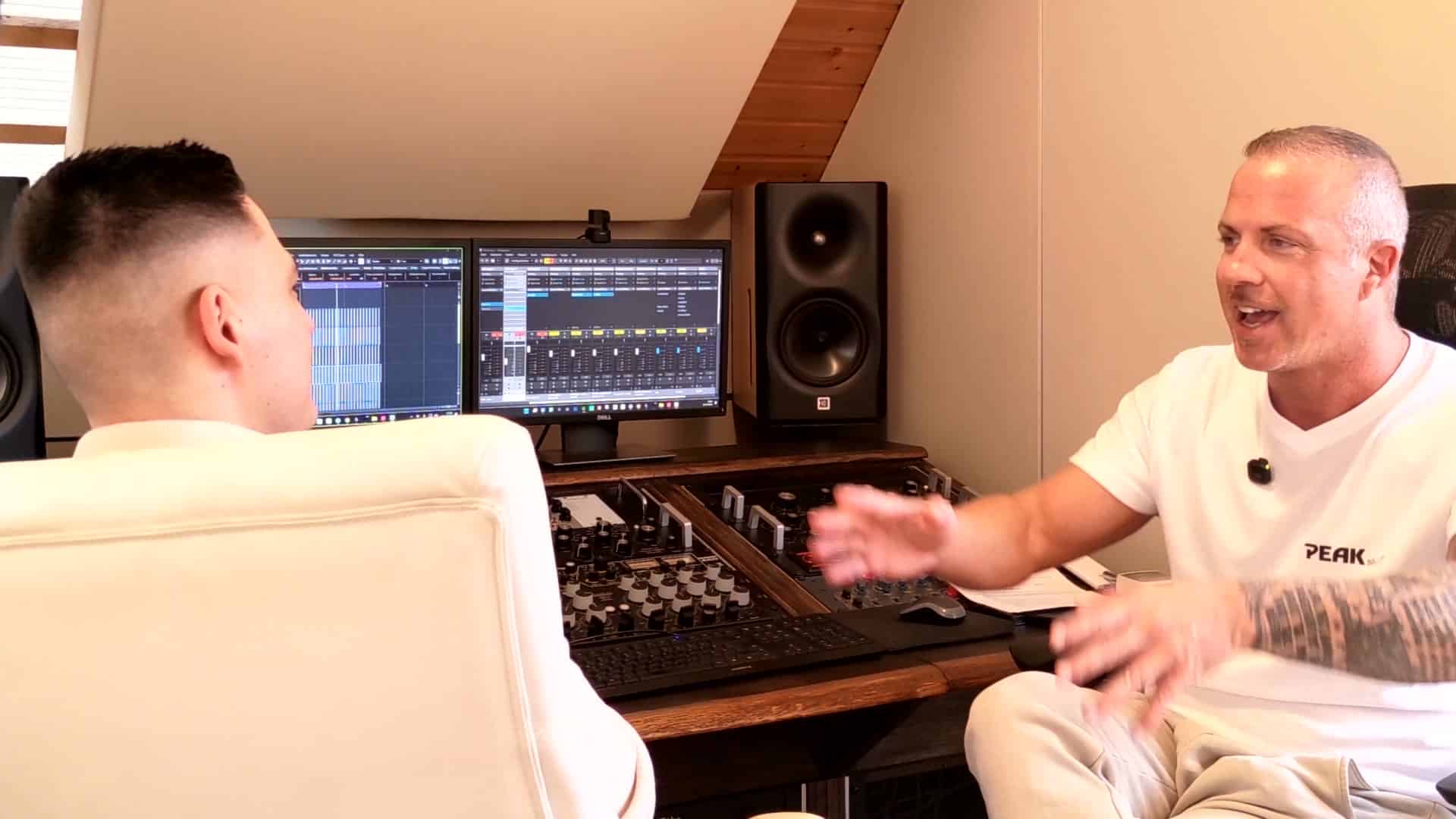
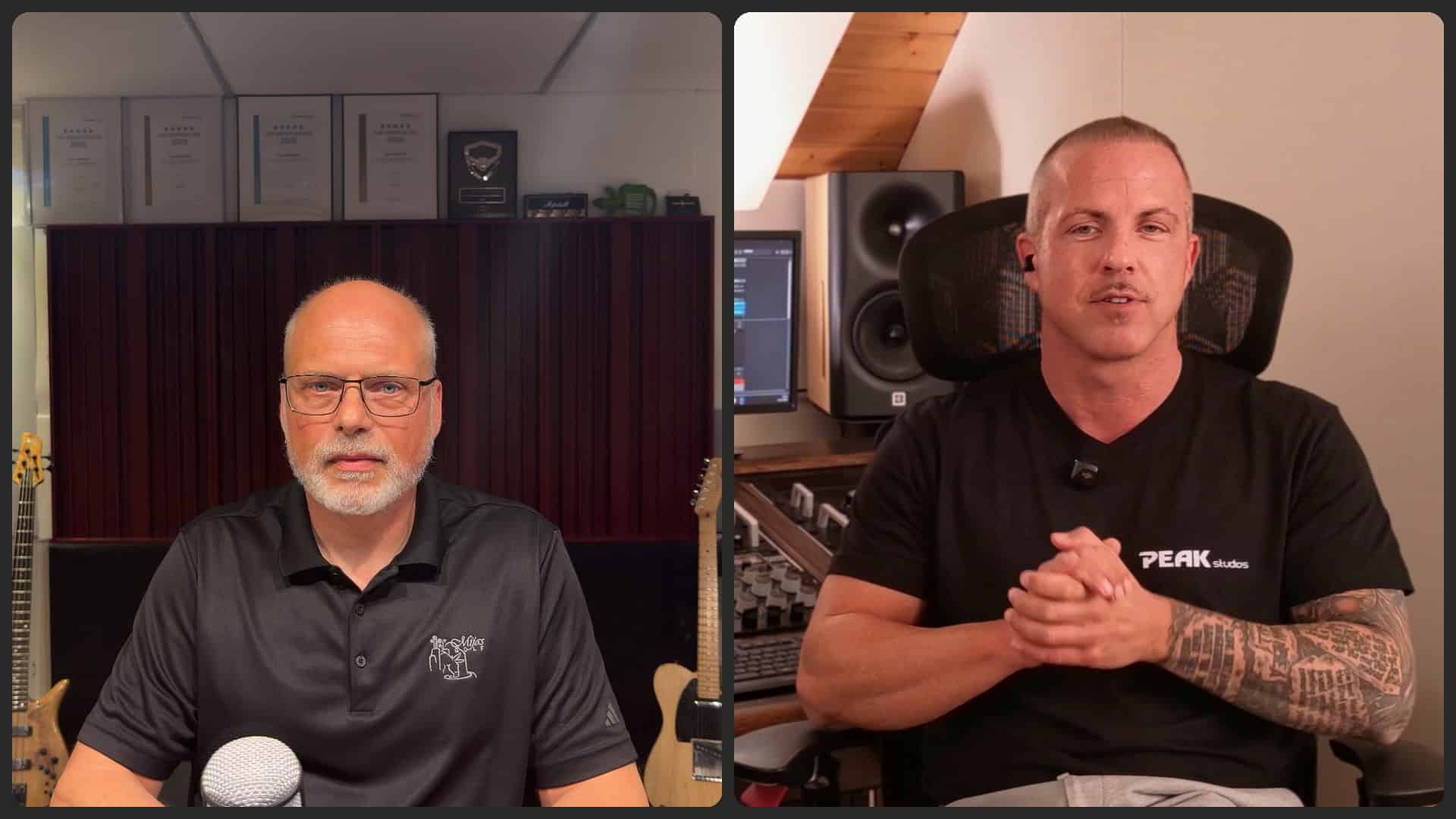
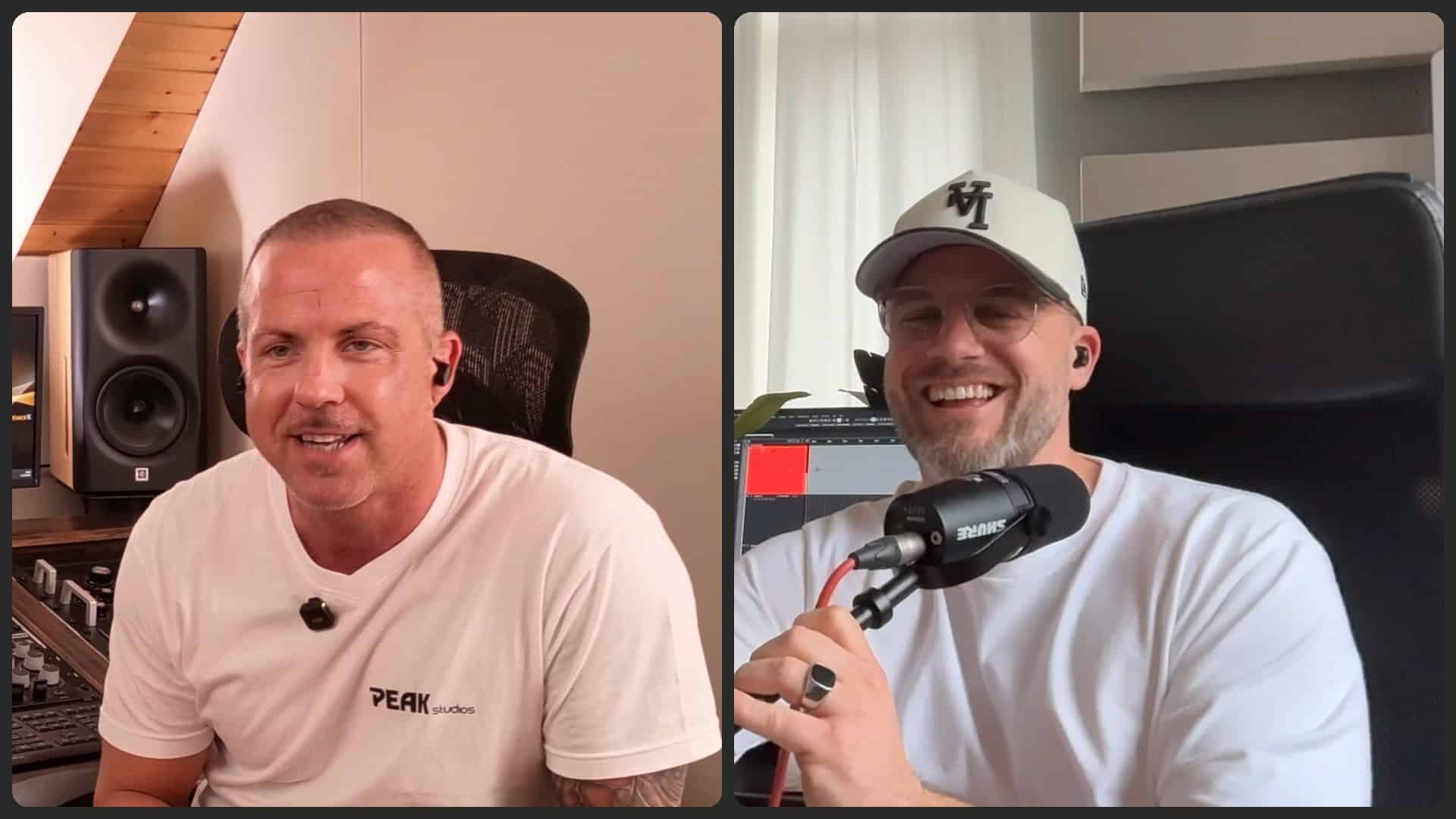
Dennis Kreutzberg and I constantly talk about music, client mixes, and things you read online. At some point, we said, "Let's record this." The result is episode 1 of our podcast – a conversation about the beginner mixing mistakes we made ourselves and a few persistent myths.
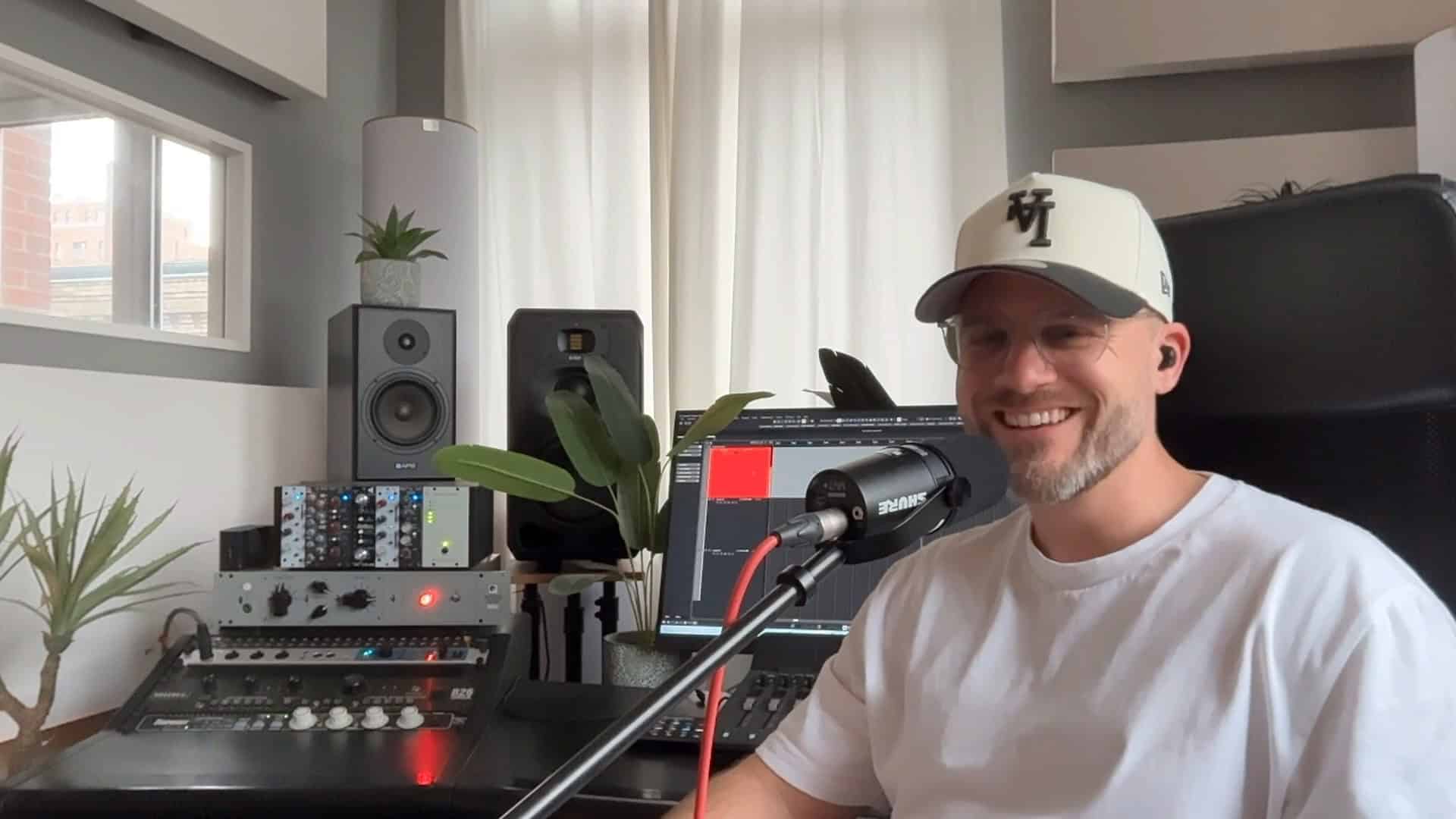
Many who spend their time with us Get the song mixedThey struggle with precisely these issues beforehand: The mix sounds different in the car, there's a low-cut filter on every track, and the plugins are piled up on the master bus. Dennis leads our Recording studio in Berlin, I'm sitting in our Studio in WürzburgWe don't agree on everything, and that's precisely what makes the conversation interesting. If you want to understand this first, what actually happens during mixing, or if you are looking for the complete process, our Mixing GuideIn this post, I'll take you behind the scenes – from the initial idea and the most important topics to the moment something went wrong during filming.
Content
What beginner mixing mistakes do Dennis and I discuss?
Episode 1 focuses on the mistakes we ourselves have made: underestimating the room and monitoring, using a low-cut filter on every track, over-EQing, mixing everything solo, relying on our eyes instead of our ears, and using too many plugins. We also address the question of when a mix is actually finished. This isn't a lecture, but rather two perspectives from our everyday studio experience.
How the podcast about beginner mistakes in mixing came about
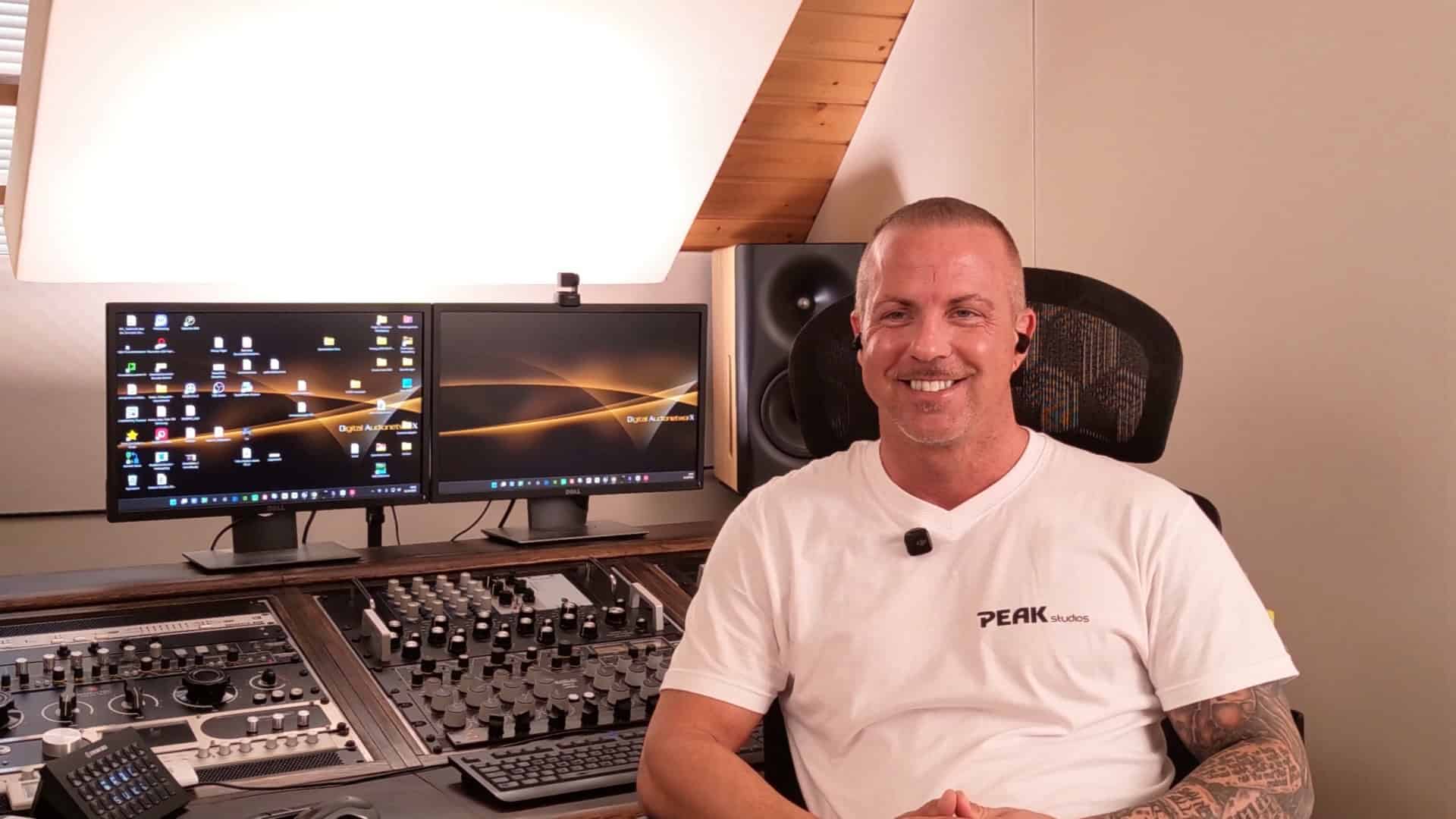
Dennis owns Blactronic Studios and manages our Berlin location on Eiswerder Island. We often chat, and we almost always end up discussing the same questions: What do customers say, what have they read somewhere, and how much of it is true? Dennis summarized it well in the following video – we constantly notice the myths circulating online and in people's minds. We wanted to clear some of that up.
We wrote down the list of topics together beforehand, and then the conversation itself flowed freely. I do online mixing and online mastering since 2006 (more information on this at my profile pageDennis has been in the music scene for over two decades, starting with his own beats. So we come from different backgrounds, and that's exactly what you can hear. We immediately agreed on some points, while on others we disagreed for quite a while – especially regarding the beginner mistakes we both made ourselves.
Room, monitoring, and the auto-check: the first mixing myths
We started right at the basics: the room and the monitoring. For Dennis, an underestimated room is one of the most typical beginner mistakes in mixing – precisely because the topic is so unspectacular. Every day there are new plugin ads, but the best plugin can't save what you can't even hear in your room. Anyone who wants to delve deeper will find more information in our article. Small space, great acoustics concrete approaches for small spaces, for example with Bass traps against booming bass.
The car check
Almost everyone knows the feeling: the mix sounds great in the studio, but the bass is booming in the car. I've simplified the explanation below. Low frequencies take a long time to decay. In a confined space like a car, they bounce around, the room is excited, and the sound reverberates. If you then turn the volume up too high and boost the bass too much, the low end quickly becomes muddy. Furthermore, we perceive bass and treble differently at high volumes than at low volumes – this is exactly what the... Fletcher-Munson CurvesNevertheless, we both like to use the car as a reference – because we know it so well.
Laptop speakers as a starting point
One thing surprised me: Dennis deliberately starts his mixes on his laptop speakers. This way, he doesn't hear any distracting low end, but only where to place things and how loud something needs to be to be heard. For beginners who already mix on a laptop and through headphones, this is good news: it's not automatically a bad thing.
Does your mix not sound the way it should?
Low cut, EQ, solo and plugins: classic beginner mistakes in mixing
The largest part of the episode revolves around beginner mixing mistakes that creep in as habits – for many beginners, and for us back then too. You can find a more detailed overview in our article about the ten most common mistakes in mixing.
Low cut on every track?
A low-cut filter on every track is routine for many. We've discussed why this can become a problem: filters have side effects such as... Phase ShiftAnd often it's cleaner to tame a track with volume automation than to reflexively cut it. I told a story from class about this. With one student, the low end suddenly became thin in the mono check – a classic problem of Mono CompatibilityIt wasn't the kick and bass. The culprit was textures that extended deep into the low end and... Panning were placed very far to the outside.
Batman ears in the EQ
With a narrow band, i.e. a high Q Factor, in the solo version, initially 18 Decibel lift and then extract every resonance – in the end the Equalizer They look like Batman ears. Dennis also sees this all the time in tutorials. Our guess: It happens mainly because modern tools make it so easy, not because the song requires it.
Mix everything in the solo.
For Dennis, that was one of his biggest mistakes back then. That's why the context makes more sense, for example, drums and bass together, especially in hip-hop with kick drums and 808s. My analogy comes from the kitchen: you taste the ingredients individually, but the final seasoning is done by tasting the whole dish. Hall This means briefly testing the reverb tail on its own and then adjusting it within the context.
Mixing myth: The curve has to be right
Analyzers and measurements are great tools, but we don't look at music, we listen to it. If you cut 10 dB of bass just because the curve looks different from the reference, you still won't end up with a good mix.
Fewer plugins, more volume controls
Many would be surprised by how few plugins are used in a professional mix. I recently had someone in class with fifteen plugins on the master bus to correct mistakes in the mix. My counter-question: Why don't you go back to the mix? I prefer working with five or six tools that I really know – EQ, CompressorHey, Dennis added another point: The most underrated control in the mix is the ordinary volume control. If a pad is bothering you, turn it down first before you reach for the EQ.
The entire episode as a video
The complete podcast episode about beginner mistakes in mixing lasts approximately 66 minutes and will be available on our platform on November 1, 2026. Youtube channel It's been released. You can watch it right here.
The episode is divided into chapters, covering topics such as room acoustics and monitoring, low-cut filters, mono checks and phase, excessive EQ, mixing by eye, plugin overload, and whether mastering can save the day. It also includes 14 short clips, which will be released gradually on TikTok, Instagram, Facebook, and YouTube Shorts starting November 3rd.
WHAT MISTAKE HAVE YOU MADE THE LONGEST?
Write to me – about the episode, your mix, or a topic for the next issue. We usually get back to you within 3 hours (on weekdays).
- Personal point of contact
- Over 20 years of experience
- Highest quality standards
You can reach us by phone from Monday to Friday from 9 a.m. to 8 p.m.
Behind the scenes of the podcast episode from two studios
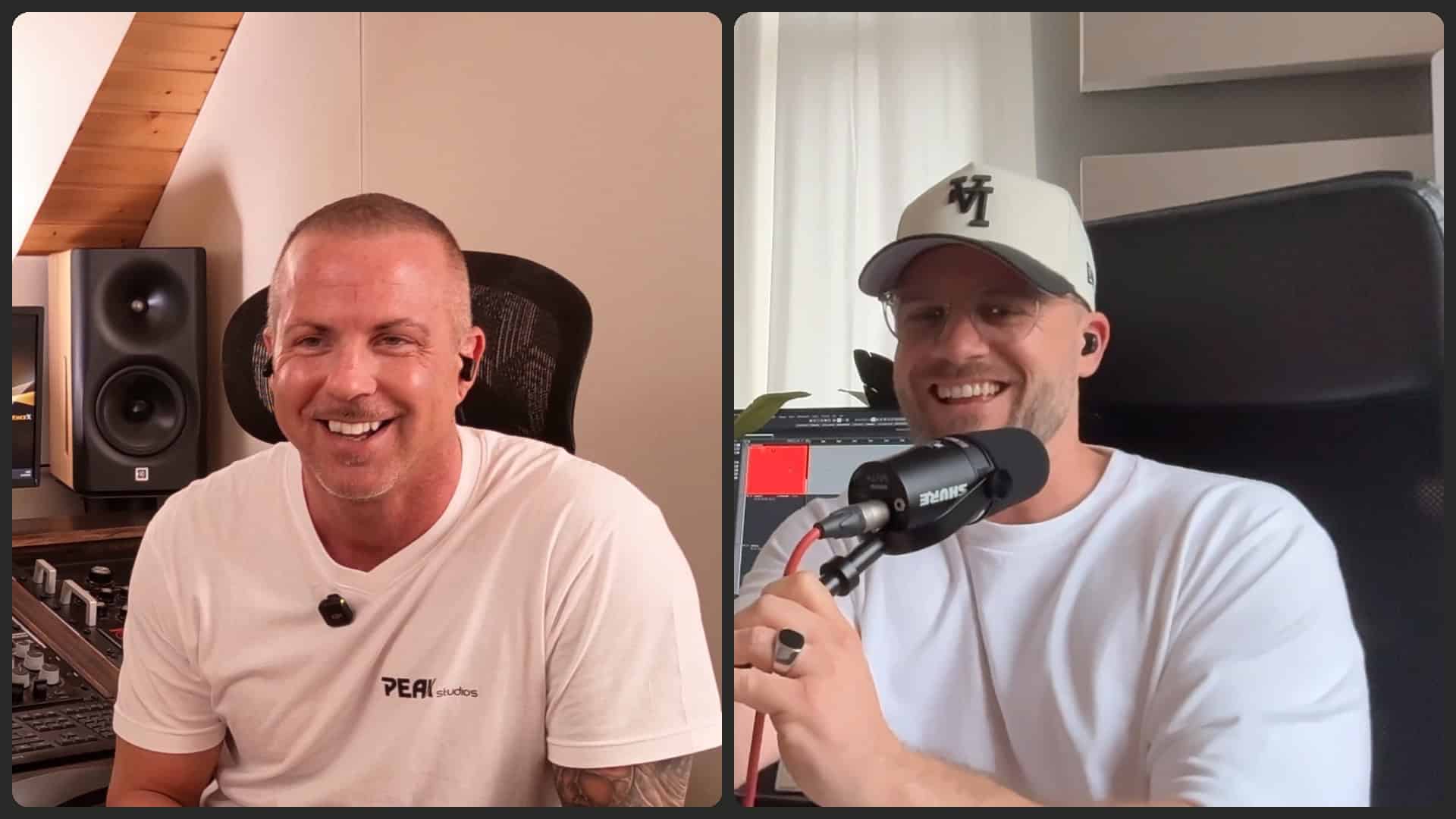
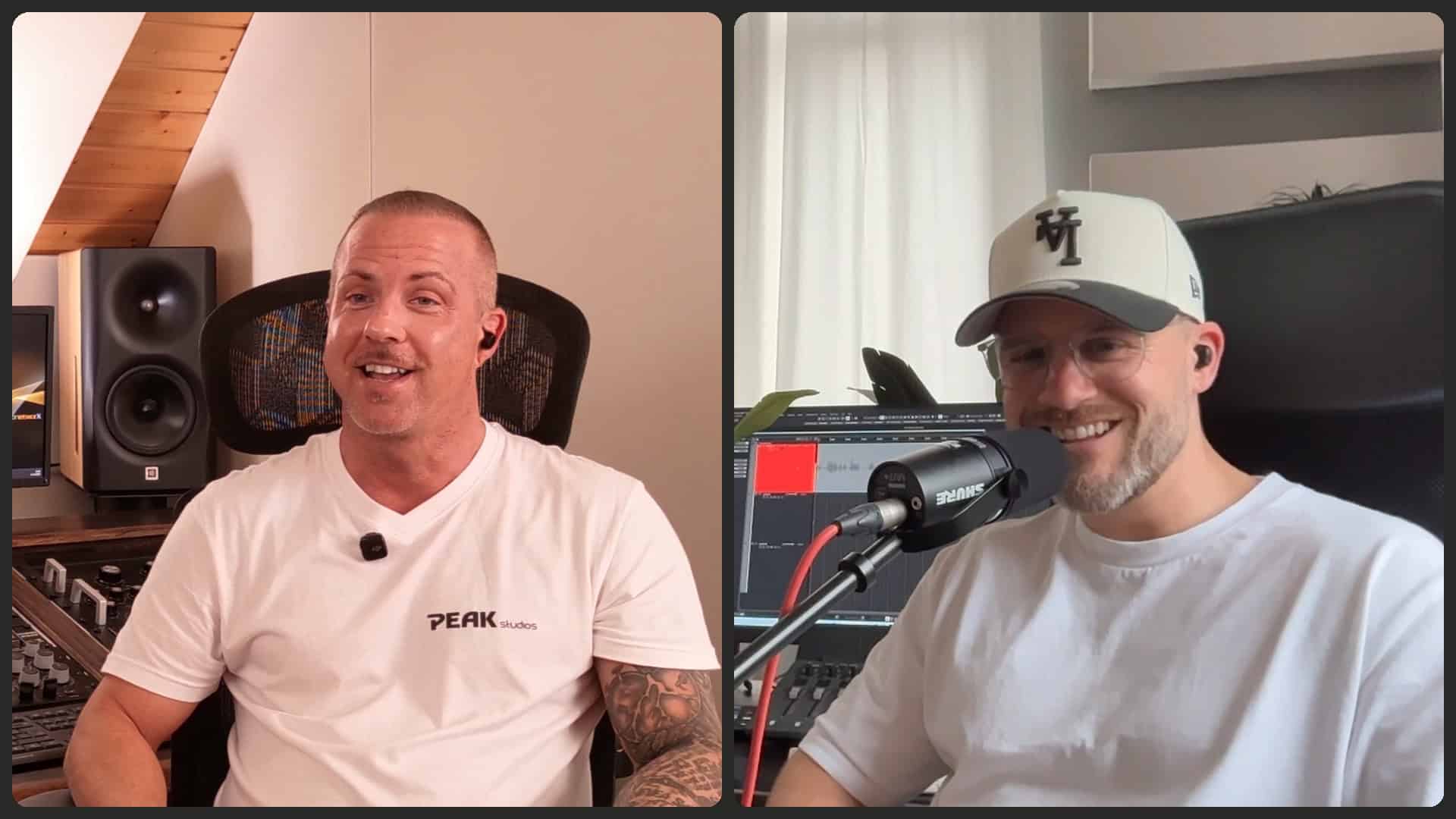
We recorded remotely. I was in Würzburg, Dennis in Berlin. Everyone recorded locally with their own microphone and camera; the video conference only ran as a backup. To ensure I could later combine both parts perfectly, we clapped at the beginning and end – first me, then Dennis. In the editing process, I synchronized both cameras and microphones so that the lips and sound matched.
However, things didn't go entirely smoothly. I announced "Chris is clapping now" a bit too early, and after a few minutes, Dennis's phone, which he was using to record the video conference, slipped out of his hand. The brief interruption and technical check were edited out of the final video. The fact that nothing was lost was precisely because of the local recordings: the phone was only the backup.
The lesson for the next episodes is therefore simple. Each side records themselves, the clapping belongs at the beginning and end, and everything that's only used as a backup is fixed. Furthermore, I then edited the voices individually for each of us so that both sound equally good – even though the microphones and rooms are completely different.
Our final tips – and my conclusion
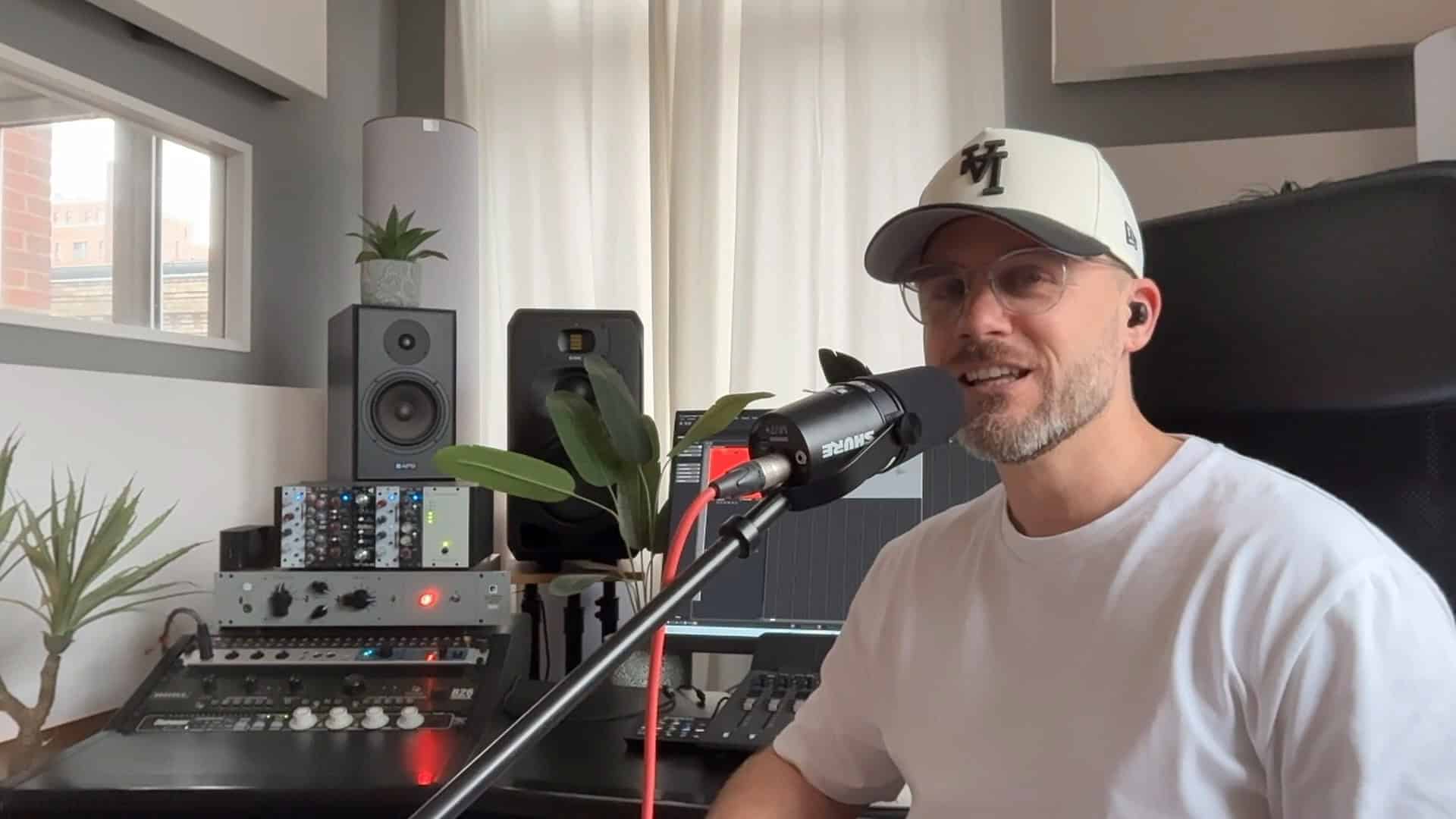
Finally, I asked Dennis what one piece of advice he would give his younger self. His answer came immediately: Don't buy so much stuff, learn your trade. No piece of hardware can give you knowledge and experience. My tip comes directly from the Teaching and coachingFirst listen to the problem, then consider which process you will choose to address it. Dennis added something he finds almost worse – doing things simply because that's how they're always done.
If you want to delve deeper:
- In the 1:1 Masterclass You're there live when your song is mixed, and you hear every decision.
- Our Free tools for musicians They help you check and prepare your songs.
My conclusion: I really enjoyed recording this, especially because Dennis and I approach things so differently. Despite all our differences, we agree on the core issue: Most beginner mixing mistakes have less to do with tools and more to do with listening. The music is more important than that last half decibel and every new plugin. More episodes are planned. If you like the first one or have a topic you'd like us to cover, feel free to leave a comment below the video.
Frequently asked questions about the podcast with Dennis Kreutzberg
Who is Dennis Kreutzberg?
Dennis Kreutzberg is a music producer and mixing and mastering engineer. He owns Blactronic Studios and manages the Peak-Studios location in Berlin on Eiswerder Island. He has been active in the music industry for over two decades. You can find out more about him at Dennis' profile page.
Where can I watch the whole episode?
The episode is airing on the Peak-Studios' YouTube channel and is embedded at the top of the post. Short excerpts will appear on TikTok, Instagram, Facebook and YouTube Shorts starting November 3rd.
Is the episode about beginner mistakes in mixing also understandable for beginners?
Yes. We'll talk about typical mistakes made in the early days and explain them with examples from everyday studio work. A few terms like low cut, phase, or mono check will come up, but you don't need to be a professional to follow along.
What can I do if my mix still doesn't sound right?
Have a listen. In the mix analysis, we'll tell you which issues are really holding your mix back. If you want to improve yourself, we'll work directly on your own songs in lessons and coaching.
Are there any further episodes?
Yes, more episodes are planned. We welcome topic suggestions in the comments below the video or via the contact form.