
Panning (Panorama): How to place signals in the stereo image
What is panning?
Panning is one of the most fundamental tools in mixing. Every track in your DAW has a pan control that allows you to continuously position the signal from far left (L) through center (C) to far right (R). While the volume determines how ahead or behind While one element has an effect, panning determines the effect. horizontal Position – the width of your mix.
The purpose behind this isn't just about effect: A well-distributed stereo image prevents instruments in the same frequency range from masking each other. For example, if two guitars are positioned on the opposite sides of the stereo image instead of both in the center, you can hear both clearly – without any EQ adjustments. Our [link to relevant article/guide/etc.] also demonstrates how stereo imaging fits into the broader mixing workflow. Mixing Guide.
Pan Law: Why the middle seems quieter
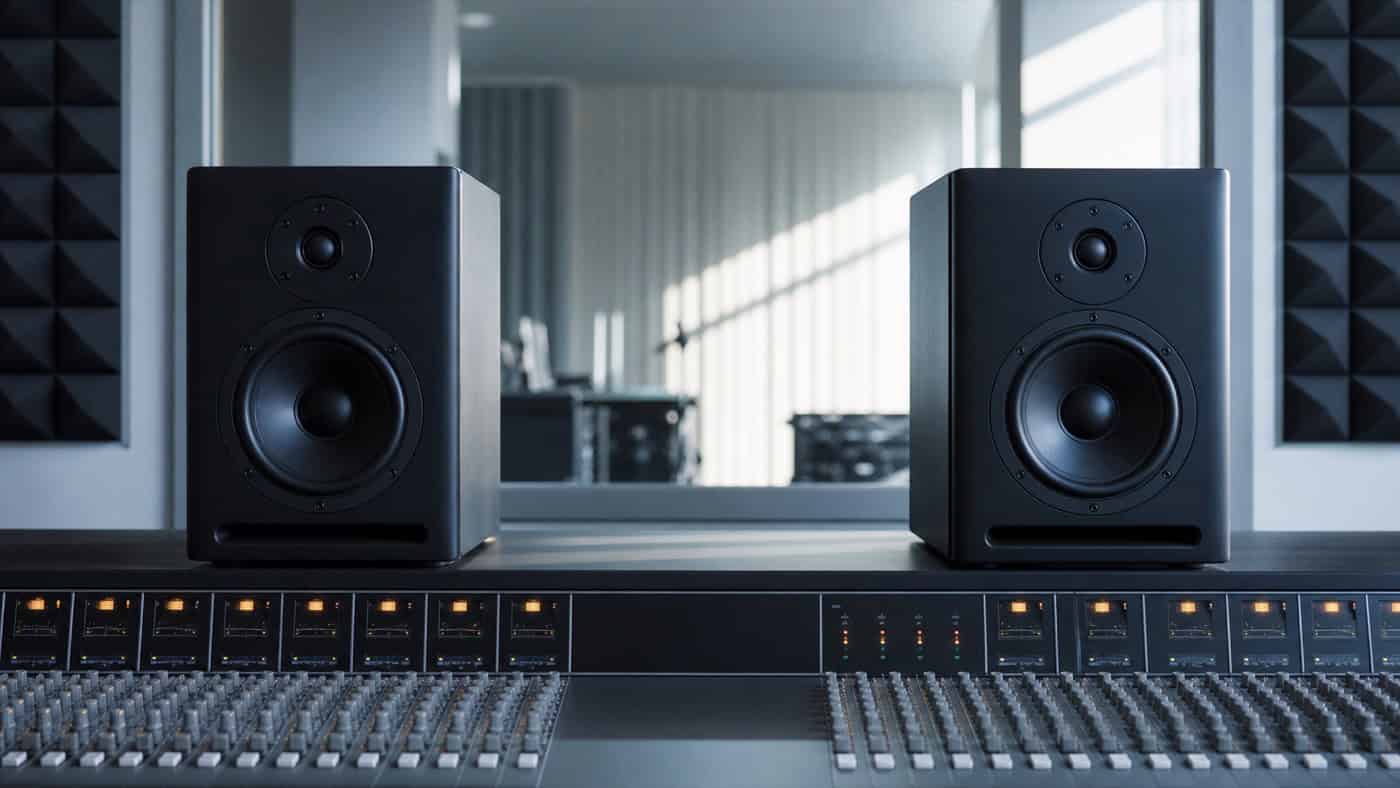
A signal positioned in the center of the stereo image comes from both speakers simultaneously and therefore sounds louder than the same signal positioned at the far left or right. To ensure that the perceived loudness remains constant across the entire stereo image, DAWs attenuate the center channel by a fixed amount – this is called attenuation. PanLaw (Panning's Law). Typical values are -3 dB, -4,5 dB or -6 dBThe selected value affects how your levels behave when panning – important to know if a mix suddenly sounds differently balanced in another DAW. A detailed overview of the various pan law modes is available in the specialist magazine. delamar.
Typical panning strategies
- Center for the foundation: The drum kit (kick, snare), bass, and lead vocals usually belong in the center. They carry the most energy and must remain mono-stable.
- Pages for width: You distribute hi-hats, overheads, percussion, backing vocals, synth pads and doubling to the outside.
- Hard Panning (100% L/R): Classic for doubled guitars or stereo doubling – creates maximum width.
- LCR approach: A deliberately simplified method where tracks are located only on the far left, far right, or in the center. This keeps the stereo image clean and decisive.
Our article shows you how to systematically arrange instruments in the stereo field. for the targeted arrangement of the instruments.
The most common mistakes
The biggest stumbling block is the mono compatibilityPushing the bass or kick drum out of the center channel results in a loss of energy and punch on mono systems (smartphone speakers, club PA systems, Bluetooth speakers). Furthermore, overly aggressive widening of the soundstage with stereo tools can lead to problems. Phase cancellations This can happen as soon as the signal is summed in mono. Therefore, the rule of thumb is: place low frequencies in the center, and regularly check the result in mono.
A second classic is the overcrowded center – because if too many elements are in the center, the mix becomes narrow and muddy, although there would actually be plenty of space left on the flanks.
Panning in professional mixing
A good panorama is unobtrusive: you don't hear "left" and "right," but rather a harmonious, broad whole in which every element has its place. In addition to the lateral distribution, the depth layering also contributes to this effect. reverb to create a spatial mix. That's precisely why this balance is a central part of our work in... mixing At Peak-Studios, we deliberately place each signal instead of according to a pattern, always with a view to mono suitability and translation on all monitoring systems.
Conclusion: What matters when panning
In summary, panning is more than just an effect – it creates order and width without requiring a single EQ. Therefore, keep the low-frequency foundation centered, consciously use the sides for width, and regularly check the result in mono. Ultimately, anyone who intentionally pans rather than relying on habit will get a mix that works on any system. Unsure if your stereo image is coherent? Online mix analysis with report It quickly reveals weaknesses.
Get your mix professionally mixed now
A well-thought-out stereo image is just one part of a balanced mix. If you want every instrument to be intentionally placed in the stereo image and for your track to sound great on all systems, we'll take care of that for you: Have your song mixed at Peak-Studios.
FAQ – Frequently Asked Questions about Panning
What is the difference between panning and balance?
Panning shifts a mono signal within the stereo field. A balance control on an existing stereo track, on the other hand, only adjusts the volume ratio between the two sides – it doesn't actually shift the signal.
Which instruments should be left in the center?
Everything that supports the foundation and needs to be mono-stable: kick, snare, bassline, and lead vocal. This ensures the core remains powerful even on mono speakers.
What does Pan Law mean?
Pan law is the level reduction in the center (usually −3 to −6 dB) that DAWs apply to ensure that the perceived loudness remains constant across the entire panorama when panning.
How much panning is too much?
There is no fixed value – the mono check is crucial. If elements disappear or become thin when summing mono, the stereo image is too aggressively spread out.