
Compressor – targeted dynamic control
Table of Contents
What is a compressor?
A compressor reduces the Volume dynamics of an audio signal by attenuating loud passages and relatively boosting quieter passages. This creates a homogeneous and controlled sound. Especially with vocals or percussive instruments, this ensures presence and intelligibility.
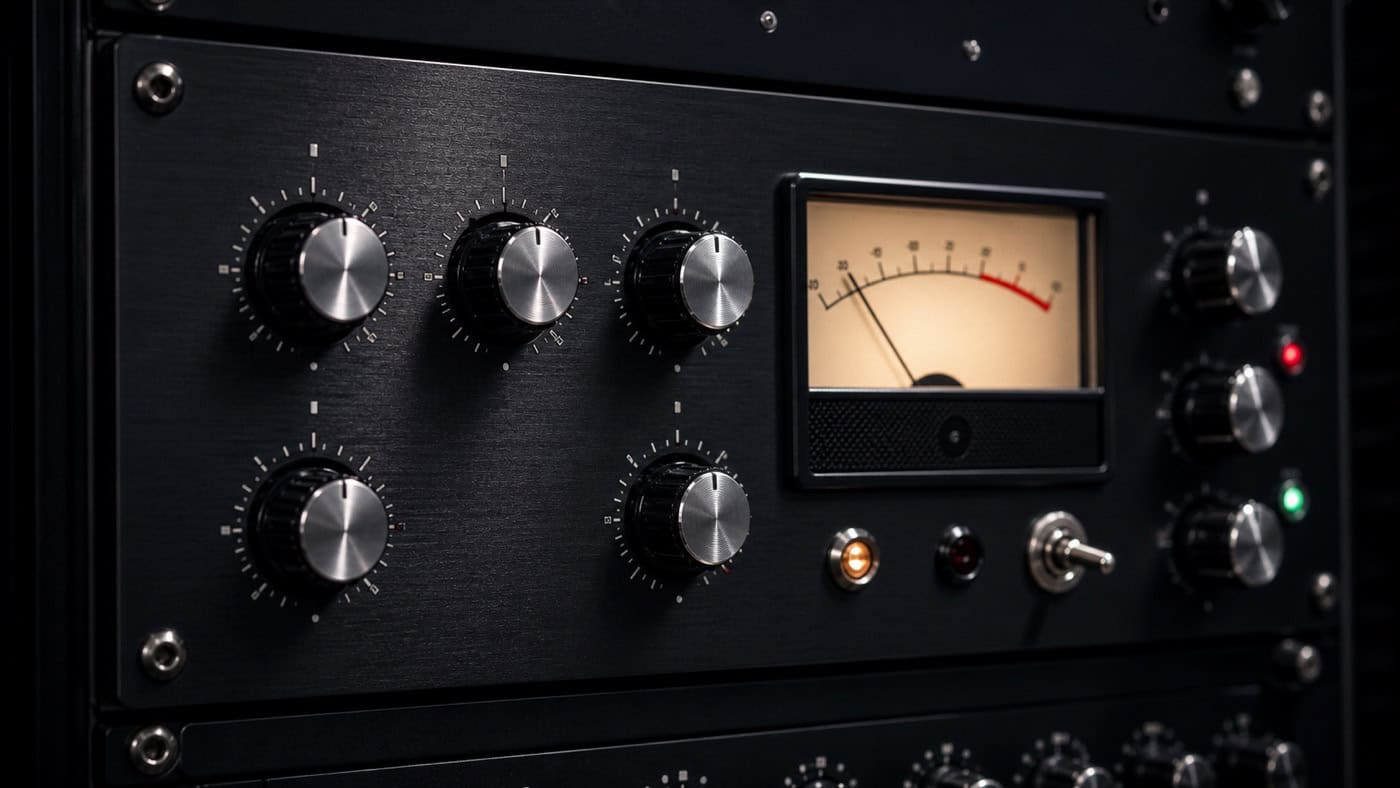
How exactly does a compressor work?
The compressor engages as soon as the input signal exceeds a certain level (threshold). Depending on the ratio, the volume is reduced. Attack and release controls are similar to... ADSR envelope In synthesizers, this refers to how quickly the compressor engages and disengages. This allows the sound to be subtly or significantly altered, depending on the musical goal.
The most important settings of a compressor
| Parameter | Significance |
|---|---|
| Threshold | When does compression start |
| Ratio | How much the signal is reduced from the threshold |
| Attack | How quickly the compressor reacts |
| Release | How quickly he lets go after the procedure |
| Knee | Transition behavior (soft or hard) |
| Make-Up Gain | Volume equalization after compression |
🔍 Tip: Use that Release time calculatorto determine optimal values depending on the BPM.
Areas of application in mixing
Im mixing A compressor helps to achieve the following goals:
Dynamically control vocals
Emphasize drum elements
Mix guitars more densely and compactly
Highlight rooms and reverberation through parallel compression
Use sidechain compression to specifically control kick vs. bass, for example
Application in mastering
Im mastering compression is used discreetly to:
Compensate for peak levels
to subtly increase the overall loudness
to harmonize frequency groups
to optimize the center-side balance
PEAK-STUDIOS relies on high-end analog compressors to combine maximum naturalness with professional loudness.
Overview of compressor types
VCA Compressor – Voltage-controlled precision
VCA stands for “Voltage Controlled Amplifier” – i.e. a voltage-controlled amplifier.
🔧 Functionality & Circuit
In a VCA compressor, an electronic amplifier (e.g., THAT2181 or dbx VCA chip) takes over the volume control. The audio input remains largely untouched in the signal path – only the Gain ratio via a control voltage, which comes from the detector or sidechain branch.
Signal flow: Audio → Detector → Control Unit → VCA
Characteristic: extremely fast, linear, technically neutral
🎯 Typical areas of application
Drum buses, snare, kick
Masterbus compression
Broadcasting & live sound (high response speed)
Advantages: Very precise control, little inherent sound, extremely flexible
Disadvantages: Sounds sterile quickly if set too hard
Opto-Compressor – Light-Controlled Musicality
“Opto” refers to the use of a optical element (LDR + LED) – i.e. a light-sensitive resistor (light dependent resistor).
🔧 Functionality & Circuit
In the signal path, the dynamics are controlled by a component that consists of a Combination of LED and LDR Depending on the intensity of the input signal, the LED glows brighter or dimmer. The LDR reacts with a variable resistance, attenuating the signal accordingly.
Signal flow: Audio → LED/LDR → optical control path → output
Characteristic: slow, non-linear reaction, “organic”
🎯 Typical areas of application
Vocals, acoustic instruments
Bass guitar
Ballads, jazz, singer-songwriters
Advantages: Very musical, soft, smooths without destroying
Disadvantages: Limited speed, hardly suitable for transients
FET Compressor – Transistor based punch
Fet stands for Field-effect transistor – an electronic component that functions similarly to a triode in tube circuits, but in semiconductor form.
🔧 Functionality & Circuit
A FET compressor uses a field-effect transistor to control volume. It simulates a "virtual damper" in the signal flow by increasing the resistance of the FET when the signal is stronger. This design enables extremely fast response times, often less than 1 ms.
Signal flow: Audio → FET → Detector & Control Signal → Output
Characteristic: aggressive, coloring, explosive
🎯 Typical areas of application
Rock vocals, shouts
Snare drums, overheads
Guitars with “bite”
Advantages: Very fast attack, controls transients perfectly
Disadvantages: Inherent sound clearly audible, little transparent
Vari Mu Compressor – Tube pressure with character
“Vari Mu” means “Variable Mutual Conductance”, i.e. a tube-based control principle with variable gain.
🔧 Functionality & Circuit
In Vari-Mu compressors, tubes themselves take over the gain reduction. At high levels, the Internal resistance of the triodes, which automatically compresses the signal. The highlight: This happens without any control voltage or VCA – purely due to the electrical properties of the tube.
Signal flow: Audio → Tube Control → Output
Characteristic: soft, musical, “melting”
🎯 Typical areas of application
Sum signal / master bus
Jazz, Classical, Lounge
Ballads, film music
Advantages: Gentlest and most musical compression
Disadvantages: Expensive, slow, sensitive to interference
Conclusion – Circuitry and sound decide together
| compressor type | Technology | character. | Speed | Ideal for |
|---|---|---|---|---|
| VCA | Voltage controlled | Neutral / flexible | Very fast | Drums, master bus, live mix |
| Opto | Light-controlled | Gentle / musical | Slowly | Vocals, bass, acoustic instruments |
| Fet | Transistor-based | Aggressive / staining | Very fast | Rock vocals, snare, guitars |
| Various Mu | Tube-based | Warm / creamy | Slow to medium | Mastering, orchestra, hum bus |
Tips for use
Start with gentle settings (ratio 2:1 to 4:1)
Adjust attack and release depending on the material
Use parallel compression for more presence without sound loss
Less is often more – dynamics can remain audible
(I.e. Want to learn more?
Check out our tutorials:
👉 Understanding compression – application methods
FAQ – Frequently asked questions about the compressor
When should I use a compressor?
A compressor is always worthwhile when a signal has large volume fluctuations – for example, vocals that are sometimes loud and sometimes soft, or a bass that isn't stable in the mix. It reduces the dynamicsBy attenuating loud passages, it creates a more even and powerful signal. In the mix, this keeps individual tracks present and consistently audible; in mastering, a slight compression smooths the overall sound.
What is sidechain compression?
In sidechain compression, the compression isn't triggered by the processed signal itself, but rather by another signal. The classic example is the "pump effect" in electronic music: The kick drum triggers the compressor on the bass track, causing the bass to briefly recede with each kick, preventing the two from masking each other. This creates space in the mix, both in terms of timing and level, and adds rhythmic punch.
Can you compress too much?
Yes. If the compression is too heavy, the sound loses its natural dynamics and becomes flat, lifeless, or "smothered." Typical signs include pumping artifacts, swallowed transients, and a tiring, fatiguing sound. Especially when striving for loudness, people often overdo it—less is usually more, and a moderate ratio with subtle gain reduction often sounds more musical.
How do I set attack and release correctly?
The attack time determines how quickly the compressor engages after the threshold is exceeded: A short attack catches transients and makes the sound denser, while a longer attack lets the initial punch through before engaging. The release time determines how quickly the compressor releases – it should match the tempo of the song so the compression feels natural rather than pumping. As a starting point, it's best to adjust both by ear to suit the material.
What is parallel compression?
Parallel compression (also known as New York compression) mixes the original signal with a heavily compressed copy, rather than compressing the signal directly. This gives you the punch and density of heavy compression while preserving the transients and natural dynamics of the unprocessed signal. This is particularly effective on drums and vocals, adding fullness without making the sound lifeless.
Which compressors are suitable for mastering?
for mastering Gentle, musically responsive compressors are often well-suited – such as vari-mu (tube) and opto-compressors, which smooth the dynamics without audible artifacts; transparent VCA, FET, or digital compressors are also used. They usually operate at a low ratio and intervene only subtly, since the entire mix is processed during mastering and every flaw becomes apparent. Often, a gain reduction of one to two decibels is sufficient to make the sound more cohesive and rounded.
Have compression applied professionally
🎛️ Do you want to take your mix to a new level?
👉 Book mixing & mastering now at PEAK-STUDIOS
With targeted use of compressor – transparent, powerful and professional.