Audio Engineer Training: Why There's No Job Guarantee in Advance

There are calls that make you pause for a moment. Not because the question is inappropriate, but because it's so far removed from how the world works in this field that you need a moment to really process the thought. It was precisely such a call that prompted me to write down clearly how an audio engineer's training and the real thing are. Entry into the audio industry actually happen.

On the other end: someone considering starting audio training. They hadn't started yet. No materials submitted, no work samples, no first day behind a mixing console. Nevertheless, the request was clear and specific: "Can you guarantee that you'll hire me afterward?"

Therefore, I'll explain here what's behind it, why a reputable studio wouldn't agree to that, and what a real path into the audio industry looks like. For everyone who really wants to know.

Contents of this article

What was behind the request?

The actual plan wasn't arbitrary. The written offer of employment wasn't primarily intended for us as the employer, but rather as a document for a government agency. With the prospect of employment, the chances of receiving an educational voucher, which finances expensive vocational training, increase. So the studio wasn't the ideal employer, but rather the tool to complete a form.

This isn't malicious intent. It's an understandable attempt to navigate a system that is itself complex. Fortunately, those seeking training in audio engineering will find many funding opportunities. Training costs money, funding instruments are useful and can open up real opportunities. Nevertheless, the possibilities for participation end here, for several reasons.
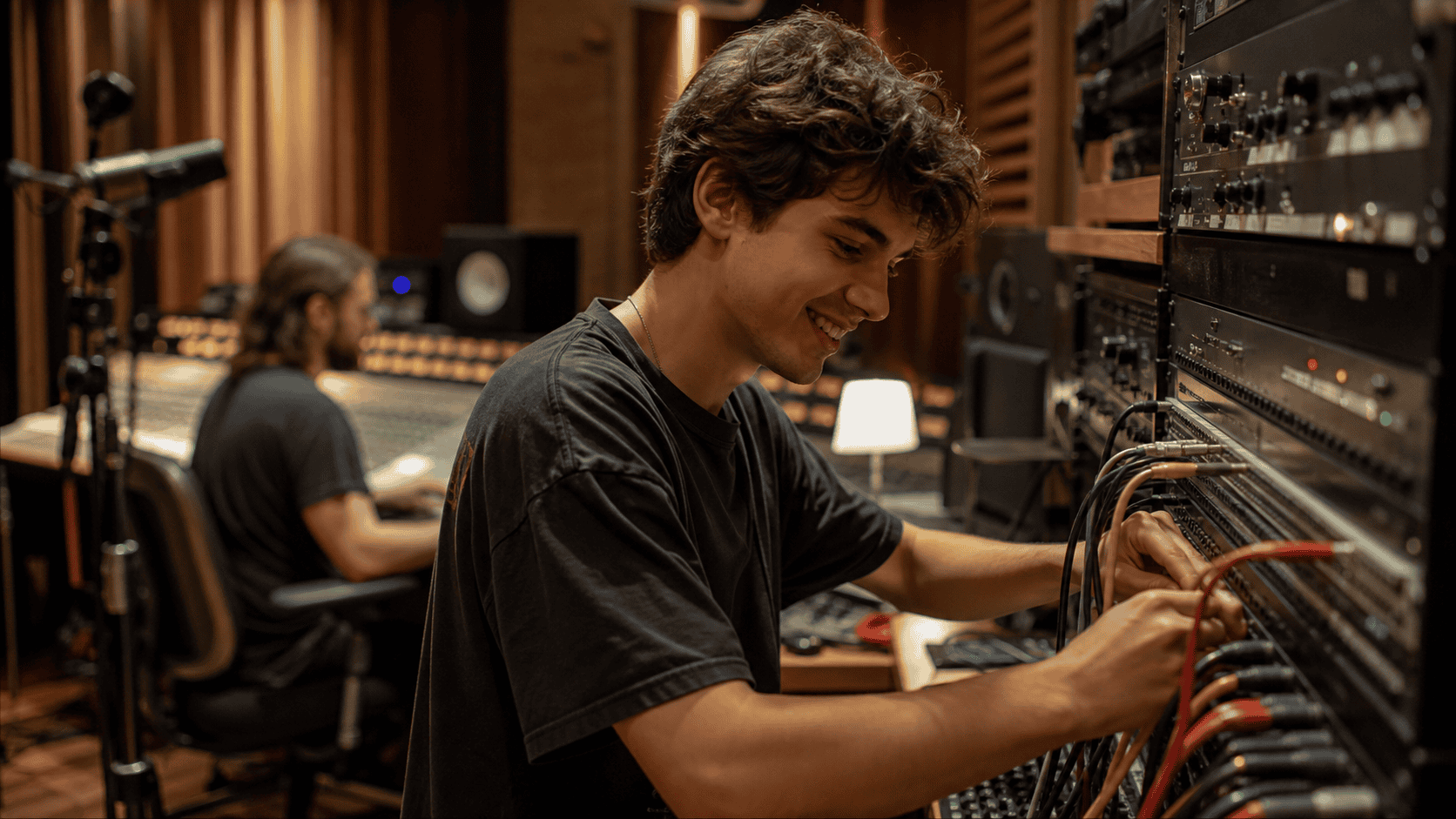
Intern wires an outboard rack in the recording studio during audio engineering internship.
An internship is often the real first step into the audio industry.

Because an internship arises from genuine interest, not from filling out a government form. Furthermore, it's precisely there that it becomes clear whether someone truly wants to pursue a career in that field.

A commitment to someone I don't know

Let's set aside the bureaucratic aspect for a moment. The request itself is quite ambitious: I'm supposed to promise in writing to hire someone I've never heard of, whose abilities I can't assess, and from whom I know not a single track, demo, or work sample.

Being hired at a recording studio isn't a mere formality. It means I trust this person to take charge of projects, manage clients, make decisions under pressure, and represent the studio externally. This requires qualifications, yes, but also personality, initiative, and the ability to work in a creative environment. None of this can be assessed before the first day of training. In fact, it's almost impossible to assess before the end of a proper apprenticeship—and that applies to any comprehensive audio engineering training program.

A guarantee without any basis is therefore not a guarantee at all, but an empty document. And an empty document that deceives an authority is a legal problem that no reputable studio will take on. This is not a criticism of the person, but simply the situation.

What an audio engineer really needs to be able to do

Anyone who seriously wants to work in the audio industry will find many paths. But none of them lead via a pre-arranged job offer. A good audio engineering education provides technical skills, but what ultimately counts is something more tangible and honest.
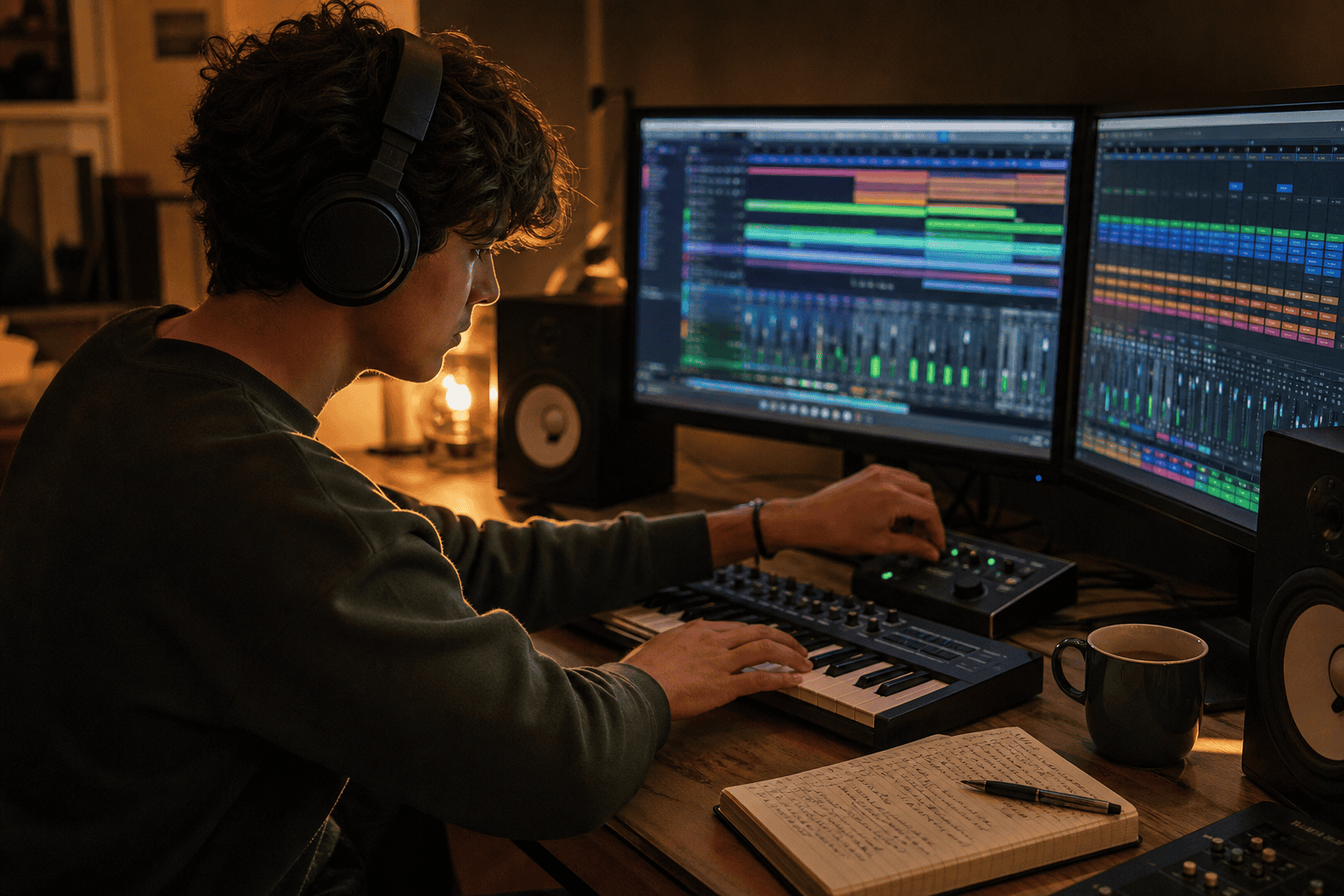
Young music producer builds his portfolio in his home studio with DAW, headphones and notes
A portfolio is created through personal initiative and within one's own setup.

Show initiative. The audio industry isn't a field where you wait to be discovered. Anyone who starts recording, mixing, and producing their own projects, even at home with limited equipment, is building something. Curiosity, perseverance, and the willingness to make 1.000 bad mixes to get one good one are therefore the most important foundations.

Building a portfolio. Nothing is more convincing than audible work. Anyone who can show a demo, even an unfinished one, gives a studio something tangible. Exactly that kind of thing. References They grow over time, because it's not enough to just have them in your head.

Internship and the right training

Request an internship. An internship at a studio is one of the most direct ways to gain real experience and demonstrate your commitment. It's not a guarantee of future employment, but it's the start of a genuine relationship based on getting to know each other, not just a form.

Choose the right training. A solid audio training program, whether as a state-regulated profession, a private course of study, or a specialized school, provides technical skills that are difficult to acquire on one's own. The prerequisites vary depending on the provider: some schools require a specific school-leaving qualification, while others place more emphasis on an entrance exam or practical work sample. The market is large, ranging from the Sound engineer training over audioengineering to professional masteringWhat ultimately suits the studio becomes clear through conversation and listening to the material. Some consciously specialize over time, for example as Mastering Engineer, which gives a finished production the final touch.

Networking without wanting anything in return. Attending events, trade fairs, and online communities related to music production is worthwhile. Those who are genuinely present there, not to gain immediate results but to learn, will build something for the long term.

Furthermore, I'm not saying this to dampen anyone's enthusiasm. On the contrary: anyone who seriously wants to enter the audio industry has a loyal partner in me. What I won't do is sign anything that has no foundation, because trust is earned.
How to actually get into the studio

For anyone who is just starting out in sound engineering training or is even about to begin: Here is what actually works, without any preconceived notions.

1. Start, somehow. Install a DAW, watch tutorials, record your own stuff. The equipment is secondary; the will to start is crucial.

2. Show something. Even if you think it's not good enough, send it anyway. Because an honest demo shows more than any self-description.

3. Ask for feedback. Studios, producers, and senior engineers are often happy to offer advice if someone asks openly. Not pushy, not demanding, but genuinely curious.

4. Apply for a Submit an internship request. So not with "I want to work for you and then have a job," but with "I want to learn and am willing to give something for it."

5. Stay tuned. Most people who have made it in this business did so because they didn't give up. Not because someone guaranteed them a job beforehand.

Ready to truly learn mixing and mastering from the ground up, instead of waiting for a guaranteed job? Our hands-on learning program gives you the technical foundation you need to break into the audio industry.

What the industry expects from aspiring audio engineers

Those who look at the audio industry from the outside often only see the result: finished tracks, polished productions, successful artists. What goes into it is usually invisible: years of work, bad mixes, nights spent in front of the DAW, and frustration over details that no one but the engineer hears.

This isn't meant to discourage you, but rather to provide an honest assessment. The industry is open to everyone willing to take this path. What it doesn't tolerate is the expectation that results come before the work. Anyone wanting to find neutral, key data on activities, qualifications, and salary in the field of audio engineering can find it, for example, in... RUFENET of the employment agency.

Building a portfolio takes time. Relationships aren't formed over a phone call, but through months and years of collaboration. A studio's trust is built by demonstrating reliability, a willingness to learn, and excellent sound quality, not by simply presenting a form.

That sounds harsh, but it's also good news: Anyone who truly wants to learn the craft and has genuine curiosity about sound, technology, and music will find a way. Anyone already wondering how... A Day in the Life of an Audio Engineer You can read about it to find out what it's really like, and ideally experience it firsthand by talking to someone who's already in it. Taking initiative starts right there.

Anyone wanting to know more about income in this profession can find information in the article about the salary as an audio engineer a factual overview. And those considering forging their own path instead of taking a permanent position will find information below. self-employed as an audio engineer an honest insight into this variant.

Bottom line: Entry level instead of a guarantee

A recording studio is not a tool for bureaucratic shortcuts. This is not a judgment on educational support, by the way, because that can be worthwhile and open up real opportunities. The point is a practical one: No reputable company can issue a job offer without a basis, regardless of what it's needed for.

A solid audio engineering education offers a clear path into the audio industry. It requires hard work, curiosity, and a willingness to accept feedback. Those who follow this path will find doors. A mere stamp of approval, intended to replace hard work, will not open any.

A genuine demonstration, honest questions, and visible initiative speak volumes about the will to do something, and those who demonstrate these qualities know where to find us. Anyone wishing to familiarize themselves with the most important technical terms first will find them in the Audio Glossary a good starting point. Anyone who also wants to have their photos professionally enhanced will find what they need in the... Recording You've come to the right place. Landing your first jobs as an audio engineer is an art in itself — and we've got you covered. Further information can be found in the blog.. More information about the recording studio as a workplace is also explained in . Wikipedia.

YOUR CONTACT TO PEAK-STUDIOS

Send us a message - we usually reply within 3 hours on working days.

You can reach us by phone from Monday to Friday from 9 a.m. to 8 p.m.

Frequently Asked Questions about Audio Engineer Training

There is no single, prescribed path. Typical routes include vocational school or private studies in audio engineering, an internship in a recording studio, and independently building a portfolio. Career changers often come through their own productions, online courses, and a great deal of initiative. Ultimately, what matters is demonstrable work, not just a qualification on paper.

Technical understanding, a good ear, and a willingness to practice extensively are essential. An audio engineering apprenticeship provides the necessary tools, but what truly convinces a studio is a demo, personal recordings, and demonstrable initiative. Those who start recording and mixing their own projects early on possess precisely these qualities.

Very important. An internship provides genuine insight into daily studio life, reveals your strengths and weaknesses, and helps you build a network. Many people report on forums like recording.de that studios primarily expect prior knowledge and genuine interest, and that internships often last several months. It's not a guarantee of employment, but it's often the start of a real professional relationship.

Salaries vary considerably depending on region, employment status (permanent or self-employed), and experience. Entry-level engineers typically earn significantly less than experienced professionals, and many initially work freelance or in a studio. Reliable figures can be found in the employment agency's job database and relevant training portals. Building a strong portfolio early on significantly improves one's negotiating position.

It depends on the provider. Many private schools for sound engineering and audio engineering don't require a specific school-leaving qualification, but instead emphasize motivation, basic understanding, and an entrance exam or work sample. State-regulated programs may have different requirements. Almost always, what you can audibly demonstrate is more important than your academic credentials.

This is generally possible if the responsible authority deems the respective requirements to be met. The requirements vary depending on the specific funding case and the institution. However, a reputable studio cannot issue a preliminary employment commitment that serves as a prerequisite for funding, as a commitment without a professional basis has no reliable value.

Image by Chris Jones

Chris Jones

CEO – Mixing and Mastering Engineer. Founder of Peak-Studios (2006) and one of the first online service providers for professional audio mixing and mastering in Germany.