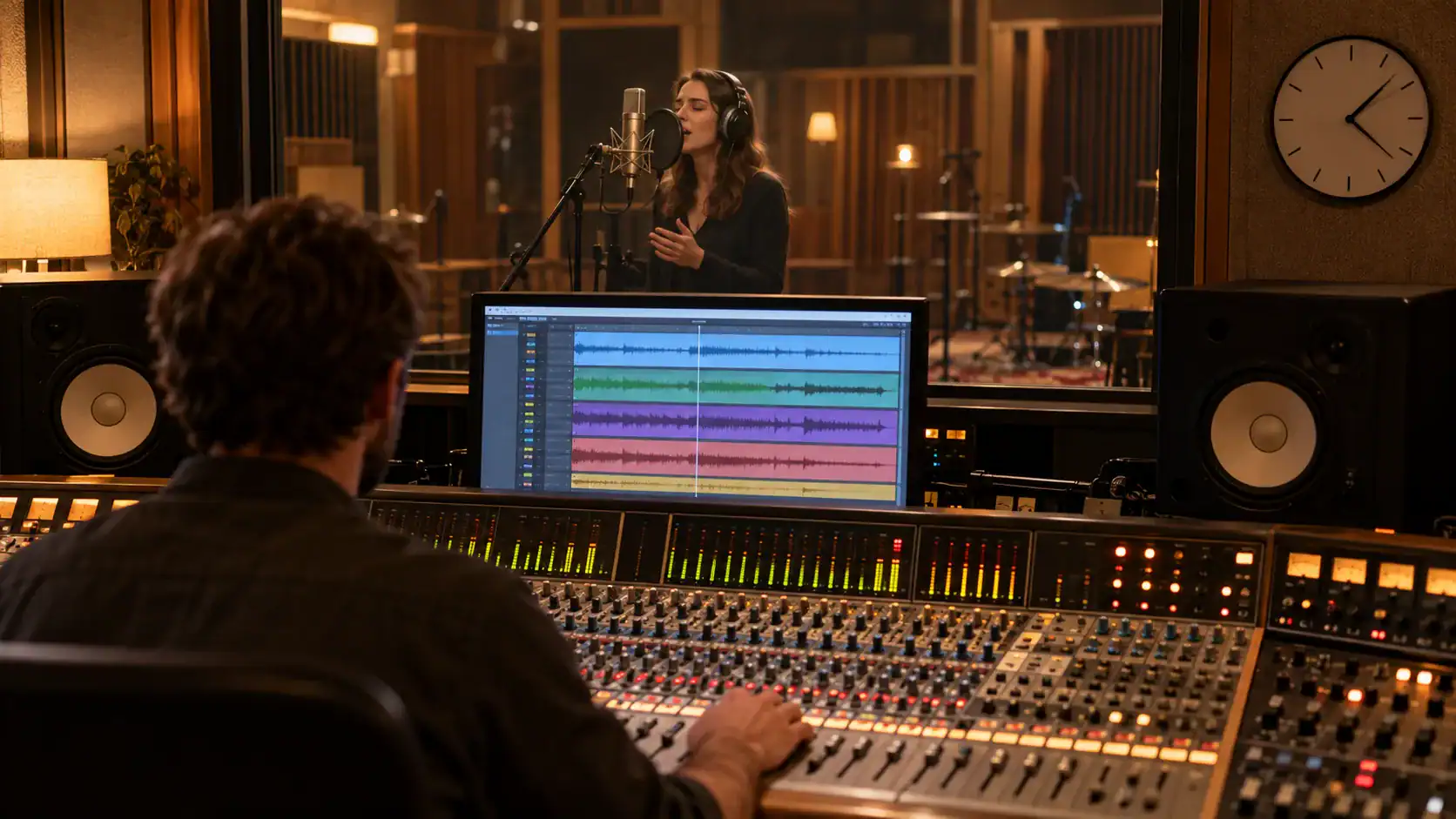
How recording quality influences the subsequent mixing process
The world of Music Production is complex and multi-faceted. One of the most crucial aspects in this process is the quality of the recording sessionThis article looks at how recording quality influences the subsequent mixing process and why a good signal chain is essential to ultimately achieve outstanding quality in mixing and subsequent mastering.
The importance of recording quality
The recording quality forms the foundation of every piece of music. A high-quality recording enables the Sound engineers, the best possible results in mixing and mastering If the quality of the recording is poor, the engineers will encounter a number of challenges that they may not be able to fully overcome. Therefore, it is essential to ensure excellent recording quality right from the start of the production process.

The signal chain: the heart of the recording
The signal chain includes all devices and software tools that stand between the sound source and the final recording. These include microphones, preamps, converter, audio interfaces and DAWs (digital audio workstations). Each component of the signal chain contributes to the overall quality of the recording. A high-quality microphone can capture the sound of an instrument or vocal with detail and clarity, while a top-notch preamp ensures that the signal remains clean and free of unwanted noise.
Your recordings are done, but the mixing isn't quite as you imagined it?
Why is the signal chain so important?
Signal purity: A good signal chain minimizes the introduction of noise and distortion. This is crucial because such interference is difficult to correct later in the mixing process. A clean signal provides the best basis for all further processing steps.
Attention to detail: High-quality components capture more details and nuances of the sound. These subtleties make a big difference in the finished mix and ensure that the sound remains lively and authentic.
Dynamics: A good signal chain preserves the dynamics of the original signal. This is particularly important because good dynamics are responsible for the emotional impact of the music.
The importance of high-quality microphones
Microphones are often the first step in the signal chain and play a central role in recording quality. High-quality microphones capture sound precisely and offer great detail. They are able to reproduce the natural sounds of an instrument or voice without distortion. Microphones such as the Neumann U87 or the Shure SM7B are very popular in professional studios because they offer excellent sound quality and versatility
The role of proper cabling
Cabling may seem inconspicuous at first glance, but it plays an essential role in the signal chain. High-quality cables transmit the audio signal without loss and noise. Poor cables, on the other hand, can lead to noise and signal loss, which can significantly affect the recording quality. It is worth investing in high-quality cables from manufacturers such as Mogami or Canare to ensure the best possible signal transmission.
The influence of analog-to-digital converters (AD converters)
Analog-to-digital converter are crucial for converting the analog signal into a digital format. High-quality AD converters ensure that the digital signal remains as close to the original as possible. Poor converters can produce distortion and artifacts that are difficult to correct during later mixing and mastering. Devices such as the Universal Audio Apollo series or the Apogee Symphony are known for their outstanding converters, which ensure clear and precise signal conversion.
Advantages and disadvantages of a higher sample rate:
Advantages:
Attention to detail: Higher sample rates capture more details and finer nuances of sound. This results in clearer and more precise audio.
Better frequency response: Higher sample rates improve the reproduction of high frequencies and reduce the risk of aliasing artifacts.
Flexibility in mixing and mastering: A higher sample rate offers more flexibility in editing, as effects and plugins can work in more detail.
Disadvantages:
Larger file size: Higher sample rates produce larger audio files, which requires more storage space and more powerful hardware.
More computing power: Processing audio files with higher sample rates requires more processing power, which increases the demands on the computer and can slow down its performance.
Little benefit at low frequencies: The audible difference between 48 kHz and 96 kHz can be minimal in many cases, especially for instruments and voices that operate primarily in the mid and low frequency range.
The importance of room acoustics
In addition to the technical equipment, the room acoustics play a decisive role in the quality of the recording. A room with poor acoustics can distort the sound and create unwanted reflections or echoes that are difficult to correct later during mixing and mastering.
Why is good room acoustics so important?
Sound purity: An acoustically optimized room minimizes unwanted reflections and standing waves, keeping the recorded signal clear and undistorted.
Poor recording quality limits mastering results — how to get the best results during mastering is shown in this article. Mastering Guide.
Authentic reproduction: Good room acoustics make it possible to accurately capture the natural sound of an instrument or voice. This is especially important to retain the emotional nuances of the music.
Efficient work: With optimal room acoustics, sound engineers and producers can work faster and more precisely because they can hear exactly what is being recorded without being deceived by room artifacts.
Tips for better room acoustics:
- Absorbers and diffusers: The use of acoustic absorbers and diffusers helps to control unwanted reflections and improve the room sound.
- Bass traps: Bass traps are specifically designed to reduce low-frequency resonances and smooth the bass range.
- Spatial analysis: A detailed room analysis can help to identify problematic frequency ranges and take targeted measures to improve the acoustics.
The influence on the mixing process
Mixing is about bringing the individual tracks of a piece of music together to create a harmonious whole. If the recording quality is poor, this process is made much more difficult. The engineers have to spend a lot of time and energy correcting mistakes and eliminating unwanted noises. This distracts from the creative aspect of mixing, which is about shaping and refining the sound.
From recording to the finished mix: Our tutorial will show you how recording quality, signal flow, and balance affect the entire mixing process.
Mixing Guide Step by step in a structured overall process.
Advantages of good recording quality in mixing:
- Efficiency: High-quality recordings require less post-production work, allowing engineers to focus on creative mixing rather than troubleshooting.
- Better sound: A clean, detailed signal provides a better basis for effects and EqualizerThe sound remains clear and defined.
- Consistency: Good recordings lead to more consistent results. The mix sounds equally good on different playback systems.
Effects on mastering
Mastering is the final step in the production process where the final sound of a Albums or tracks. Here too, the quality of the recording plays a crucial role. If the recording and mix are of high quality, the mastering engineer can exploit the full potential of the track.
Why good recording quality is also important in mastering:
- Sound quality: A clean, well-mixed track is easier and more effective to master. The final sound is clear and powerful.
- Avoiding mistakes: Mistakes that occur during recording or mixing are difficult to correct during mastering. A high-quality recording minimizes this risk.
Conclusion
The quality of the recording is crucial for the entire music production process. A good signal chain ensures that the recorded signal is clean, detailed and dynamic. This makes the mixing process much easier and enables an outstanding result to be achieved in mastering. Investments in high-quality recording equipment, careful recording techniques, the right choice of sample rate and optimized room acoustics ultimately pay off in the form of professional-sounding pieces of music that delight the listener.