Interview with Chris Jones from Peak-Studios: Behind the scenes of online mixing & mastering
In this interview, Chris Jones, founder and CEO of Peak-Studios, , as he was one of the pioneers in 2006 Online mixing services and Online mastering Learn more about his inspiration, his passion for music and technology insights, and the personalized services that make Peak-Studios so special.
1. Chris, you founded Peak-Studios in 2006 as one of the first service providers in Europe. What inspired you to start an online service company?
Answer:
Yes, I founded Peak-Studios in 2006 as one of the first service providers in Europe. Back then, however, it was still called Thug Music. I wanted to start a company at the time because I lived in a small town with 250.000 inhabitants and still live there. There were only a few recording studios here and relatively few musicians who could have generated good sales.
But I still wanted to pursue my passion, making music. I also knew that the Internet was on the rise and had a feeling that everything would only get bigger over the years. So starting an online service company was a natural choice for me. I also didn't want to be a competitor to the local studios, because I always believe that we should work together, not against each other.
For this reason, I saw my place more in the online world, because there I could also work with musicians from genres that didn't exist in Würzburg.
2. How did your musical journey begin and what fascinated you early on?
Answer:
Music has always fascinated me. When I was four, we had some kind of music lesson in kindergarten, and I also enjoyed making music in primary school.
Even at a very young age, around five or six, I was very enthusiastic about technology. I found it fascinating to play with a cassette recorder. At that time there was a radio show called "Schlager der Woche". I always recorded music on cassette and waited during the show until my favorite song was played so that I could press "Record" in time. I really enjoyed producing transitions or editing new material with different cassette recorders.
That was technically complex at the time. Nevertheless, the combination of musical and technical aspects fascinated me. Whether it was recording or mixing music tracks or looking at the inside of a loudspeaker box, I found everything about it extremely exciting.
I also started creating MIDI compositions with friends on the Atari quite early on. We also produced and remixed well-known pieces, for example "Axel-F." by Harold Faltermeyer, the theme song from Beverly Hills Cop. And so it just kept developing.
We were constantly composing and producing music until I eventually got into DJing. Having worked a lot with cassettes as a child, this was not far off the mark. It was nice to experience how a certain sequence of songs can inspire people so much and give them a great evening. I also found composing my own pieces very enriching, as it allowed me to express myself and process experiences.
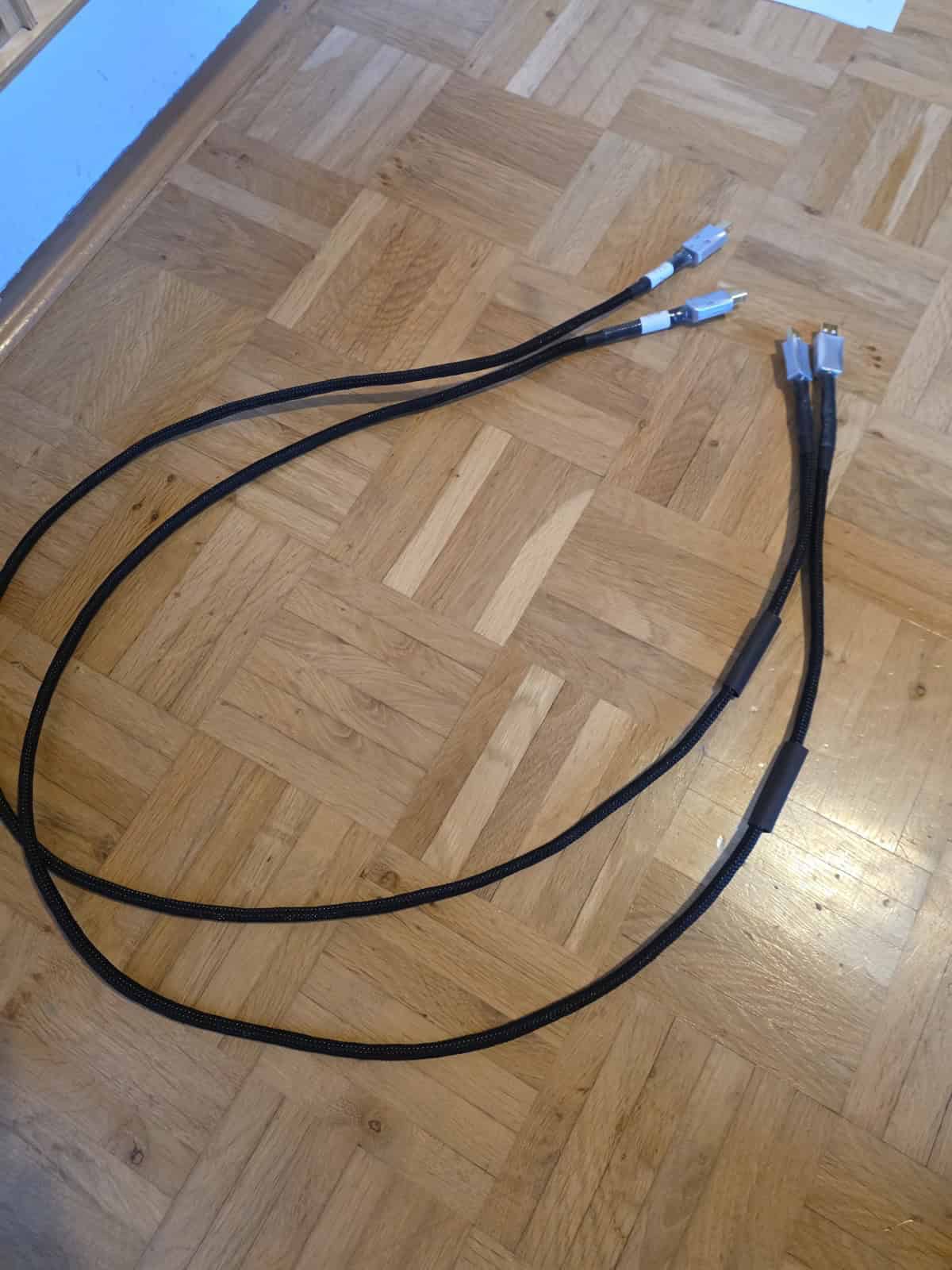
Even today, I often see musicians working through their childhood or general experiences in albums or songs. During my childhood and youth, I also worked in event technology and set up technology for concerts. That was great for me because both areas - music and technology - came together again. For example, I learned how to set up and lay cables correctly so that no one gets hurt, and how indispensable "gaffer tape" is in sound engineering.
3. What does Peak-Studios mean to you personally?
Answer:
Peak-Studios means everything to me. I don't know what else I should do in my free time other than making music, because it's really the only thing that gives me consistent pleasure - both personally and professionally. That's also the reason why I love getting up early in the morning and starting the day: I can start making music straight away, create new works together with other musicians, support them in their vision and make their ideas part of my own.
This mixture of technical and creative aspects gives me a lot of joy. I can add my personal touch and make everything a little better than it already was. It also helps me to create a good structure for myself, because I am a person who needs structure and derives security from it. As a self-employed person with my own company, I am only responsible to myself, I can create this structure independently and thus maintain a certain feeling of security that is good for me emotionally.
The company means so much to me that I have given up an incredible amount of things - not because I had to, but because I enjoyed it. I didn't get my driver's license until very late, because I was always investing the money I earned in new equipment so that I could become more professional, offer better quality and continue to pursue my passion. I hardly ever take time off when I'm on vacation or sick, because music is what relaxes me the most. Even when it's stressful and there's a lot of work to do, it makes me happier than lying on the beach somewhere - even though that would certainly be nice occasionally.
When it comes to illness, I don't have the best genes and have been in the ambulance a few times, but even then, my first thought is about my company and instructing my employees on how to proceed if I am out of action for a longer period of time.
It is also extremely important to me to only work on projects and assignments that I really enjoy. Of course, I have sometimes taken on things in the past that I didn't enjoy doing that much. But today I am in the fortunate position of being able to hand over tasks that I don't really enjoy to others who are keen on doing them. Because when someone enjoys doing something, the result is good.
This leads to the many positive customer reviews: People feel that there is someone here who does their work with enthusiasm and passion. The end result is a result that speaks for itself and satisfies our customers. And that means my work doesn't feel like work.
4. What makes Peak-Studios so special compared to other providers?
Answer:
What makes Peak-Studios so special? First and foremost, the Customer serviceWhen I founded the company - and I still experience it sometimes today - quick, friendly responses are rare in Germany. You often wait weeks or months for answers or don't get any at all. The tone is often unfriendly, communication is done purely by email and seems impersonal. I didn't like that when I founded the company and I always thought it was great to see what customer service was like in America: very customer-focused. It was exactly this orientation that I wanted to integrate into my services.
Personal support is very important to me. As is sound, honest advice - without trying to sell something that the customer doesn't actually need. Then I earn a little less, but I leave with a good feeling. For me, that is a decisive unique selling point.
I also offer an uncomplicated service with transparent pricesso that customers know immediately what to expect. In addition, they have the opportunity to upload data directly to my own server, rather than via third-party links. Our server is located in Germany and is subject to German data protection laws, which is an important factor for some customers.
Another USP is the short turnaround times. Although we officially state three to five working days after receipt of payment, we often deliver the finished master files or the mixed song on the same or next working day. This doesn't always work if we are completely busy, but it is usually a big advantage for the customer.
We also differ from other providers in terms of customization because we respond specifically to requests and feasibility and clarify in advance what can be implemented sensibly. And when it comes to quality, it is always important to me to get the most out of every production. This is not always possible due to the material, but we do our best to achieve an individual, high-quality sound character instead of simply copying what already exists.
Another important point is our broad musical experience. In 2006, I originally only worked in the hip hop and R'n'B area, listened to a lot of punk rock in my private life and over the years took on productions from many different styles. I have gained increasing experience in electronic music, classical music and rock. At first, not every production sounded perfect, but over time it got better and better, so that my customers now benefit from a very large wealth of experience, which is particularly valuable for crossover productions.
For example, a singer-songwriter came up with a song that had classical strings in it that he wanted to add suddenly. I advised him against it because a crescendo usually starts softly and sounds more natural. He liked that suggestion and went with it.
5. Why do many customers highlight your communication skills and professionalism in their Google reviews?
Answer:
Many customers highlight our strong communication skills and professional approach. How does that work? By focusing intensively on the customers and taking my time. This time is not paid for at the beginning, but it pays off in the end and produces high quality, which in turn is good advertising. It's actually a no-brainer: if you invest a little more time in communication at the beginning, you get to your goal faster, the customer is happy and production reaches a level that you wouldn't otherwise be able to achieve.
Many people also find this all-round support to be positive. This was a main focus for me when I founded the company, in a country that I often describe as a "service desert". I want my customers to feel that they are being perceived as individuals and not as a mere number or a source of money. I want them to notice that their project is close to my heart and that I want to understand and implement it as best as possible. Emotions are crucial, especially in music, and many people can only put them into words to a limited extent. A personal conversation helps immensely in this case.
This is exactly where I come in: I give people space to express their ideas and emotions and ensure that the end result corresponds to them. In order to maintain this personal touch in the online area, I offer the possibility of remote sessions We can see each other, they can listen live and have complete transparency, almost like being there in person. Of course, customers cannot benefit from the first-class studio acoustics at home, but they know their own monitoring system and can better judge whether it is suitable for them.
The online focus allows me to work not only with artists from Würzburg, but also with musicians worldwide. Nevertheless, I attach great importance to personality and proximity in order to create a genuine experience.
The opinions of our customers


6. What role does high-quality equipment play in your studio, and how important is your expertise as an engineer?
Answer:
Equipment and especially high-quality recording studio equipment is very important to me, especially in mastering. In these cases, you need devices that sound as neutral as possible to hear and process the sound without distortion. If you use tools that color the sound, you should do so deliberately.
More important than a long list of hardware or software is working with a few high-quality items that you know well. Many people buy huge amounts of plugins, especially during promotions like Black Friday, without really thinking about how they sound and how they work. But in the end, it is always the person behind the devices who determines the quality. With experience, you can also produce a fantastic sound with standard plugins.
The best engineers often use only a few effects in the mix and rely on a perfect starting point: good recording quality, proper cabling and optimal acoustics. With a solid foundation, little processing is often enough to make the sound seem natural and professional. I have been working with largely the same devices and plugins for years and rarely add anything new. But when something new comes along, I test it thoroughly to ensure that every move is perfect in the end.
7. Your work is considered very individual. How exactly do you respond to the special wishes of your customers?
Answer:
Individual solutions are essential for me. Every song, every production is different. Of course, you can work with project templates based on a genre or style, but ultimately the emotionality and message of the respective title always takes priority.
Whether it's a ballad, a reappraisal of the past or a professional voice production - they all require their own approach. That's why communication is again extremely important, especially when it comes to details that are easily lost in pure text form. Ultimately, I always offer a tailor-made solution so that the customer feels how unique their production is.
8. What challenges do customers often come to you with and how do you overcome them?
Answer:
There are different problems that customers come to me with. Most of the time it is about creating their own sound so that the recordings sound professional on all systems. Often there are also noisy recordings that need restoration. In our time there is also a certain uncertainty because there is a lot of knowledge (and half-knowledge) on the Internet. Especially when it comes to Streaming or Vinyl Mastering Incorrect values and terms often circulate, which leads to confusion.
You can find more about vinyl mastering myths in the article:
The Biggest Vinyl Mastering Myths
I strive to eliminate this uncertainty through professional expertise. It’s not about withholding knowledge, but about guiding people so they can grow from one production to the next. Feedback during the workflow is extremely important—especially since I often work online and clients are not physically present. When they receive a progress update, I want their honest feedback to find out what should sound different, ensuring that everyone is satisfied in the end. I also appreciate when a client provides constructive criticism, as it helps me grow.
After more than 20 years and more than 30.000 titles edited, there have been countless success stories and I am always proud when someone says: "That's exactly how I imagined it."
Of course, I also had projects with major artists and corporate clients such as Sparkasse, Hotel Kempinski, Audi, VW, Eurosport, Beanieman, Rick Ross, Tyga, Wu-Tang Clan, Cheryl Studer, Van Halen or Oasis, which I am very proud of. But I particularly remember a project during Corona, where musicians from all over the world came together and I was able to take over the mastering. Another great experience was when one of my clients was in a TV soap and his song was presented to millions of people. Yet another project was with an artist from Switzerland who made the long journey to Würzburg to record here - an unforgettable experience.
9. How have artists’ expectations changed since the advent of home recording?
Answer:
Expectations have changed compared to before, also because home recording equipment is much more affordable today. In the past, it was about the complete production, from the recording session to the master. Many people can now carry out pre-productions at home, which saves studio time. At the same time, some tasks such as editing or vocal tuning are passed on to the artists themselves. On the one hand, this is an advantage because people can do more themselves, and on the other hand, it saves work for recording studios.
However, the number of customers who can afford music production is also increasing. In addition, there are now a large number of service providers, which presents customers with the challenge of choosing the right provider.
More on this topic: How do I find the right mixing and mastering service provider.
They also often want more support in how they can use their programs effectively themselves in order to save costs or because they want to deal intensively with the subject matter.
In the past, they needed someone to do everything for them; today, they also want to have a say and do some of the things themselves. Accordingly, they are more likely to request additional processes where customers reach their limits and then need professional help. That's where we come in with our know-how, equipment and network.
10. What genres do you cover and why is this diversity important to you?
Answer:
Over the years I have worked in almost all genres. Starting with hip hop, R'n'B and punk rock, it developed into classic rock, EDM, house, techno, minimal, industrial, heavy metal, crunch, as well as pop and folk music. At some point a label even approached me and was incredibly happy with it, so we worked together permanently. Some productions even made it to the top of the folk music charts.
I have not specialized in a particular genre because I personally think it is important to remain open to different styles. If you think outside the box, you are always learning something new and can offer customers added value thanks to this wealth of experience. This comprehensive experience creates a sound that many customers appreciate because they notice how much know-how from various projects has gone into it.
The fact that even price search engines like Idealo me on topics related to audio and studio technology confirms that we have built up a high level of expertise here.
11. Where do you want Peak-Studios to develop in the next few years and how does advancing technology affect you?
Answer:
Where is the journey going? More and more towards technological advancement. Artificial intelligence has long been present and will simplify even more processes in the future. We want to use it to make our processes more efficient in order to offer our customers a smooth project process. The streaming industry is also constantly evolving towards higher resolution formats such as WAV or FLAC. Our goal is to always stay up to date so that we can make sensible use of all new possibilities.
That's why I'm constantly educating myself about AI and plugins that can take over certain work steps. You have to know which parameters to tweak if the AI doesn't deliver the desired result. New work processes are certainly emerging and we have to learn to master them. It's the same with automatic mastering suites or even complete song creation via AI. Often the final "depth" is still missing. That's exactly where I start to understand what the problem is and how to optimize it.
This is also where my personal approach to further development lies: identifying useful innovations, checking their quality and seeing where they actually help, instead of getting lost in the flood of possibilities.
12. What advice do you have for newcomers who are just entering the world of music production?
Answer:
I advise newcomers to try out a lot and to allow for mistakes. That's the only way to really learn. Tutorials, blogs and forums are very helpful, but you should always critically examine content because there is a lot of contradictory information. Patience is also essential. It's unrealistic to be commercially successful straight away when you're just starting out.
I never intended for my company to be so big, I just wanted to make music and maybe earn a little extra money. I never thought it would grow like this. I am also happy to help with business questions or with the structured development of mix and master – among other things by 1-to-1 online lessonsThis allows me to teach strategies that are tailored to each individual.
13. Is there a motto or philosophy that motivates you in your work every day?
Answer:
I don't have a specific motto, but I think it makes sense to always do what you enjoy. Things that aren't fun should be delegated, automated or simplified. If you do things you don't like just for money, you'll burn out at some point and wonder what the point is. I firmly believe that satisfaction comes from doing something meaningful.
That's why you should decide for yourself whether you are really prepared to sacrifice a lot of free time or to always take on new customers. If you enjoy all of this, then it's the right path to take, and there's nothing better than earning money from your passion.
14. Conclusion: Why Peak-Studios?
Answer:
Potential customers who place great value on personal contact, who want an individual approach, fast and conscientious work with a high level of expertise in all genres, have come to the right place with me and Peak-Studios. Regardless of whether it is online mixing, mastering, lessons, mix analysis or audio restoration - here you always get professional service. I stand for innovation, quality and excellent customer service.
Interested in professional online mixing & mastering?
YOUR CONTACT TO PEAK-STUDIOS
Your contact for questions about your production!
- Personal point of contact
- Over 20 years of experience
- Highest quality standards
You can reach us by phone from Monday to Friday from 9 a.m. to 8 p.m.