
Mastering Engineer – All information at a glance
A mastering engineer is the audio specialist who sonically refines the finished mix in the final step of music production. He optimizes loudness, frequency balance, dynamics, and stereo imaging. He also creates final masters for streaming, CD, vinyl, and radio. This ensures that a track sounds balanced and professional on every playback medium.
Definition and Tasks
The mastering engineer is the last important authority in audio production. Audio mastering It's not just a hobby, it's a profession. Working in a studio isn't simply about ruining the sound with plugins like Ozone. In the following section, we'll give you an overview of the tasks involved.
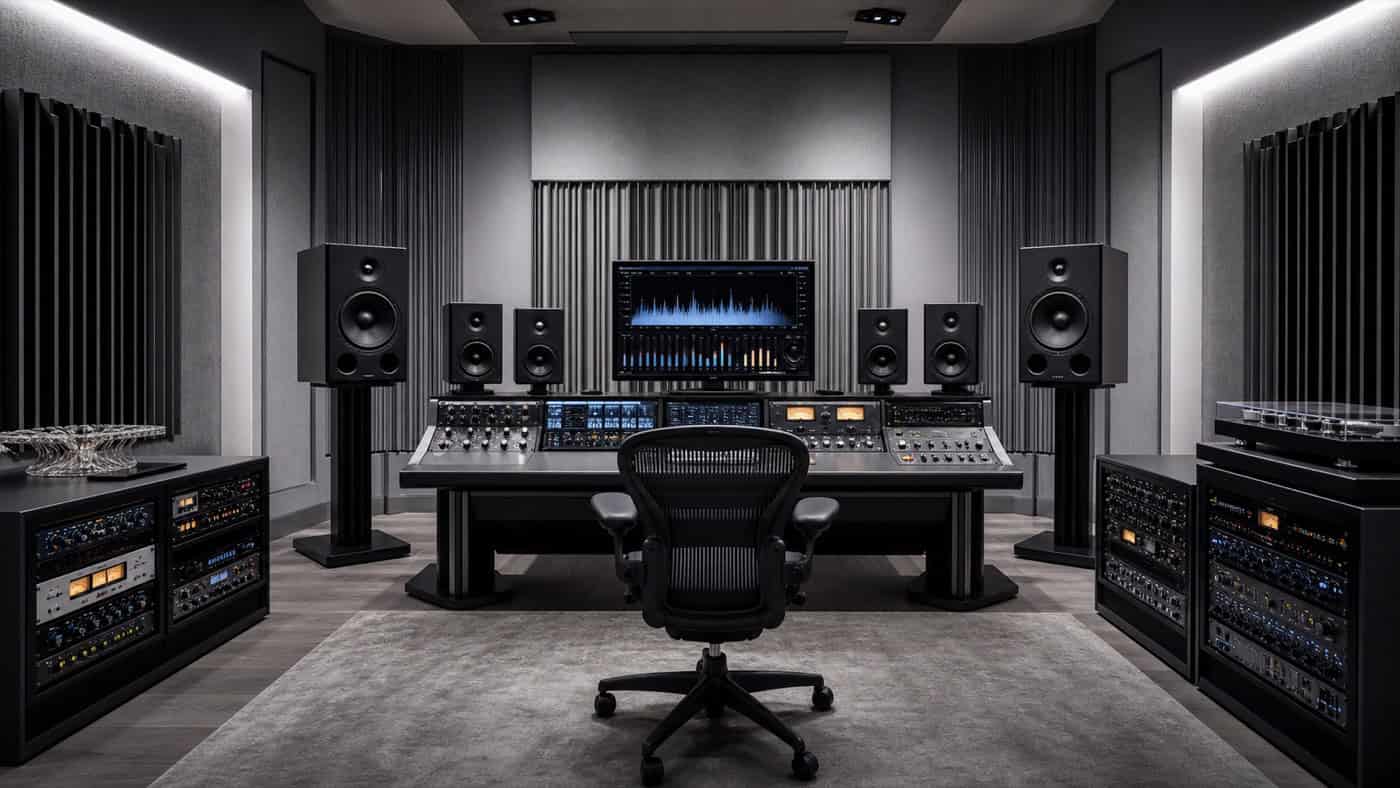
What does a mastering engineer do?
- The mastering engineer works in a professionally set up hybrid environment. He uses analog and digital equipment, accurately measured acoustics, and, ideally, linear monitoring speakers. Only when these elements are right can he create a master. mastering to produce. Before that, we are only talking about processing the total amount.
- Typically, the mastering engineer works on the finished file. mixdown or individual StemsThe changes are usually minimal. After all, the artist and mixing engineer determine the character of the song during the mixing process.
- The mastering engineer is the final link in the production process. They improve the quality of the track, work on entire albums, and create DDP images. Mastering for streaming platforms It plays an important role, because the proportion of songs listened to online is constantly increasing.
- In addition, the mastering engineer gives the mixing engineer Feedback. This is especially true when it mistakes in the mix There are some flaws that cannot be corrected during mastering.
Mastering as the final touch
Mastering is the final touch, so to speak. Here, the track is prepared for the pressing plant, radio, and streaming platforms. The goal is a track that sounds balanced on every playback medium.
I will also demonstrate what these tasks look like in everyday studio life in a separate video series offering practical insights. Self-employed as an Audio Engineer - Studio Real Talk It's about self-employment, client work, mixing and mastering.
The mastering engineer is therefore the architect of the final sound stage. The topics and tools they master are compiled by the Mastering Guide.
More and more mastering engineers are also offering a Online mastering The advantage for the artist is obvious. He no longer has to travel to a studio or undertake long journeys for his master's degree.
How do you become a mastering engineer?
Ideally, a mastering engineer possesses years of experience in audio engineering and music production and has proven themselves as a mixing engineer over time. Someone who understands the challenges and characteristics of mixing and has a trained ear is also capable of creating a master. We, too, can look back on over 20 years of experience in the music industry!
DO YOU WANT TO LEARN MASTERING?
With our custom-made mastering lessons, we meet you at your current skill level and teach you everything important about mastering.
Mixing engineer, audio engineer, mastering engineer - what are the differences?
The term audio engineer is usually used as an umbrella term for professional work with audio or sound material. But the range of tasks within music production is so broad that it is worth breaking it down further.
Mixing and mastering engineers work hand in hand to achieve the ideal sound of the song.
First and foremost, the mixing engineer deals with the mixing ratio of the individual instruments, creates a tonal balance within the song and thus ensures a pleasant mix.
Ideally, the mastering engineer enhances the work done so far by the mixer, resolves minor inconsistencies in the frequency response and prepares the audio material both musically and technically so that it reaches a professional level and can compete with other productions.
What does a mastering engineer do?
A mastering engineer refines the finished mix as the final step in production. They optimize loudness, frequency balance, dynamics, and stereo image, and create final masters for streaming, CD, vinyl, and radio.
What is the difference between a mastering engineer and a mixing engineer?
The mixing engineer blends the individual tracks into a coherent song. The mastering engineer then processes the finished stereo mix and prepares it for all playback media.
How much does a professional mastering engineer cost?
The cost depends on the length and format. A single track is cheaper than a complete album – you can find the current prices transparently on our website. price page.
What kind of training does a Mastering Engineer need?
There is no fixed training path. Crucial factors are a trained ear, years of practical experience, an acoustically calibrated listening environment, and sound technical knowledge.
Do you need a mastering engineer for streaming?
Yes. A professional master ensures that your track sounds balanced and competitive on Spotify, Apple Music, and other platforms – despite the loudness normalization of these platforms.