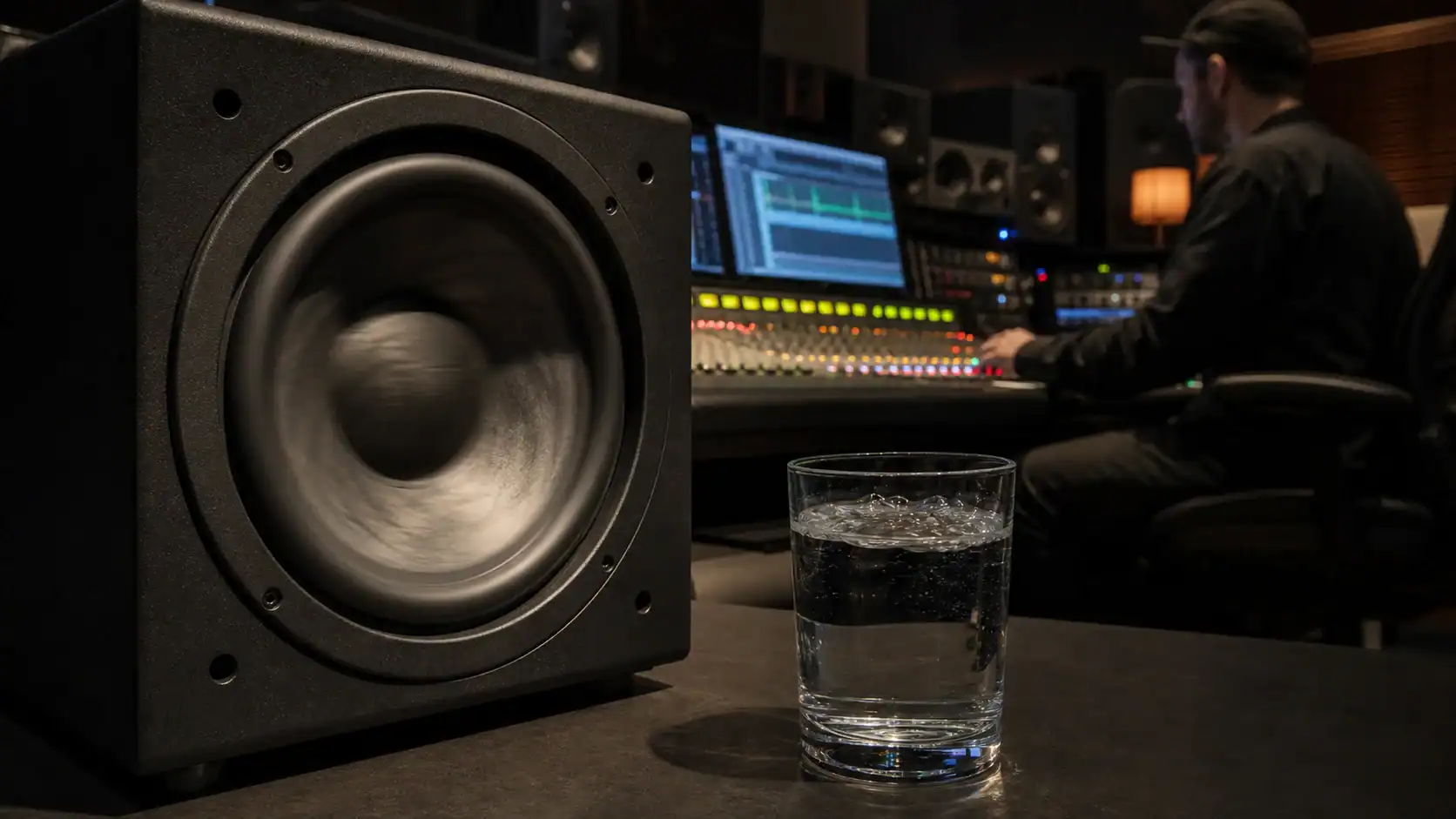
Perfect Mixes Made Easy: The Ultimate Guide to Professional Sound
Aperfect mixis not created by the simple use of plugins – it is the result of meticulous planning, innovativerecording techniquesand more progressiveaudio editingIn this guide, which is especially designed for ambitiousSound engineers, sound engineeringexperts and professionals in theMusic Production was developed, we dive into the depths ofmusic mixingart. Find outwhy "Fix it in the Mix" doesn't work, and discover exclusivemixing tips, mixing strategiesandstudio tipsthat will help you turn your track into an audiophile masterpiece – from pre-production to the finalAudio Mastering.

Structure instead of individual tips:If you want to see the entire mixing process with a clear sequence, typical mistakes and further detailed topics, you will find it in theMixing GuideThe complete step-by-step overview.
The path to the legendary mix
There is often a misconception:→ “Fix it in the Mix” – But an inadequate raw mix cannot be turned into a perfect mix by subsequent corrections.Therefore, the bestTips for the perfect recording before mixingalready in thePre-production for better soundThis guide not only provides youmixing tipsandmixing strategiesat the highest level, but also practicalPractical examples from professional studios, which covers the path from recording to the finalAudio Masteringdescribe in detail.
In this guide you will learn:
- Pre-Production & Recording:→Songwriting and arrangement for clear frequency distribution→Tips for the perfect recording before mixingand the use of modernrecording techniques
- Mixing & Audio Editing:→frequency grading and EQ techniques→Understanding and Applying Compression→Depth layering and spatiality in the mix
- Advanced strategies:→Subgroups and bus compression for consistency→Automation for a lively mix→Workflow optimization for faster and better mixing
- Error avoidance:→Common mixing mistakes and their solutions→ A detailedChecklist for the perfect mix
Get personal support from our experts – individual, practical and tailored. Get started now!
The basis: A perfect mix begins with the recording
Pre-Production: The Invisible Secret Weapon
Pre-production for better soundis the cornerstone of a successfulmusic mixing. Already atSongwriting and arrangement for clear frequency distributionAll instruments and vocals must be arranged strategically to avoid frequency conflicts.
- Arrangement & Songwriting:→Core message:Don’t overload the midrange – too many instruments in the same frequency range will result in a “muddy” mix.→Practical example:A song with three guitar tracks requires a completely different arrangement than a song with just one.→Tip:Use targeted layering and ensure a balanced distribution to create space for each element.
- Recording planning:→Checklist:→ Tips for theperfect shotbefore mixing: Document the signal flow from source toanalog-digital converter(ADC).→ Define reference tracks that serve as a benchmark for frequency staggeringand EQ techniquesserve.
Microphone selection & placement: Microphone selection and placement for optimal sound
The principle"Garbage in, garbage out"applies here especially. The rightMicrophone selection and placement for optimal soundis crucial for the character and clarity of the final mix.
- Vocal recordings:→Large diaphragm vs. small diaphragm:→Large Diaphragm Microphonesoffer warm, full-sounding vocals – ideal for intimate performances.→small-diaphragm microphonesdeliver precise detail and are perfect for voices with fine nuances.→Ribbon microphones:Experiment with these for a natural, analog sound that isAudio Masteringa special touch. →Practical example:A Neumann U87 may be a classic, but sometimes an alternative model is necessary to optimally capture the individual character.Here is a little guide - Basic Vocal Chain.
- Instrument recordings:→drums:→Overheads:→ Higher positioning for an airy, spatial sound.→ Lower positioning for a more direct, punchy sound.→Close Miking & Ambient Microphones:Combine close-ups for rich detail with room microphones for naturalDepth layering and spatiality in the mix... →Guitars & Amps:Experiment withOn-Axis vs. Off-Axistechniques to achieve the optimal frequency response.
Timing & Intonation: Timing and intonation for clean takes
A natural groove is the heart of aperfect mix. Timing and intonation for clean takesare crucial – digital tools can only support human expression, but never replace it.
- Timing:→Organic Groove:Small musical irregularities can make the track livelier – sometimes a snare that is slightly “behind the beat” sounds more emotional.→Tools:Use waveform editors to precisely analyze transients and optimize the interaction between drums and bass.
- Intonation:→Natural corrections:setzeaudio editingand tools like Melodyne provide excellent support –Auto tuneshould never replace natural character.→Vocal warm-ups:Establish fixed routines to optimally heat up your voice andclean takesto guarantee.
The Mix Core: Volume Balance & Frequency Grading
A legendary mix lives from the perfect balance between all its elements.volume balance in the mixand precisefrequency grading and EQ techniquesensure that the song impresses even without excessive use of plugins.
3.1. Volume balance: The harmonious dialogue in the mix
- Level management:→ Make sure drums, bass and vocals are in a natural, balanced dialogue.→Tip:Test the mix on different listening systems – studio monitors, headphones and consumer speakers should all produce a consistent sound.
- Dynamic automations:→ Use targeted volume adjustments to control the presence of individual instruments and create lively dynamics.
Let us analyze your mix – request your mix analysis now!
Frequency grading and EQ techniques: Every element in its place
EQ is much more than a simple correction tool.It is the precise carving of an acoustic mosaic.
- Targeted EQ work:→ Work with high-pass andlow-pass filtersto assign each instrument its space.→For example:For vocals, use a gentle high-pass starting at around 80 Hz – this preserves the body of the voice while removing disturbing frequencies.
- Mid-Side EQ:→ Edit the mono part (middle) and the sides separately toto optimize the stereo image.
- Dynamic EQs:→ Control fluctuating frequency peaks without sacrificing the natural character of the instruments.
Understanding and applying compression: more punch, less pump
Compression is the finishing touch that brings the mix together.But to really shine, you have toUnderstanding and Applying Compression– with sensitivity and strategic commitment.
- Types of compression:→VCA compressors:Ideal for drums totransientsto control precisely.→Optical compressors:Provides gentle, natural smoothing for vocals.→FET compressors:Deliver the aggressive attack punch that some genres require.
- Advanced techniques:→parallel compression:Combine the dry signal with a heavily compressed one to preserve both punch and dynamics.→Multiband Compression:Control different frequency ranges separately – ideal for compressing the low end without compromising the presence of the mids.
- Transient Shaping:→ Fine adjustments of attack and sustain allow you to emphasize individual elements without affecting the overall mix.
Advanced mixing techniques: creativity meets highest precision
Once you have the basics down, you can move on to the sophisticated techniques that will transform your mix from good to legendary.
4.1. Subgroups and bus compression for consistency
subgroups and bus compressionare essential to glue the mix together and achieve a consistent sound.
- Creation of bus systems:→ Judgeseparate buses for drums, vocals, guitars and effects.→ This enables a uniform dynamic and facilitates the application of globalmixing strategies.
- Glue Compression:→ A classic SSL bus compressor adds extra warmth and fullness to the mix – an indispensable component inAudio Mastering.
Automation for a lively mix
Automation for a lively mixgives your tracksdynamicsand emotional depth.
- Detailed automations:→ Use targeted volume and effect changes to control the emotional flow – for example, lowering the lead vocals by 1 dB in the verse and increasing them sharply in the chorus.→ Automate parameters such as reverb, delay and filter effects to add continuous movement to your mix.
- Effect chain automation:→ Slow modulations in effect chains ensure a livelyaudio editingand an immersive listening experience.
Get started now: Discover our professional mixing services and take your sound to the next level!
Common mixing mistakes and their solutions
Even the most experienced sound engineers face challenges.Common mixing mistakes and their solutionsis the key to continuous improvement.
- Typical mistakes:→Excessive plugin usage:A mix that relies exclusively on digital corrections quickly loses its naturalness.→Too much compression:This results in a flat, lifeless sound.→Insufficient preparatory work:Error in thePre-productionand during recording can only be corrected with difficulty in the later mixing process.
- solution strategies:→ Invest in a clean recording before you startaudio editingbegin.→ Conduct regular A/B tests withpractical examples from professional studios.→ Give your ears regular breaks to remain objective at all times.
Workflow optimization for faster and better mixing
An efficient workflow is the basis for continuing creative work without interruption.
- Work environment & monitoring:→Ideally mix at 79–85 dB SPLto ensure precise perception and avoid listening fatigue.→ Test your mix on different systems – from studio monitors to headphones to consumer speakers.
- Reference & comparison procedures:→ Place at leastthree reference tracks, which serves as a benchmark formixing strategiesandfrequency grading and EQ techniquesserve.
- Automation of routine tasks:→ Use scripts, macros and templates in your DAW to speed up repetitive tasks – leaving more room for creative fine-tuning andAudio Mastering.
Do you want your music to sound great everywhere?
Conclusion: From good tracks to a legendary mix
“Mixing is an art and a science – it’s about the perfect balance, not the uncritical use of effects.”A legendary mix based on:
- Meticulous preparation:→Pre-production for better soundandTips for the perfect recording before mixingform the foundation.
- Technical sophistication:→ With advancedfrequency grading and EQ techniques, Understanding and Applying Compressionand precise automation you can achieve a lasting sound.
- Creative passion:→ Experiment withrecording techniques, integratestudio tipsand implement innovativemixing tipsto shape your own personal audiophile style.
Remember:→ A mix is never final – it is constantly evolving until it is simplyperfectat a hunt.
Bonus: Ultimate checklist for the perfect mix
Before you submit your final mix, check these points:
- [✔]Recording quality:→ All tracks are captured with an optimal signal-to-noise ratio and without disturbing artifacts.
- [✔]Frequency distribution:→ Every instrument has its clearly defined place –Songwriting and arrangement for clear frequency distributionare crucial here.
- [✔]Natural volume balance in the mix:→ The track is convincing even without excessive use of plugins.
- [✔]Retained dynamic range:→ Through targetedcompressionand automation keep the dynamics alive.
- [✔]Spatial depth & stereo imaging:→Depth layering and spatiality in the mixwere optimally dosed through reverb, delay and other effects.
- [✔]Cross-system consistency:→ The mix works equally well on studio monitors, headphones and consumer sound systems.
closing thoughts
The path to a legendary mix in theMusic Productionrequires the highest precision, technical know-how insound engineeringand tireless creativity. With this ultimate guide, themixing tips, recording techniques, studio tipsand comprehensivemixing strategiescombined, you are well equipped to take your track from recording toAudio Masteringinto an audiophile masterpiece.
Start now:→ IntegratePre-production for better soundinto your workflow, applyTips for the perfect recording before mixingand optimize your process with targetedWorkflow optimization-Measures.→ Experiment withMicrophone selection and placement for optimal sound, perfectTiming and intonation for clean takesand implement innovativeSubgroups and bus compression for consistency.
Good luck – and remember:“Where great mixes begin, that’s where the path to your very own, legendary mix begins.”
Start your journey to the perfect mix now – contact us for a free initial consultation!