Better mixing! 10 tips for better production
10 tips for better audio production
Especially when mixing, you can do things differently in many places to achieve better results – particularly with regard to clean delivery in themasteringWe've compiled ten tried-and-tested tips to help you make your mix more focused, cleaner, and ultimately better. It's less about expensive plugins and more about workflow, ear training, and a clear head.
You can implement the following points immediately in your next project. Don't just blindly follow them, but pick out the two or three tips that make the biggest difference for you right now.

Tip 1: Take a break after every hour.
Your hearing is your most important tool – and it tires faster than you think. Therefore, take a five- to ten-minute break after every hour of work. This keeps your concentration high and protects you from making bad decisions that only become apparent hours later.
Make sure you're not exposed to loud noises during this time. Take a short walk outside for some fresh air instead of continuing to listen to music in the same room. Your hearing will only recover if you give it real rest – constant noise during breaks won't help.
Tip 2: Work with multiple listening volume levels.
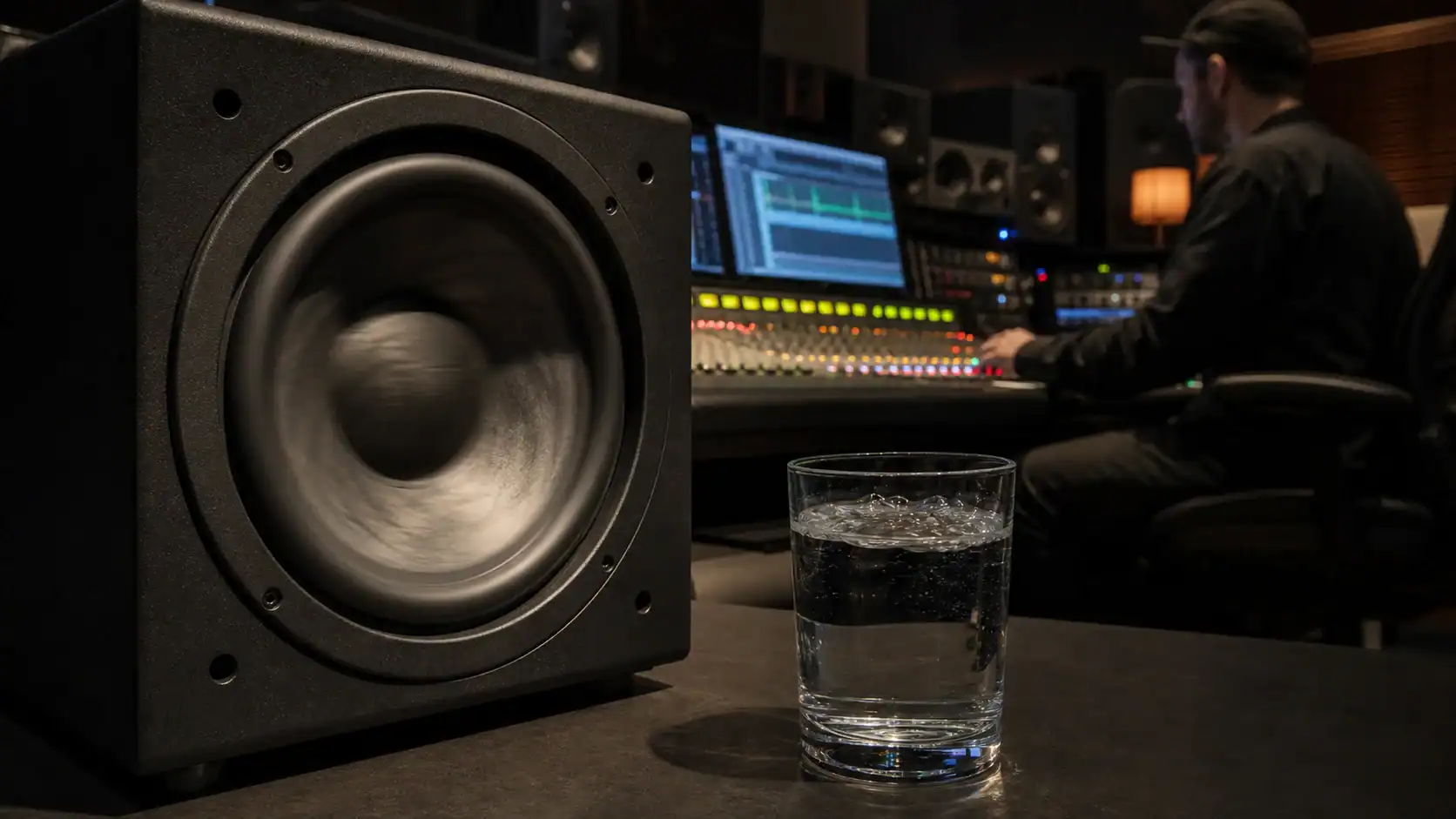
A mix that only sounds good at a single volume level isn't a good mix. Therefore, test your work at several levels: quietly to assess the balance, at medium volume for the details, and occasionally briefly at a higher volume to check the energy and punch. Especially at low volumes, it quickly becomes apparent whether the most important elements are still present.
It's important that you consciously control the level instead of turning the knob by feel. If you want to know how to properly calibrate your monitoring volume, a look at the topic will help you.headroomand on ourMastering Guide.
Tip 3: Avoid multitasking
You can only do one thing 100%. If you're answering emails, scrolling through social media, or juggling three projects while mixing, you'll make worse decisions and ultimately take longer. Focus on just one mix and block everything else out.
Turn off notifications and close any distracting apps. A focused 45- to 60-minute work block will get you further than an entire afternoon filled with interruptions. Your workload will directly benefit from having your mind on one thing at a time.
Tip 4: Always have an analyzer handy
Your ears decide – but an analyzer helps you uncover misjudgments. A frequency analyzer shows you resonances, gaps in the frequency response, or an overly loud bass range that you might miss after hours of listening. Treat it as a check against your hearing, not as a replacement for it.
A clean, controlled frequency response is also extremely important for later mastering. Additionally, keep values such as...True Peakand theDynamic Rangein mind, so that your mix doesn't get ruined before themasteringreaches its limits.
Tip 5: Set a fixed time for the project to end.
A mix is never truly "finished"—there's always something that can be improved. That's the trap. Therefore, set a time in advance by which you'll stop, regardless of whether everything is perfect or not. This artificial deadline forces you to prioritize and not get lost in the details.
Often, with fresh ears the next day, you'll hear more clearly what's really missing. Endless tweaking on the same evening, on the other hand, usually only leads to making an already good mix worse.
Tip 6: Create a raw mix
Before you delve deeply into editing, save a simple rough mix – a basic balance without extensive processing. This way, you always have a reference to directly compare the "before" and "after" versions. This prevents you from gradually working your way away from what is actually a good sound.
Export the raw mix or bounce it to a silent track in your project. If you're later unsure whether your edits have actually improved the song, this comparison will be invaluable. Trust your ears, not the expectation that "more processing" automatically sounds better.
Tip 7: Only work when you are fit.
If you're not feeling well and aren't ready to give 100 percent, it's better to do nothing at all. Decisions made while tired or unfocused often have to be reversed the next day – that costs twice the time. A clear head is more important when mixing than any expensive plugin.
Forced creativity rarely leads to good results. If you lack the necessary focus or attention, use the time to tidy up the project or take a real break. Your mix will thank you if you only work on it when you're truly present.
Tip 8: Separate your work steps
Always complete tasks like cutting vocals or filtering out resonant frequencies separately. If you finish one step completely before moving on to the next, you're less likely to forget something and you'll maintain control. Keeping track of everything is crucial, especially in large projects.
Structure your approach: first clean up and cut, then rough balance, then frequency processing, then dynamics withcompressionTrying to do everything at once quickly leads to losing track and overlooking important details. A clear sequence makes your workflow faster and the result more consistent.
Tip 9: Start with intricate mixing tasks.
Your hearing is significantly more objective at the beginning of a project than at the end. Therefore, schedule the delicate, demanding tasks for the start of your session – such as detecting resonances, precisely setting frequency adjustments, or accurately adjusting critical levels. Later, when your hearing is fatigued, such decisions become more difficult.
You can postpone the more complex, less delicate steps until the end. This way, you can use your best perception for the parts where accuracy is truly crucial. Attempting subtle adjustments with a tired ear risks unnecessarily distorting an already clean mix.
Tip 10: Ask for help if you get stuck.
If you have no idea how to solve a problem, don't hesitate to ask someone. We're all just human, and most knowledge is freely available these days. False pride will only hold you back – a good tip at the right time can often save you hours of frustrating attempts.
Sometimes it makes sense to have a mix professionally finished instead of trying to force it across the finish line yourself. If you reach your limits, you can always have your track reviewed by us.Uploadand ourmixing or mastering-Take over the team.
Conclusion
A better mix rarely results from a single miracle cure, but rather from a well-thought-out workflow: pauses, multiple listening levels, clear work steps, and fresh, protected hearing. These ten tips will cost you nothing but a little discipline – and that's precisely what distinguishes a clean mix from one that can't be salvaged in mastering.
It's best to start with two or three points and make them a habit before adding more. And if you'd rather leave the final touches to the professionals: Upload your song to us.hochor take a look at ourMastering Guide, to delve even deeper into the topic.
How often should I take a break while mixing?
Take a five- to ten-minute break after about every hour of work. Your hearing tires faster than you think, and tired ears make worse decisions. Avoid loud noises during your break so your hearing can truly recover. This will keep your concentration high and prevent mistakes you might otherwise only notice hours later.
Why should I check my mix at multiple volume levels?
A mix that only works at one volume level isn't robust. At low volume, you can tell if the key elements are present; at medium volume, you can assess details; and at slightly higher volumes, you can test the punch and energy. Control the volume consciously and ensure sufficient headroom so that your mix sounds great on any system and during mastering.
Why do I need an analyzer when mixing?
An analyzer acts as a counter-check to your ears. It uncovers resonances, gaps in the frequency response, or overly dominant bass that you might miss after hours of work. Keep an eye on true peaks and dynamic range as well. Important: The analyzer doesn't replace your ears, but rather confirms or corrects your listening impressions and provides a clean foundation for mastering.
What is a raw mix and why is it helpful?
A rough mix is a rough, balanced version of your song without extensive processing, which you save before the actual mixing. It serves as a reference, allowing you to compare before and after at any time. This way, you can immediately see whether your adjustments truly improve the song or if you're moving away from a good sound. Trust your ears rather than the amount of processing.
Should I do intricate mixing tasks at the beginning or at the end?
Tackle delicate, demanding tasks at the beginning of your session. Your hearing is significantly more objective at the start, making precise frequency adjustments or the detection of resonances most successful then. You can postpone more complex tasks until the end, when your hearing is already fatigued. This way, you utilize your best perception precisely where accuracy truly matters.