
 Decibels (dB) in audio production
Decibels (dB) are not an absolute unit, but rather express a logarithmic ratio between two sound pressure levels. +10 dB means ten times the energy, but is perceived as only twice as loud. In audio production, dB is used to classify everything: sound pressure (dB SPL), digital headroom (dBFS), and loudness (LUFS).
In audio engineering, decibels (dB) describe a logarithmic relationship between sound levels.mixingand mastering helps dB to adjust gain, headroom, dynamics, sound pressure and digital levels such asdBFSor to classify dBTP cleanly. You can learn in detail how levels, loudness and headroom interact in mixing and final mastering in the Mastering Guide.
What is a decibel (dB)?The scale is logarithmic, not linear: +6 dB doubles the amplitude, and approximately +10 dB is perceived as twice as loud. In digital audio, dBFS is used – 0 dBFS is full scale; above this, there is no signal, only clipping.What does decibel mean in audio?
Adecibels (dB)describes a logarithmicrelationshipbetween two level values. In audio engineering, this is used to describe, among other things, sound pressure, gain, headroom, RMS,True PeakandLUFSclassified.
- 0 dB SPLThis corresponds approximately to the hearing threshold.
- 130 dB SPLis at the pain threshold.
- Everything about85 dB SPLProlonged exposure can strain the hearing.
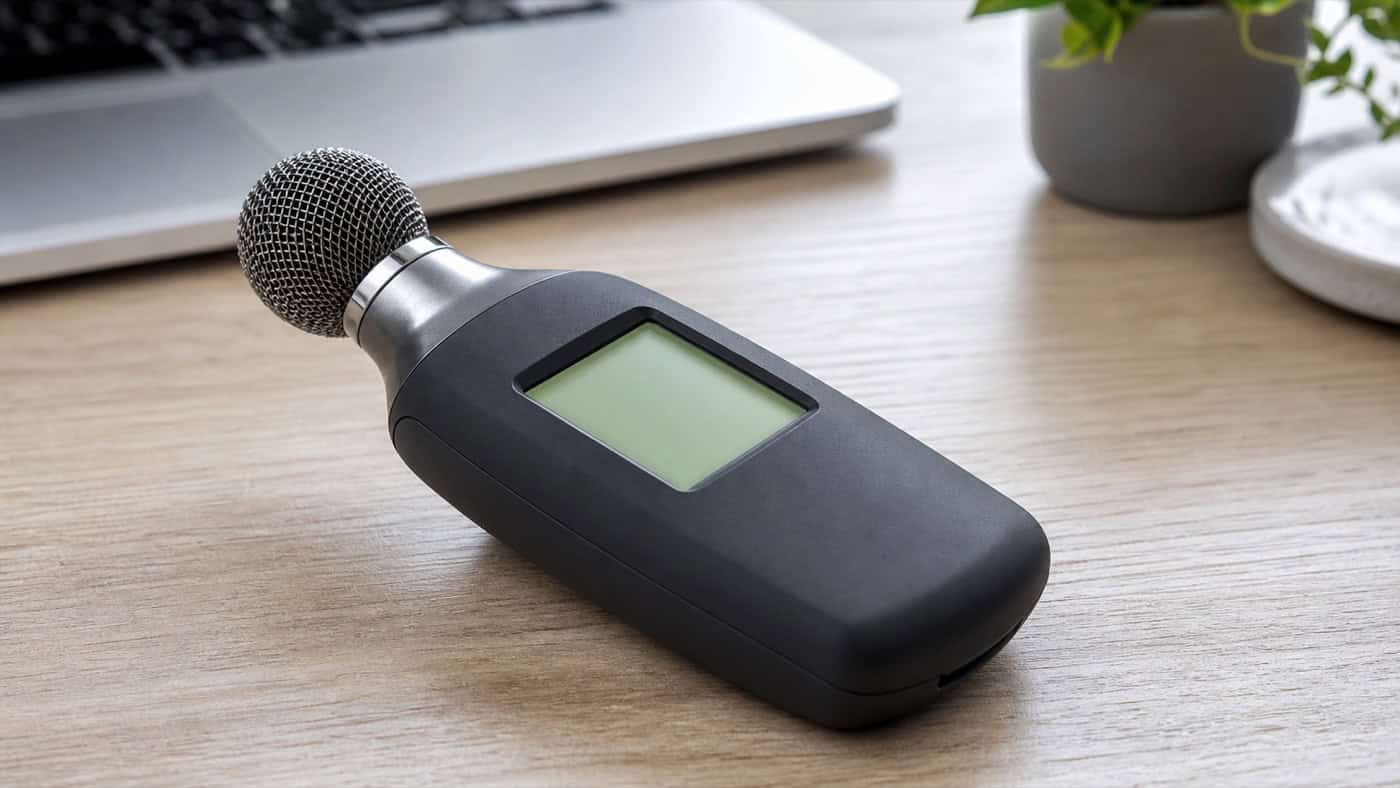
What decibel units are there?
In the audio sector, different dB variants are used – depending on the application:
- dB SPL: Sound level related to air pressure – for physical volume.
- dB (A): Rated according to theSensitivity of human hearing(A-filter).
- dB FS (Full Scale): Reference value in thedigital audio technology, maximum value = 0 dBFS.
- dBu / dBV: Refer toelectrical voltages– especially in the studio.
- Bel and Neper: Obsolete or in special areas (e.g. communications engineering).
👉Tip: For mixing and mastering,dBFScrucial, as this is where the maximum digital headroom is defined – read our article onClipping and dBFS.
What dBFS means in digital mixing and how LUFS and RMS are used for loudness assessment can be read in the article aboutLUFSas well as in theMastering Guide.
Can I measure decibels with the iPhone?
Yes – modern iPhones (from iOS 13) have a built-in volume measurement in theHealth app. There are also third-party apps such as:
- Decibel X(iOS + Android)
- NIOSH Sound Level Meter(iOS, very precise)
- Sound Meter PRO(Android)
These apps areuseful for rough estimates, but do not replace a calibrated measuring device.
How good are decibel apps?
Decibel apps use the built-in microphone of the smartphone – this isnot calibratedand often has limited frequency ranges. Nevertheless, they are sufficient for:
- Noise assessments in everyday life
- Monitoring during band rehearsals
- initial assessments of hearing strain
You should do professional audio worknever rate exclusively via app.
Why are decibels important in mixing and mastering?
The decibel rating helps you clearly understand gain, headroom, RMS, true peak, and LUFS. This allows you to set levels correctly, avoid clipping, and compare sound quality more objectively – from microphone level to the final master. This is especially helpful for those who then want to professionally process their song.masteringAnyone who wants to benefit from cleanly set dB levels will benefit – they are the basis for a powerful, consistent master.
🔍Read more:
If you want to better assess levels, dynamics, and headroom in your mix, ourmix analysis Specific feedback before mastering.
If you're unsure whether your mix is loudness- and streaming-friendly, our [tool/method] can help you.mix analysis with specific feedback on level, headroom and dynamics.
More mastering knowledge bundled together: theMastering GuideThis is our collection of all article pages on the topic.
Tip:Measure the loudness of your track in LUFS– free in your browser with our Loudness Meter.
Frequently asked questions about decibels
What does 0 dB mean?
Decibels are always a relative value and require a reference point – therefore, "0 dB" means something different depending on the scale. In digital audio technology, 0 dB marks...dBFS(Full Scale) is the maximum output level: Beyond that, only clipping occurs. In contrast, 0 dB SPL (sound pressure) corresponds approximately to the human hearing threshold, i.e., the quietest sound that can just barely be perceived.
How many dB are harmful to hearing?
Prolonged exposure to levels above approximately 85 dB SPL is considered potentially damaging to hearing – the louder the sound, the shorter the safe exposure time. Levels around 120–130 dB SPL are close to the pain threshold and can cause permanent hearing damage after only a short time. When mixing and mastering, a moderate monitoring level helps to avoid ear fatigue and allows for longer periods of objective listening.
What is the difference between dB SPL and dB FS?
dB SPL measures the actualsound pressureIn air – that is, how loud a sound is physically, relative to the hearing threshold. dBFS (Full Scale), on the other hand, is a digital level within the DAW, where 0 dBFS is the upper limit and all values below it are negative. Both use the unit decibel, but have completely different reference points.
Which app measures decibels most accurately?
Smartphone sound level apps provide a useful indication, but their accuracy is limited by the phone's built-in microphone. Reliable measurements require a calibrated sound level meter. In audio contexts, levels are usually measured directly in the DAW as dBFS, not via an app.
Does twice as loud mean twice as many dB?
No – the decibel scale is logarithmic. A doubling of the sound power corresponds to only +3 dB, a doubling of theAmplitudeor an increase in sound pressure of +6 dB. However, an increase of around +10 dB is required to perceive it as "twice as loud". Small dB values, therefore, often have a greater perceptual effect than one might think.