
 Sound Pressure Level
In DecibelMeasured in decibels (dB), the sound pressure level indicates how strongly sound waves affect the human ear. The reference point is 0 dB – the lower threshold of human hearing. The scale covers the entire range of hearing, from a barely perceptible whisper (approx. 30 dB) to concert noise (100–120 dB).
Sound pressure level is an important term in acoustics and describes the strength of the sound we hear. This article provides a comprehensive introduction to the topic of sound pressure level, including definition, measurement, applications and health effects.
What is a sound pressure level
The sound pressure level is expressed in decibels (dB) and measures the pressure that sound waves exert on the human ear. It is measured in relation to a reference value, with 0 dB representing the lowest hearing threshold.
Physical basics
Sound waves are created by the vibration of objects that set air molecules in motion. These vibrations spread as sound and create the sound pressure that is measured.
How is the sound pressure level measured?
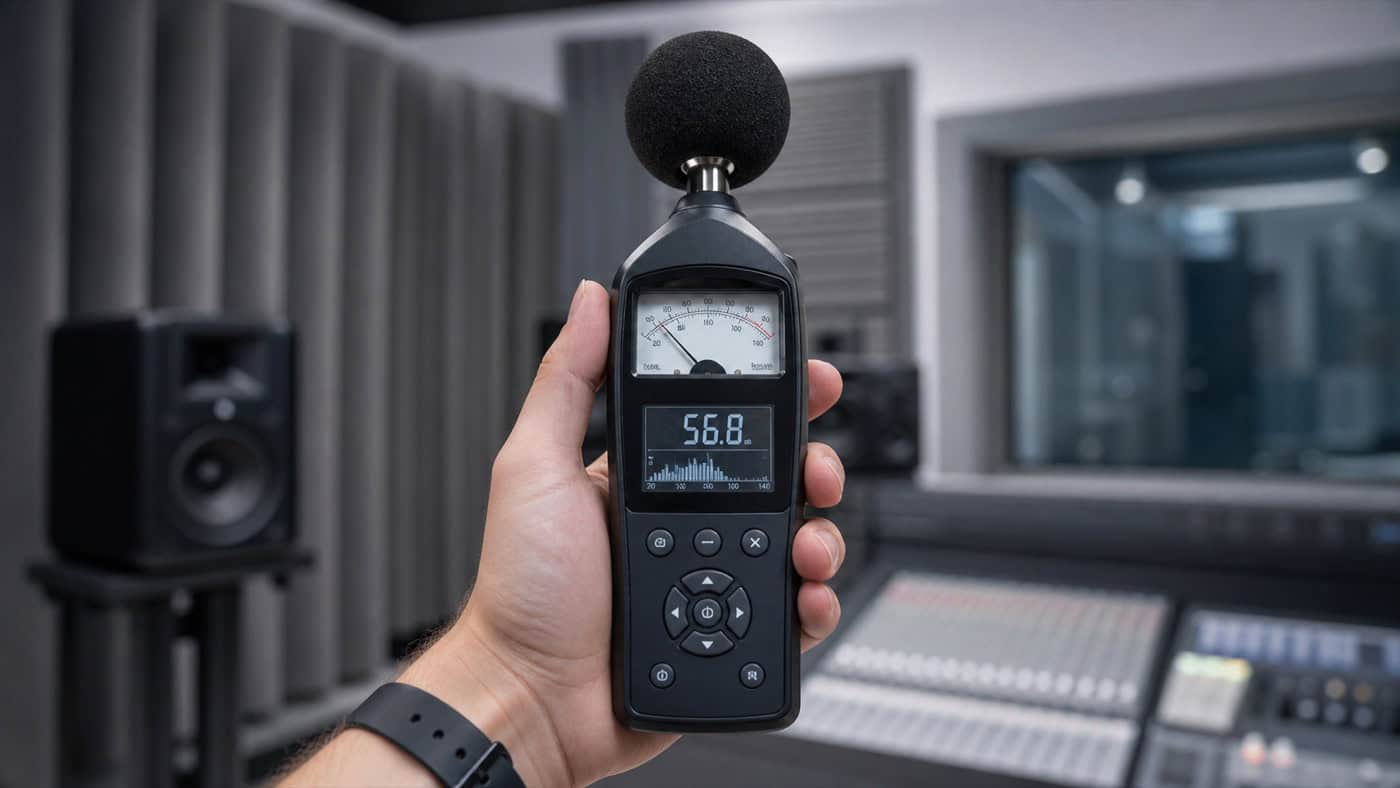
Sound pressure level is usually given in decibels (dB). The A-weighted scale (dBA) is the most common, mimicking human hearing. Sound level meters are used for measurement; these convert sound waves into electrical signals.
Methods and devices for measuring
Professional sound level meters are precise devices that can measure different frequencies and volumes. There are also smartphone apps for basic measurements, but they are less accurate.
Applications in digital audio
Quantization noise is relevant in many areas of digital audio:
- Music industry:Control the volume of concerts and recordings.
- Industry and construction:Compliance with noise protection regulations and protection of workers.
- Everyday:Assessment of noise pollution from traffic, household appliances and events.
Health Effects
High sound pressure levels can cause health damage. In the short term, stress and sleep disorders can occur, and in the long term, hearing damage such as tinnitus and hearing loss can occur.
Guidelines and limits
The World Health Organization (WHO) recommends limiting noise levels in residential areas to a maximum of 55 dB. In work environments, the limits are often between 85 and 90 dB for an eight-hour work shift.
Measures to reduce
The following measures can be taken to reduce the sound pressure level:
- Soundproofing materials:Soundproof windows and doors, special curtains.
- Technical solutions:Quieter devices and machines, noise protection hoods.
- Behavioral changes:Reduce the volume of music and television, use hearing protection.
What is a sound pressure level?
The sound pressure level (SPL) describes how much the sound pressure of a sound wave fluctuates – in other words, how "loud" a noise is physically. It is expressed logarithmically inDecibel(dB SPL), relative to the reference value of 20 µPa near the human hearing threshold (0 dB). Because the scale is logarithmic, even a few decibels more mean significantly greater sound energy.
How is the sound pressure level measured?
Sound pressure level is measured with a sound level meter, which detects the sound pressure via a microphone and displays it in decibels. For measurements that accurately reflect the ear's frequency sensitivity, A-weighting (dB(A)) is usually used. For reliable readings, the device should be calibrated – smartphone apps only provide rough estimates.
What are the health effects of high sound pressure levels?
Sustained exposure to high sound pressure levels can lead to stress, sleep disturbances, concentration problems, and, in the long term, permanent hearing damage. As a guideline, continuous exposure to approximately 85 dB(A) is considered hazardous to hearing; very loud peaks around 120 dB reach the pain threshold. Hearing protection and breaks are therefore particularly important when working in noisy environments.
How can you reduce the sound pressure level?
Sound pressure levels can be reduced by increasing the distance to the source, using quieter devices, and employing sound-insulating and sound-absorbing materials such as acoustic panels or curtains. Within a room, absorbers primarily reduce reflections and reverberation, rather than the direct sound at the source. In the workplace, personal hearing protection is also helpful if the source cannot be further attenuated.
What are the typical sound pressure levels in everyday life?
For reference: Whispering is around 30 dB, a normal conversation around 60 dB, heavy traffic around 80 dB, and a rock concert or jackhammer over 100 dB. Continuous exposure to around 85 dB becomes critical for hearing. These values are guidelines and depend heavily on the distance from the sound source.
Useful examples
Typical sound pressure levels in everyday life:
- To whisper:about 30 dB
- Normal conversation:about 60 dB
- Vacuum cleaner:about 70 dB
- road traffic:approx. 80-85 dB
- Concert:approx. 100-120 dB