
 Oversampling in music production
OversamplingThis refers to the internal processing of an audio signal at a sampling rate that is many times higher than the Nyquist rate—typically 2×, 4×, or 8×—before the plugin downsamples the result to the project rate. This shifts aliasing and imaging away from the audible range (below 20 kHz) into less critical frequency ranges, and significantly reduces nonlinear distortion.
What is oversampling?
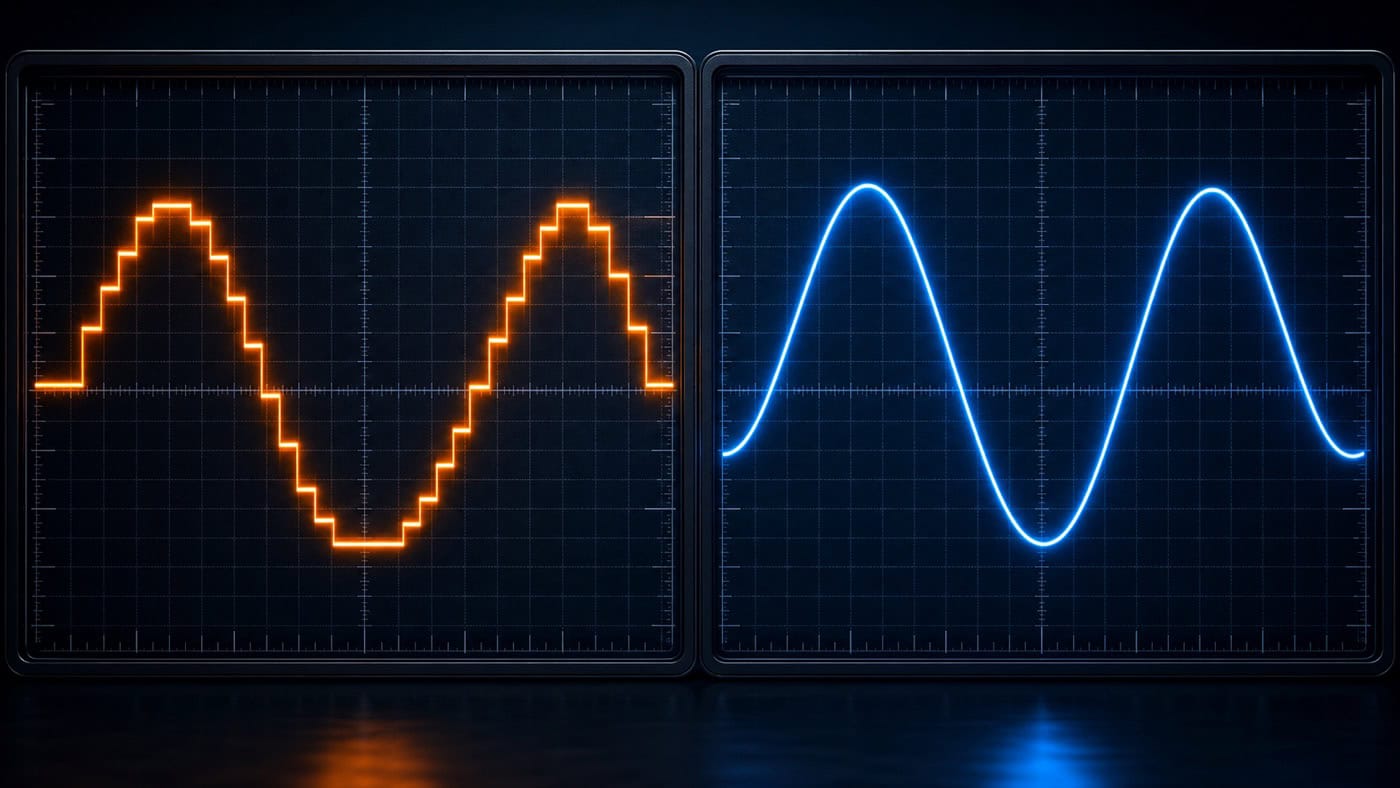
In music production, oversampling refers to a technique where a plugin internally processes the audio signal at a higher sample rate than required by the output format. A downsampling filter then reduces the signal back to the original project rate.
Oversampling is often used in digital audio processors such asequalizersOversampling is used in compressors, saturators, and other nonlinear effects. The higher internal sampling rate enables more precise calculations, reduces aliasing artifacts, and significantly degrades intermodulation behavior during nonlinear processes (clipping, saturation). Oversampling in mastering plugins—how to use it consciously—is shown in the...Mastering Guidein the context of the signal chain.
Overview of oversampling factors
| factor |
Internal rate at 44,1 kHz |
Internal rate at 48 kHz |
Typical benefits |
|---|---|---|---|
| 2 × |
88,2kHz |
96kHz |
Good entry point, low CPU overhead, less aliasing with EQ and compression |
| 4 × |
176,4kHz |
192kHz |
Recommended for saturators and waveshapers, significantly reduced intermodulation. |
| 8 × |
352,8kHz |
384kHz |
Highest quality in nonlinear processes (tape machine emulations, soft clipping); high CPU requirements |
What are the benefits of oversampling in mastering?
During mastering, oversampling in nonlinear plugins (limiters, saturators, exciters) reduces the generation of aliasing distortion and intermodulation artifacts. Brickwall limiters, in particular, benefit: with 4× or 8× oversampling, the algorithm operates internally at 176,4–384 kHz, so peaks are cleanly limited without generating audible aliasing harmonics.
2× or 4× oversampling — what is the difference?
2x oversampling (88,2/96 kHz internal) is sufficient for linear processes such as EQ or compression gain reduction in most cases. 4x (176,4/192 kHz) is recommended for saturators, distortion, and nonlinear effects: The distance between the desired signal and the aliasing zone is increased, making the anti-aliasing filter less aggressive and resulting in less phase distortion.
Does oversampling affect the final audio quality?
Yes — but indirectly. The output signal remains at the project rate (e.g., 44,1 kHz). Oversampling improves the internal processing quality: less aliasing, reduced intermodulation, and cleaner transients when limiting. Whether the difference is audible depends on the plugin type: barely noticeable with gentle compression; significant with hard clipping or saturation.