
 Q-factor (audio)
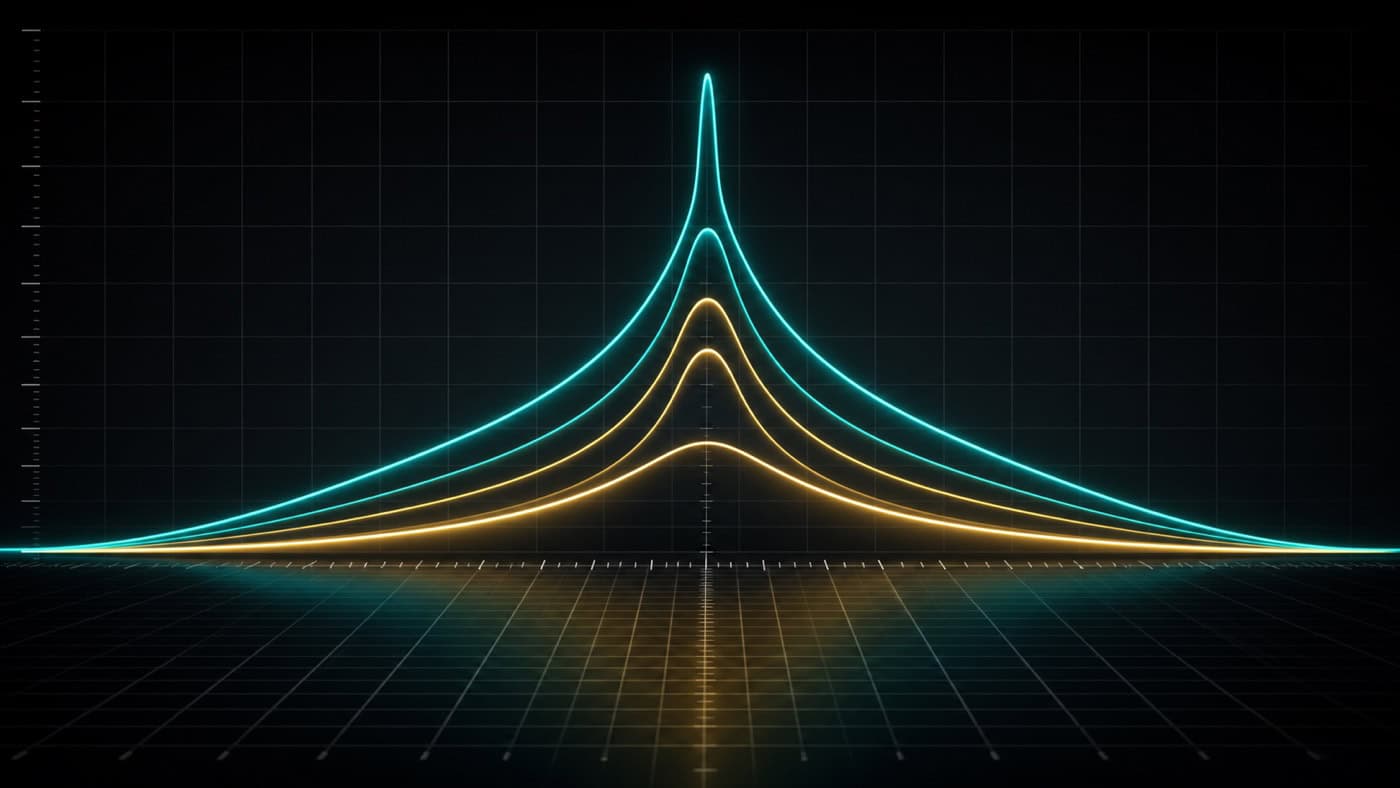
At the EqualizerThe Q factor determines how narrowly or broadly a filter cuts into the frequency spectrum: it is the ratio of center frequency to bandwidth. A high Q value produces a narrow, surgical cut – ideal for removing unwanted frequencies – while a low value gently shapes broad bands.
What is the Q factor?
TheQ Factor(Quality factor) is a key concept in audio production. It describes how narrowly or broadly a filter affects the frequency spectrum. Put simply, it controls the "sharpness" of the effect. Therefore, sound engineers use it to precisely adjust frequency ranges and thus improve sound quality.
Origin and development
Originally, it comes from electrical engineering, where it describes the resonance sharpness of resonant circuits. In audio production, it then describes how narrow or wide a frequency band processed by an equalizer is. Therefore, it still forms the basis for precise filtering.
Importance of the Q factor
It plays a crucial role in sound design. A high value produces a narrow bandwidth and is therefore suitable for precise adjustments. A low value, on the other hand, covers a wider range. Especially inmixingandmasteringThis choice determines how clean and balanced a track ultimately sounds.
Measuring and adjusting the Q factor
The Q factor is calculated as the quotient of center frequency and bandwidth. This definition originates from electrical engineering, where it is known as...Quality factorIt's well known. Modern DAWs and plugins like FabFilter Pro-Q, Waves Q10, or iZotope Ozone measure and adjust it precisely. This allows you to selectively define how wide or narrow a frequency band is processed.
Application in sound design
In sound design, you use it differently depending on the goal. The following examples illustrate this well:
- High value:selectively removes interfering individual frequencies.
- Low value:It gently shapes broad frequency ranges.
- bass:A medium value emphasizes the bass without overloading it.
- Vocals:A high value tames disruptive sibalances.
Sound design
Furthermore, it shapes the timbre and precision of a track. Those who adjust it consciously achieve natural sound quality while simultaneously dampening unwanted frequencies. This creates a sound image that is powerful yet clear.
Future prospects
Tools related to the Q factor are also evolving. Modern EQ plugins offer increasingly precise analyses and dynamic filters that automatically adjust the value to the material. Furthermore, increased computing power and AI-supported methods facilitate precise, real-time work. This will make targeted frequency processing even faster and more intuitive in the future.
What is the Q factor in audio production?
The Q factor describes the sharpness or bandwidth of a filter and is crucial for precise frequency adjustment in audio production.
How does the Q factor affect sound quality?
A high Q factor allows for precise adjustments, while a low Q factor affects wider frequency ranges. This improves sound quality.
Which tools help with setting the Q factor?
Modern DAWs and specialized plugins such as FabFilter Pro-Q, Waves Q10 Equalizer and iZotope Ozone provide tools for accurately measuring and adjusting the Q factor.
How do I optimize the Q factor for different music styles?
Adjust the Q factor depending on the style of music: High Q factor for precise adjustments, low Q factor for broad frequency adjustments. Experiment and use specialized plugins.