Avoid too much reverb – clear mixes with spatial depth
Table of Contents
What is reverb?
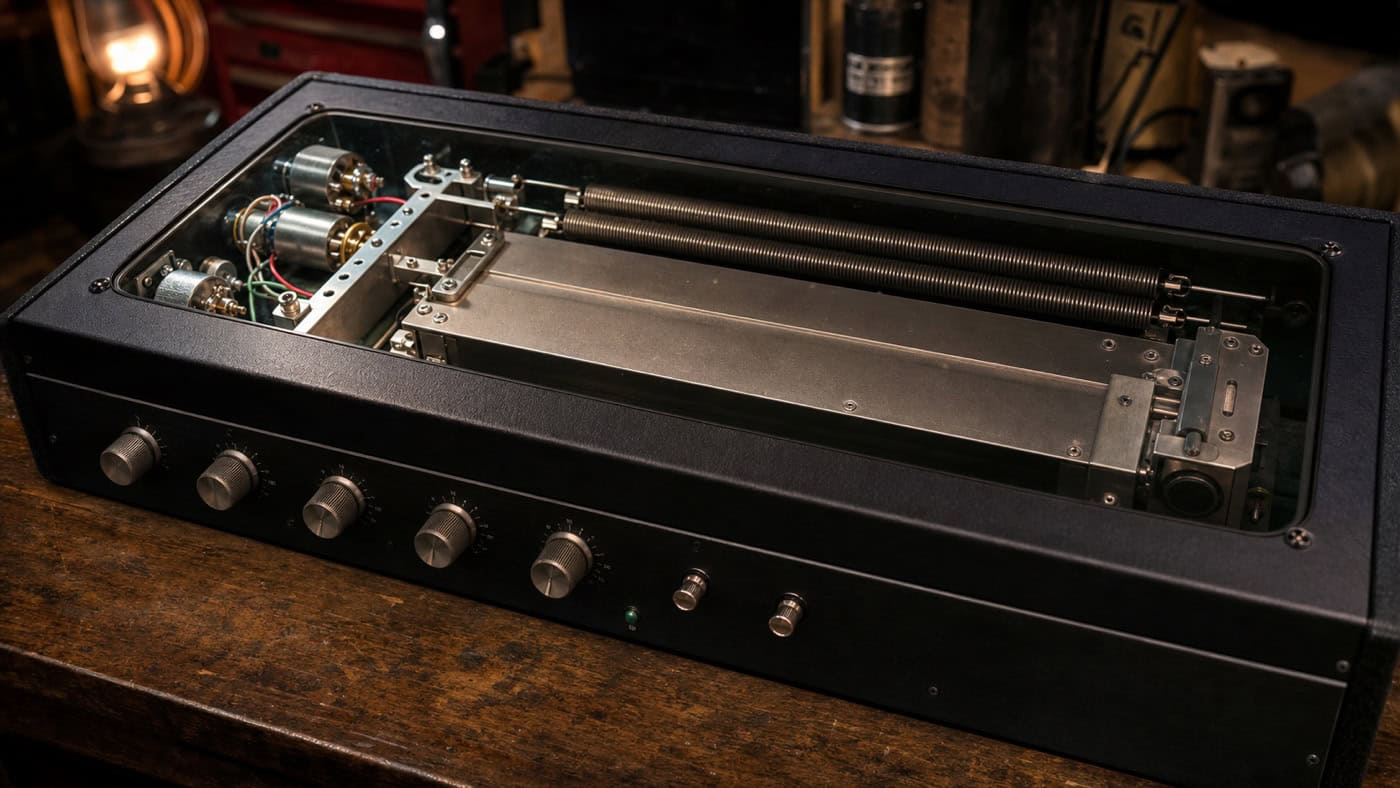
reverb Hall is the sum of all reflections that occur when a sound event resonates in a room. Unlike echo, where individual repetitions are heard, reverb creates a dense reverberation of countless reflections. Music Production Reverb is used to create depth and place instruments in an imaginary space. But reverb is an effect—not a "permanent" tool. Too much reverb can swallow details and blur the mix.
Why does too much reverb cause problems?
Too much reverb is considered one of the most common Mixing errorThe EngineEars blog warns that excessive reverb and delay wash out the mix and mask details (blog.engineears.com)The Audient guide points out that beginners often load a separate reverb on each channel, which leads to a “confused sense of space” and a confusing mix (audient.com).
In addition to the blurred sound, there are other disadvantages:
Masking details and timing
Phase problems
Unclear depth gradation
According to Google Trends (DE, last 12 months), searches for “Reverb” achieve a significantly higher value than other mixing errors such as “compression"Or"Gain Staging“ – Reverb is the most sought-after problem area in mixing.
Use spatial depth in a controlled manner: Our tutorial shows you how reverb, balance, and dynamics interact throughout the entire mixing process. Mixing Guide in a clearly structured process.
Basics: How does reverb and delay work?
| Concept | Description | Use in mixing |
|---|---|---|
| reverb | Simulates the reverberation of a real room. | Creates depth and atmosphere. Too much leads to a washed-out mix. |
| , delay | Delays the original signal. | Haas effect or rhythmic repetitions. |
| Pre-Delay | Distance between the original signal and the start of the reverb. | Allows direct signal to pass through better. |
| Dampening/EQ | Filters highs or lows in the reverb signal. | Avoid masking. |
| Aux bus | Shared reverb instance for multiple tracks. | Saves CPU and creates spatial consistency. |
Common reverb mistakes and how to avoid them
1. Too many different reverbs
→ Chaos in the spatial feeling. Better: use two or three aux buses.
2. Wrong algorithms
→ Not every song needs a cathedral hall. Choose the room size carefully!
3. No EQ in the reverb
→ Reverb signals mask bass or treble. High-pass filters below 200 Hz + EQ required.
4. No ducking
→ Reverb overlays vocals. Solution: Sidechain compression or automation.
5. Decay times are too long
→ Bathtub sound. Rule of thumb: Reverb ends before the next beat.
6. Poor room acoustics
→ You're not listening to your mix objectively. Treat your room before mixing.
Step-by-step guide to reverb control
Clean up traces
Ensure gain staging (−6 dBFS max.)
Setting up Aux Reverb (Room + Hall)
Configure sends (e.g. 10–15% wet content)
Reverb EQing
Ducking via sidechain or automation
Referencing on headphones, monitors, car
Take listening breaks
Use spatial depth in a structured way: Our tutorial will show you how reverb, balance, and depth of field interact throughout the entire mixing process. Mixing Guide in the complete process.
Reverb in different genres
| Genre | Reverb use |
|---|---|
| Pop / Hip-Hop | Short reverbs or slap delay for vocals |
| Rock / Metal | Moderate rooms for drums, guitars not overloaded |
| Electronic | Deep rooms with ducking to protect kick and bass |
| Orchestra | Long convolution reverbs with real-space impulse responses |
Room acoustics and monitoring
Good room acoustics determine the correct reverb mix. Untreated rooms distort the perception.
Acoustic tip:
Place speakers in an equilateral triangle
Use absorbers (rock wool) & bass traps
Diffusers for scattering
Foam is not an all-purpose solution!
Conclusion – Your path to clean mixes
Too much reverb is the most common mixing problem, according to trends. But with sends, EQ, ducking, and automation, you can maintain control. Without good room acoustics, however, even perfect reverb design is useless.
👉 If you are unsure: Peak-Studios helps you with professional Mixing, mastering & room acoustics consulting.
YOUR CONTACT TO KNOWLEDGE
Send us a message with your problem – we’ll help where we can!
- Personal point of contact
- Over 20 years of experience
- Highest quality standards
You can reach us by phone Monday to Friday from 9 a.m. to 8 p.m., or conveniently via WhatsApp.
FAQ – Frequently asked questions about reverb and mixing
How much reverb is suitable for vocals?
Depending on the genre: Pop = short, ballad = long, but controlled with EQ and ducking.
What is the difference between reverb and delay?
Reverb = reverberation; delay = targeted repetition. Often used in combination.
Why does my mix sound worse on other speakers?
Room acoustics. Reflections distort perception, and you're mixing the reverb incorrectly.
How do I recognize too much reverb?
Mute the reverb and compare. If details are missing or it sounds muddy, it's too much.
Which reverb plugins are good?
Valhalla Plate, FabFilter Pro‑R, LiquidSonics – depending on the music style and room size.
Book a service
Ready for your best mix?
Use the expertise of Peak-Studios:
✅ Reverb control from the pros
✅ Mixing & Mastering with spatial awareness
✅ Personal advice included
How much reverb is suitable for vocals?
It depends on the genre. Pop vocals benefit from short plate reverbs or slap delays, which add depth without reducing intelligibility. For ballads, the reverb can be longer, but should be controlled with EQ and ducking.
What is the difference between reverb and delay?
Delay creates crisp repetitions, while reverb produces a dense reverberation. Both effects combine to create depth and rhythm.
Why does my mix sound worse on other speakers?
Usually, it's due to poor room acoustics. Untreated rooms distort the perception of bass and reverb; your mix doesn't translate properly.
How can I quickly identify reverb problems?
Mute the reverb regularly and compare it to the dry track. Use reference tracks and various monitorings; muddy mids and a lack of detail indicate too much reverb.
Which reverb plugins are recommended?
Plate emulations like Valhalla Plate, algorithmic reverbs like FabFilter Pro-R, or convolution reverbs like LiquidSonics Seventh Heaven are good options. It's important to understand the plugin's character and adjust parameters specifically.