Resonance frequencies: secret of music production
The world of music production is full of fascinating concepts and techniques aimed at creating the perfect sound. One of these concepts is the resonant frequency. It plays a crucial role in improving sound quality and achieving creative effects. In this post, we will explain the basics of resonant frequencies, look at their application in music production, and provide practical tips on how to use them effectively.
The physical principles of resonance frequencies
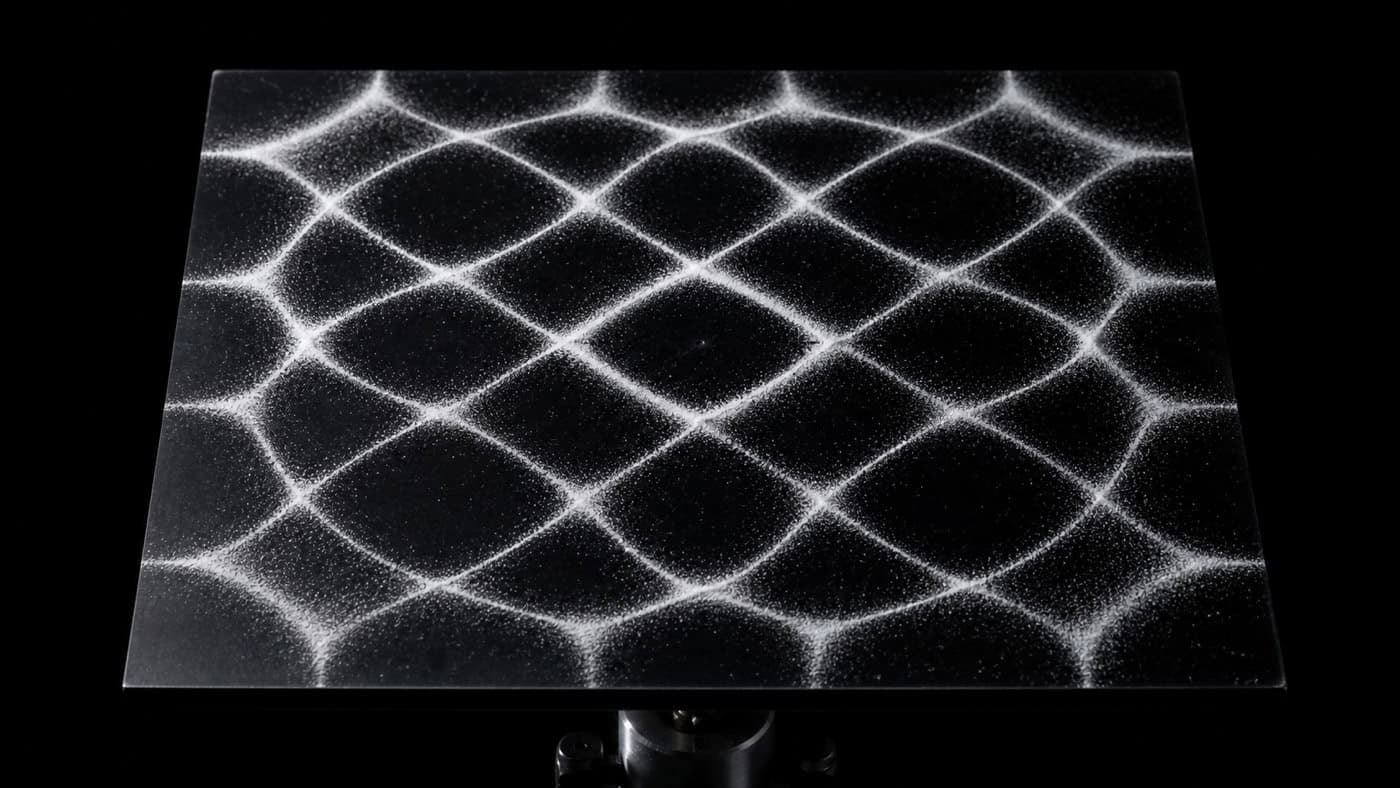
Resonance is a physical phenomenon in which a system that is excited at a certain frequency begins to oscillate. This frequency, at which the system oscillates the most, is called the resonance frequency. A well-known example from nature is the oscillation of a swing: if you push it at the right rhythm, the swing swings higher and higher.
In the Music Production we encounter resonant frequencies in various forms. Instruments have their own resonant frequencies that determine their unique sound character. Understanding these frequencies helps producers shape and optimize the sound.
Tips for identifying and using resonance frequencies
Identifying resonant frequencies is an essential step to using them effectively. Here are some practical tips:
- Use spectrum analyzers: Tools like spectrum analyzers help to visually identify frequencies and spot problem areas in the mix.
- EQ sweep technique: A common method is the EQ sweep. This involves pushing a narrow-band EQ boost through the frequency range to make resonances audible. Read more about this in our blog "EQ'ing – cleaning the frequency spectrum.
- Headphones and monitors: Use different listening environments to identify resonances that may have been missed in one environment.
Once the resonant frequencies are identified, they can be used to shape the sound. A targeted boost or cut at these frequencies can make the mix clearer and more balanced.
Control frequencies in the overall mix: Our tutorial will show you how to use resonance, EQ strategy, and tonal balance in a structured way throughout the entire mixing process. Mixing Guide in the complete process.
Successful application of resonance frequencies in well-known tracks
To put theory into practice, let's look at some case studies of well-known tracks where resonant frequencies played an important role:
- “Billie Jean” by Michael Jackson: The distinctive bass drum sound in this track was created by emphasizing resonant frequencies, giving it its distinctive power.
- “Bohemian Rhapsody” by Queen: The complex vocal harmonies were kept clear and present by carefully placing resonances in the frequency spectrum, despite the multi-layered production.
Tools and software for analyzing resonance frequencies
There are numerous tools and software that can help music producers analyze and use resonance frequencies:
- Spectrum analyzers: Tools such as iZotope Ozone or FabFilter Pro-Q provide detailed visual representations of the frequency spectra.
- EQ plugins: Frequencies can be edited precisely using high-quality EQ plugins. For example, the FabFilter Pro-Q or the Waves Q10.
Mistakes and challenges: What to avoid
When dealing with resonant frequencies, there are some mistakes that should be avoided:
- Excessive boost: Boosting a resonant frequency too much can make the mix seem unbalanced.
- Non-linear listening environments: Poor acoustics in the studio can lead to resonances being misjudged.
- Loss of naturalness: Excessive corrections can affect the natural sound of an instrument.
New developments in the field of resonance frequencies
Research in the field of resonance frequencies is constantly evolving. New technologies and algorithms make it possible to analyze and control resonances even more precisely. Pioneering developments such as artificial intelligence and machine learning could enable even more precise sound control in the future.
Conclusion
Resonant frequencies are a powerful tool in music production. They can be used to shape and enhance the sound, but can also cause undesirable effects if not properly controlled. By understanding the physics behind them and using modern tools, producers can unlock the full potential of resonant frequencies and take their tracks to the next level.
What is the difference between a resonance and a normal frequency in a mix?
Each frequency is a tone at a specific position in the spectrum. A resonance, on the other hand, is a frequency that stands out disproportionately because an instrument, a room, or a component resonates particularly easily at precisely that frequency. It often sounds harsh, booming, or ringing and stands out clearly from the balanced soundscape.
What Q-factor should I use to filter out a disturbing resonance?
Annoying resonances are usually very narrowband, so when cutting, you use a high Q factor, i.e., a narrow filter, so that only the problematic frequency is attenuated and the surrounding sound is preserved. Cut as little as necessary; often just a few decibels are enough. Wide cuts with a low Q, on the other hand, change the entire sound character and should be avoided when dealing with resonances.
Why does a room sound louder at certain frequencies than at others?
Standing waves, known as room modes, form in every room. They arise when the distance between parallel walls is a multiple of half the wavelength, causing sound to be amplified in some places and canceled out in others. This leads to audible peaks and dips, especially in the bass range. Therefore, you should never judge resonances blindly by ear in an untreated room.
Can I use resonances selectively instead of always removing them?
Yes, resonances aren't inherently a bad thing. A deliberately applied, subtle boost can give a snare more punch, a guitar more bite, or a synth more character. Resonance filters and formant effects creatively utilize this principle. The crucial factor is whether the emphasized frequency enhances the sound within the context of the overall mix or makes it sound unbalanced.
How do I distinguish between a true resonance problem and a pure volume problem?
A resonance remains at the same frequency and reappears regardless of pitch, for example as a constant drone or ringing. A volume problem, on the other hand, affects entire frequency ranges or individual tracks in relation to each other. With an EQ sweep, you can find resonances that stand out in isolation, while a level problem can be solved by balancing the tracks rather than by making tight cuts.