Mixing with analog hardware vs. plugins

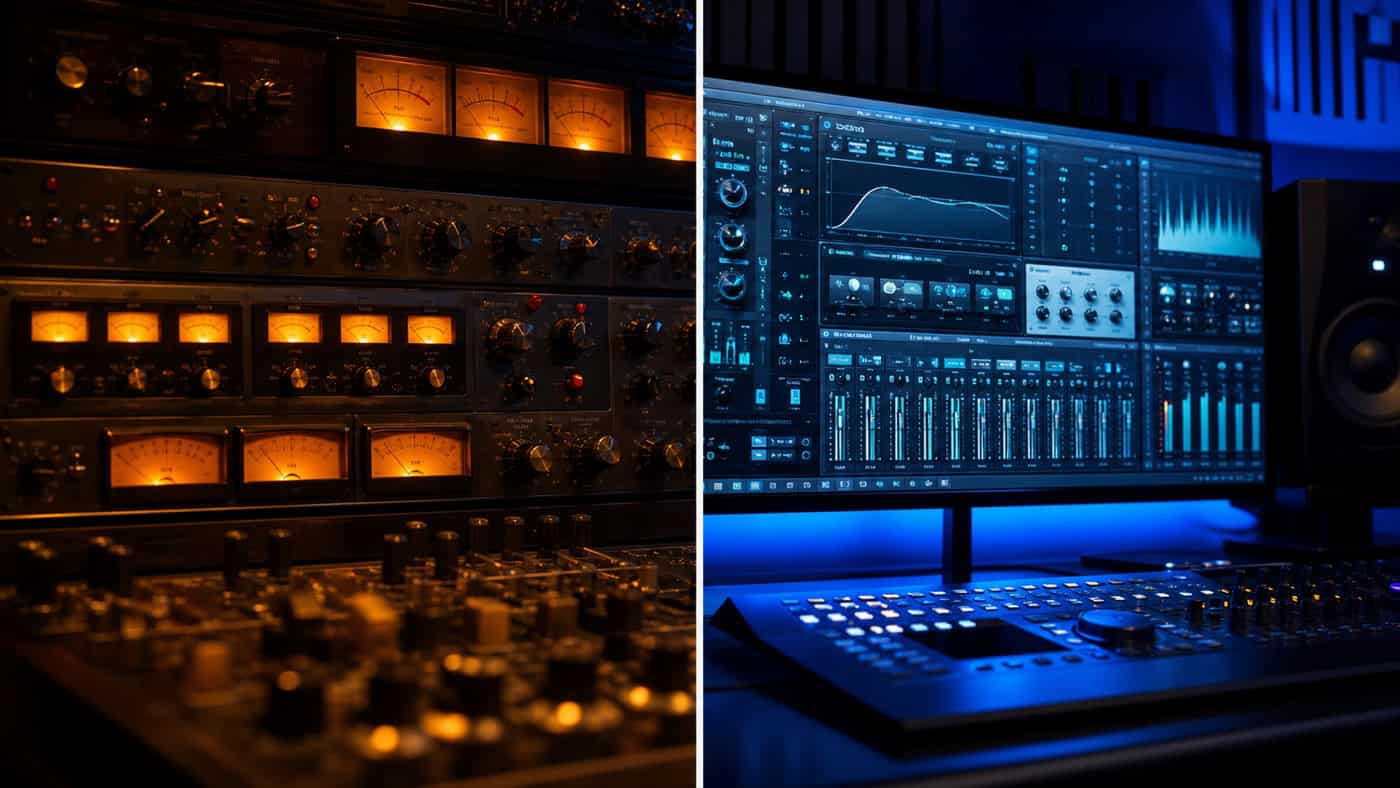
Mixing is an art form that has been transformed by technological advances over the decades. While in the early days of the studio everything was analog, digital plugins have now revolutionized many workflows. Yet many swear by Sound engineers and producers still rely on the mixing with analog hardware. In this article we will discuss the advantages and disadvantages of analog mixing compared to mixing with plugins and show different applications. We will also explain why mixing with analog devices often takes longer than mixing with plugins.

Advantages of analog mixing

1. Sound quality and warmth

A major argument for mixing with analogue hardware is the unparalleled sound quality. Analogue devices give the sound a warmth and depth that many people find more “musical”. Tube amplifiers, analogue Equalizer and Compressors can produce a rich, full sound that is often described as more pleasant and natural.

2. Haptic experience

The physical experience of operating knobs, faders and dials cannot be replaced by clicking a mouse. Many sound engineers appreciate the direct control and haptic feedback that analog hardware provides. This physical interaction can enhance the creative process and lead to more intuitive decisions.

3. Unique sound

Every analog device has its own sonic characteristics and idiosyncrasies that make it unique. This “character” can help add a special touch to a mix that is often difficult to reproduce with digital plugins.

Do you want the best possible sound for your song on all streaming portals?

Disadvantages of analog mixing

1. Costs and maintenance

Analog hardware is expensive. The initial cost of high-quality analog equipment can be significant, not to mention the ongoing maintenance costs. Tubes and other components need to be checked regularly and sometimes replaced, which means additional costs and downtime.


2. Space requirements

Another problem is space requirements. Analog devices are physically large and require a dedicated room with appropriate cabling and power supply. This can lead to space problems, especially in smaller studios.


3. Lack of flexibility

Analog mixing offers less flexibility when it comes to editing and saving settings. While digital plugins can easily be loaded into a DAW (digital audio workstation) and their settings saved, analog hardware often requires manual re-adjustment and documentation of settings for future reference.

Are you still finding mixing difficult and don't know which decisions are the right ones?

Applications of analog mixing

1. Mastering

At the Mastering Analog hardware is often used to refine the final mix. Analog equalizers and compressors can provide subtle but crucial sonic improvements that add the finishing touches to a track.


2. Recording and signal processing

Many sound engineers use analog hardware during recording to shape the sound of instruments and vocals. Preamps, mic preamps and analog effects can give the raw material a distinctive sound quality that has a positive effect on the final mix.

3. Hybrid setups

A hybrid approach combines the best of both worlds – digital and analog technologies. Many modern studios use analog hardware in conjunction with digital plugins to maximize flexibility and sound quality.

Your mix is ​​finished and you are still unsure whether you did everything right?

Why mixing with analog devices takes longer

1. Manual settings

A major reason why mixing with analogue equipment takes longer is the need to make all settings manually. Every knob and fader must be adjusted by hand, which can be time-consuming. In contrast, digital plugins allow for quick adjustments and saving of presets.

2. Repeatability

Repeatability of mixes is harder to ensure with analogue equipment. Settings must be carefully documented to be able to be restored later. This can lead to longer preparation times, especially if changes or regressions are required.

3. Troubleshooting and maintenance

Analogue equipment can be more prone to technical problems, requiring additional time for troubleshooting and repairs. A broken cable or failed tube can significantly delay the mixing process.

4. Setup and cabling

Physically setting up and wiring analog equipment also takes time. Each step in the signal path must be carefully planned and implemented to ensure the sound is not compromised.

Conclusion

Mixing with analog hardware offers a number of advantages, including outstanding sound quality, a tactile experience and unique sonic characteristics. However, it also comes with disadvantages such as high costs, space requirements and lack of flexibility. The decision whether to mix analog or digitally depends on individual preferences and project requirements. A hybrid approach can often be the best solution to take advantage of the benefits of both worlds. Despite the longer time and additional challenges of analog mixing, it remains an indispensable part of the creative process for many engineers and producers.

Image by Chris Jones

Chris Jones

CEO – Mixing and Mastering Engineer. Founder of Peak-Studios (2006) and one of the first online service providers for professional audio mixing and mastering in Germany.