Mid-Side and the editing options
Processing mid and side signals can add significant value to the entire production. In this article we would like to explain the different editing methods.
How does mid-side processing work?
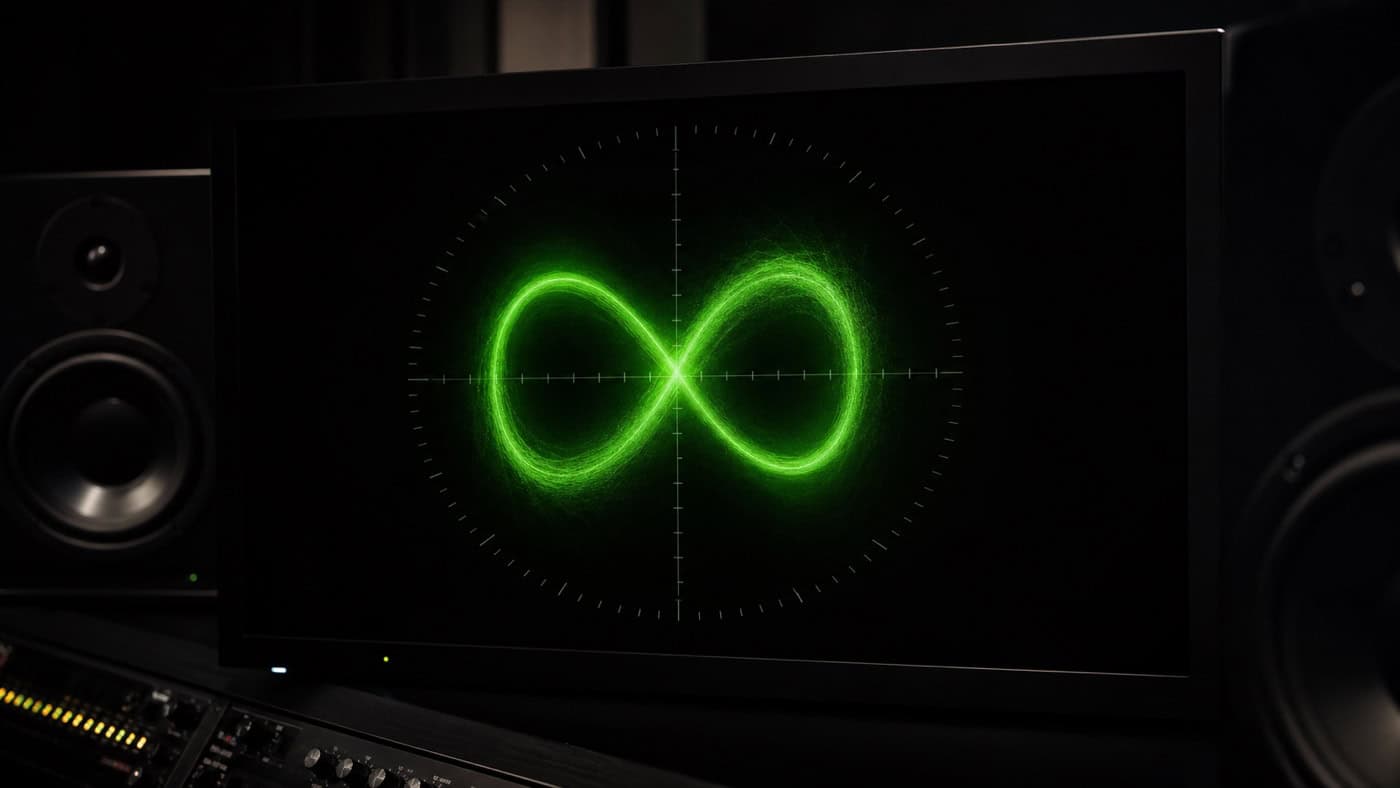
Mid-Side Processing is an audio technique based on the separation of mono (middle) and stereo (side). The middle represents the sound content that is identical in both channels, while the sides correspond to the differences between the channels.
Mid signal (mono): Here the signals from both channels are added and divided by 2 to get the common sound in the middle.
Side signal (stereo): Here the signals of the left and right channels are subtracted from each other in order to obtain the differences, i.e. the stereophonic content.
These separate signals can then be processed independently before being combined back into a stereo signal. Mid-side processing is often used for Stereo width control, spatial effects and Mastering .
How is mid-side calculated?
Mid-Side Processing is calculated using simple mathematical operations. Assuming you have a stereo signal with channels L (left) and R (right):
Center signal (M): M=L+R2M=2L+R
Here the left and right channel signals are added and divided by 2 to get the common tone in the middle.
Side signal (S): S=L-R2S=2L-R
Here the signals of the left and right channels are subtracted from each other and divided by 2 to obtain the differences, i.e. the stereophonic content.
To return to the original stereo signal, you can combine the two signals M and S as follows:
L=M+SL=M+S
R=M-SR=MS
These formulas allow the separation and subsequent reunification of mid and side signals in a stereo signal.
Analog sound for your tracks too?
Processing mid and side signals in the mix
The separate processing of mid and side signals mixing can be on individual instrument tracks or on Group lanes take place. The processing options are very diverse.
By simply lifting it with the Equalizer of the middle or side signals, individual frequency ranges can be amplified and thus the perception in the stereo image can be changed. More creative effects such as adding saturation or delay can also be applied to individual or groups of tracks give a new sound character.
By specifically filtering out resonances and Interfering frequencies in the side signal can produce a sound image that sounds very powerful and tight in the middle signal and very wide and airy in the side signal. If you combine these options with the separate one compression Surprisingly good, transparent and powerful results can be achieved using the mid and side signals.
Example 1 – Drums
If you use mid and side processing, for example with overhead microphones, you can do this in a targeted manner strengthen the location of the drums from the center or make the entire room appear largerthan he actually is. You could make the entire drum kit sound more open with a treble component in the side signal.
Example 2 – Guitars
By a Targeted increase in the lower mids In the side signal on the guitar bus, you can easily simulate a thick guitar wall.
Mid and side signals in mastering
A common problem when mastering is side signals too loud and the associated one Pressure loss of the entire song. By processing the mid and side signals separately, you can readjust the level ratios and help the song, which seemed spacious, become a powerful song again. A song whose speech intelligibility suffers because instruments such as guitars or a snare drum in the side signal mask the frequency range of speech intelligibility in the middle signal due to their high level can become one by using dynamic equalizers or multiband compressors significantly improved speech intelligibility contribute in the upper midrange.
This approach naturally applies to all frequency ranges. For example, an electric guitar that is too pronounced in the side signal can mask the bass line in the middle signal. Through Reduction of the affected frequency range In the side signal, the bass in the middle signal can be heard better again.
Also too strong phase shifts in the bass range phase problems can result can be significantly improved or even eliminated by using a high-pass filter.
Tip:
To avoid changes in panorama or phase behavior, always use a. when processing mid and side signals linear phase equalizer be used. Also the use of oversampling with certain processors can significantly influence and improve the quality of center and side processing.