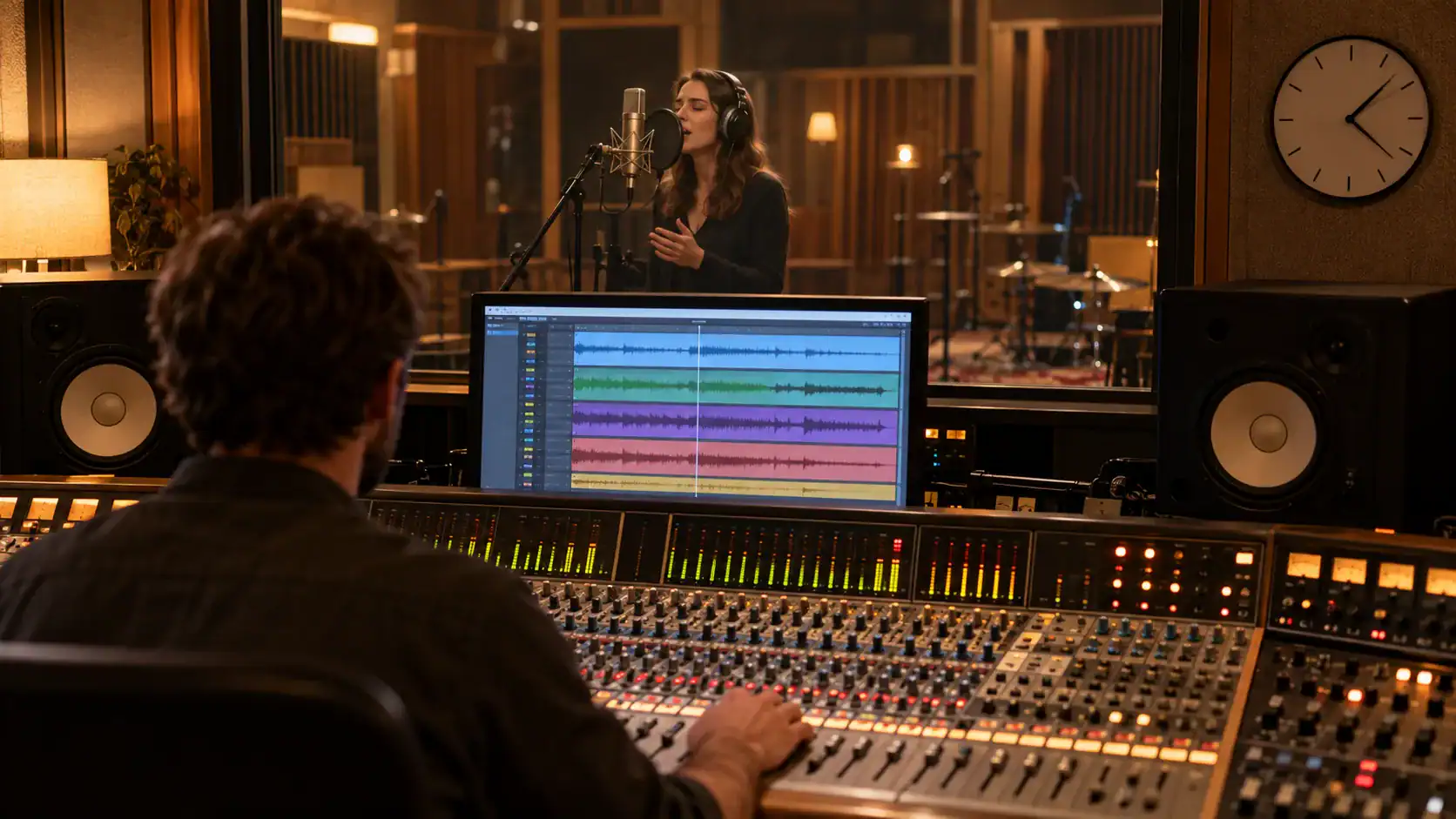
Is the volume set correctly?
Is the monitoring volume set correctly? That's how it's done!
What is volume?
Loudness is a measure of how loud a person perceives an auditory event to be. It is a psychoacoustic quantity, which is determined by Sound Pressure Level, frequency spectrum and the time behavior of the sound.
Addendum: A distinction is made between loudness and loudness. Volume happens on the volume control on the system. Loudness is the actually perceived and perceived threshold limit of an acoustic signal. I speak of volume because this is more common in the vernacular and this article should be understandable for everyone. 🙂
How do I adjust the listening volume?
Even among experts, this question is frequently discussed and highly controversial. Although a sound pressure level of 85 dB is often recommended, we see things a little differently. For our Mixing and / or mastering we set our levels using 3 measuring methods.
Eavesdropping in the overall workflow: How monitoring volume, dynamics, and headroom interact in the entire mixing process is explained in the Mixing Guide with a clear step-by-step structure.
As follows:
We calibrate to a level of 83 dB using a sound pressure level meter (available for around €100) and white noise (free to download online). If your monitor controller doesn't have a "DIM switch," perform a second measurement at 77 dB. Then, take measurements at 85 dB, 70 dB, and 60 dB. Set markers on the gain control and in your digital sources, such as your audio interface (if possible). Now you have different levels of your monitoring volume, with the 83 dB mark being the level at which the ear can most linearly perceive musical signals.
The correct monitoring volume determines every mastering decision — the overall context of the volume issues is gathered by the Mastering Guide.
Personally, I often switch between different loudness levels to keep challenging my ears. But please do yourself a favor and take a 5-10 minute break of absolute silence after every hour of “listening.” Your ears will thank you!
An old studio wisdom:
Sounds like one Music mix good on a monitor with low to medium listening power, it is also a feast for the ears on any disco system!
The loudness war:
Since the mid-90s, tracks in pop, rock, and techno music have been mastered at increasingly higher volumes – the full history of this arms race is explained in our glossary entry on [topic missing]. loudness warIn this process, the dynamic range is compressed to just a few dB to achieve a maximum loudness level. RMS levels of -5 dB are no longer uncommon. This trend leads to a loss of quality and is completely unnecessary, since you can simply turn up the volume on a CD using an amplifier.
The reason for this development is the artists' fear of sounding too quiet compared to other tracks and thus not being able to compete. This fear is absolutely unfounded. B. all radio stations use a processor through which all tracks played, regardless of their actual level, are played at the same volume. In the end, booming and too loud music leads to hearing damage and nobody wants that!
Fortunately, this trend is slowly waning and it is getting quieter and again mastered more dynamically. It will certainly take a while before everyone rethinks.