AI Music News 10/2025 – AI tools, mixing updates
What has happened in the last 30 days?
From AI guitar design to automated voice modeling to legal guidelines: The AI music scene is becoming more professional – and at the same time more human. New tools emphasize fairness, ethics, and creativity, rather than just automation.
Suno v4.5+ brings stems & vocals
The update allows users to directly upload their own vocals and instruments for the first time. Also, the Stems-Separation has been improved.
Takeaway: More control for producers who want to combine AI outputs with real recordings.
Positive Grid – Project BIAS X: AI guitar design
The new Project BIAS X from Positive Grid uses agentic AIto generate guitar sounds with text prompts – e.g., “warm vintage clean tone with shimmer”
Takeaway: Musicians create their sound using prompts instead of presets – ideal for songwriters who want to speed up their mix flow.
IK Multimedia ReSing – Ethical Voice Modeling
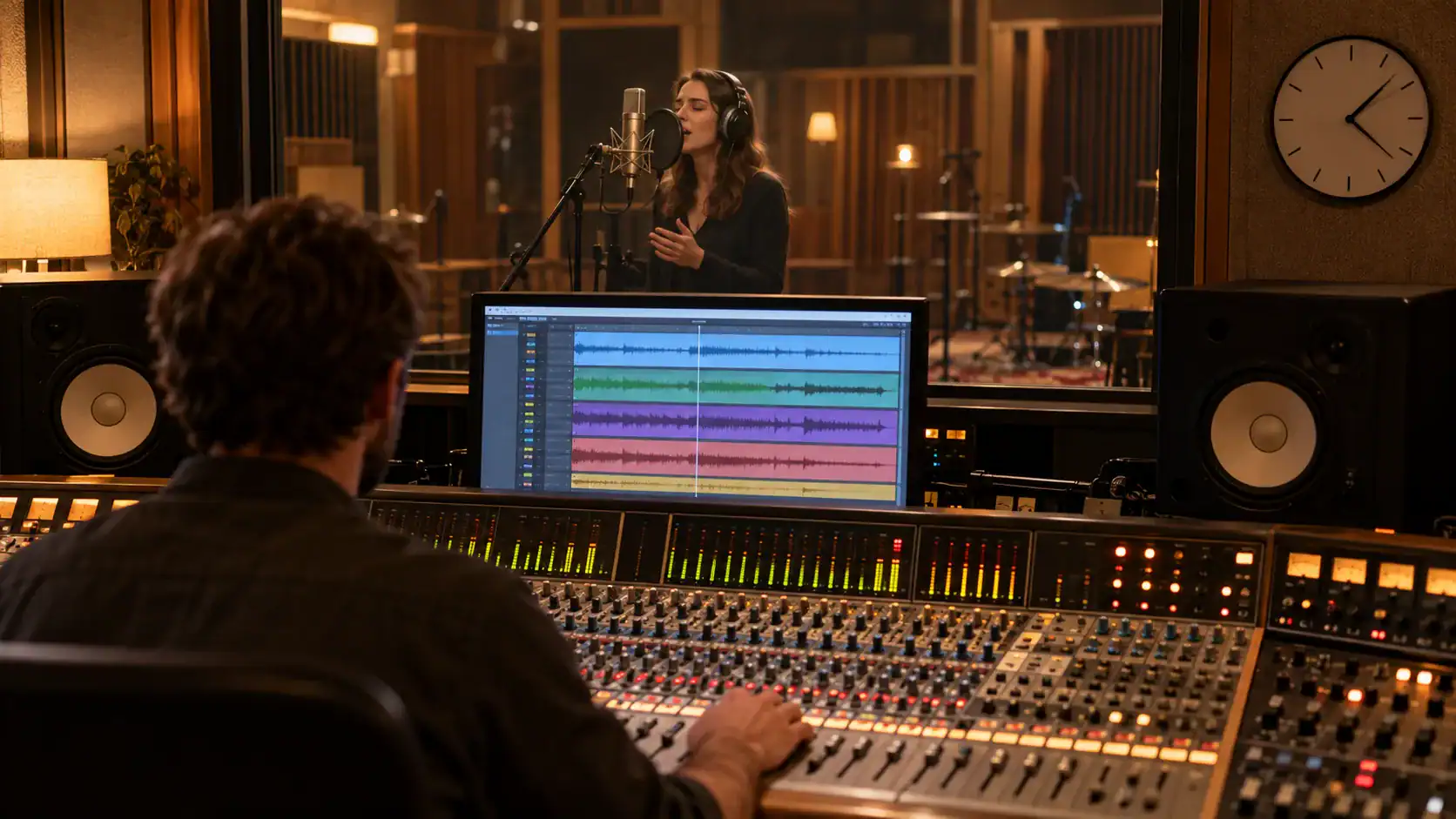
ReSing is a new vocal plugin that delivers “ultra-natural” vocal performances – without any legal gray areas.
It operates entirely offline and uses licensed datasets for voice synthesis. Instead of AI-based cover art, IK relies on ethical training.
Takeaway: Realistic vocal takes for demo productions, without legal risks or cloud dependency.
WAVS AI Sample Finder
The startup WAVS introduces the first AI-powered search plugin for samples. It analyzes sound character, rhythm, and genre to automatically find similar sounds in a sample pack – based on machine learning embeddings.
Takeaway: Save time in sound design – no more endless sample browsing sessions.
Epidemic Sound – Adapt AI and Fair Pay
Epidemic sound introduces “Adapt” – an AI tool that automatically adapts licensed music for videos (tempo, instruments, mood).
Accompanying this, a new royalty model for composers was published (+43% increase in share until 2026).
Takeaway: AI music without exploitation – fairly paid and cleanly licensed.
Not sure if your mix works?
👉 Get professional mix feedback now! – Get your mix analysis including professional feedback and concrete improvements to take your song to the next level.
Suno Studio – Generative DAW goes live
Suno launched its version 5 and the new “Suno Studio” in September – a browser-based DAW for generative music with multi-track AI instruments and prompt editing.
The platform combines audio separation, style transfer and text-to-music.
Takeaway: The transition from AI generator to full-fledged production environment has begun.
Spotify & GEMA debate – fairness vs. deepfakes
Spotify introduces new AI labeling requirements: Labels must disclose if AI has been used in songs.
At the same time, the debate about GEMA-compliant payment for AI-based works is growing.
Takeaway: Legal frameworks are finally evolving – but AI musicians should keep their metadata transparent.
Practical check – 5 immediately applicable tips
Test Project BIAS X with your own text prompts – e.g. “spatial chorus lead”.
combine ReSing with de-esser and reverb for real session vocals.
Use that WAVS Sample Finderto balance the sound of kick and bass.
use Suno Studio for AI stems and idea sketches.
Check before uploading: Note the AI content in the metadata (Spotify / GEMA).
FAQ – Frequently Asked Questions about AI Music October 2025
Are AI vocals legally permissible in Germany?
Yes, as long as the original voice is not recognizable and the training is based on licensed data (ReSing, Epidemic Adapt).
How can I use AI instruments in DAWs with proper documentation?
Through project documentation of the tools used and clear labeling in the credit sheet.
Do I have to report AI shares to Spotify or GEMA?
Yes – Spotify has required AI disclosure in the upload process since fall 2025. AI co-writers should also be listed as "other contributors" with GEMA.
What distinguishes ethical from non-ethical AI music production?
Ethical models such as ReSing or Suno Studio use licensed training data and offer transparency and compensation to artists – in contrast to systems that use third-party material without consent.
Can AI completely take over mixing or mastering?
Partly – tools like Ozone 12 or RoEx deliver good initial results, but subtleties like emotion, punch or spatial effect still require human sensitivity.
How do I protect myself from AI deepfakes of my music or voice?
Through audio fingerprinting services (e.g., Audioshield, SongSecure) and clear copyright metadata. Spotify and YouTube are currently working on automated detection systems for deepfake vocals.
Sources
MusicRadar – “Positive Grid Project BIAS X”musicradar.com
MusicRadar – “IK Multimedia ReSing Software”musicradar.com
MusicRadar – “WAVS AI Sample Finder”
Epidemic Sound – Press Release “Adapt”corporate.epidemicsound.com
Mixmag Asia – “Suno Studio Launch”mixmag.asia
Spotify Newsroom – “AI Protections”newsroom.spotify.com