In-ear Bluetooth headphones test 2025
The best in-ear headphones of 2025
In-ear headphones tested in 2025
For this test, four current premium in-ear headphones were used in everyday life for several weeks: Sennheiser Momentum True Wireless 4, Technics EAH-AZ1000, Sony WF-1000XM5, and second-generation Bose QuietComfort Ultra. Sound quality, ANC, wearing comfort, call quality, and app control were evaluated—the Bose came out on top.
The market for True wireless headphones has been booming for years. Hardly a month goes by without a manufacturer releasing a new model with even better sound, even stronger Noise canceling or even longer battery life. I reached the point where my simple, basic headset was slowly giving up the ghost. So I wanted to take the step and get my own In-ear Bluetooth earbuds I'm moving away from simple headsets and toward more modern solutions. As part of this, I ordered several models to find out which one works best for my everyday life, as well as for my work in the studio. As an audio engineer with over 20 years of experience, it's particularly exciting to see how closely these small in-ears are now approaching the standards of professional studio headphones. That's precisely why I initiated this review.
For this detailed True Wireless Headphones Test I ordered four current premium models and tested them intensively in everyday life and in the studio:
- Sennheiser Momentum TrueWireless 4
- Sony WF-1000XM5
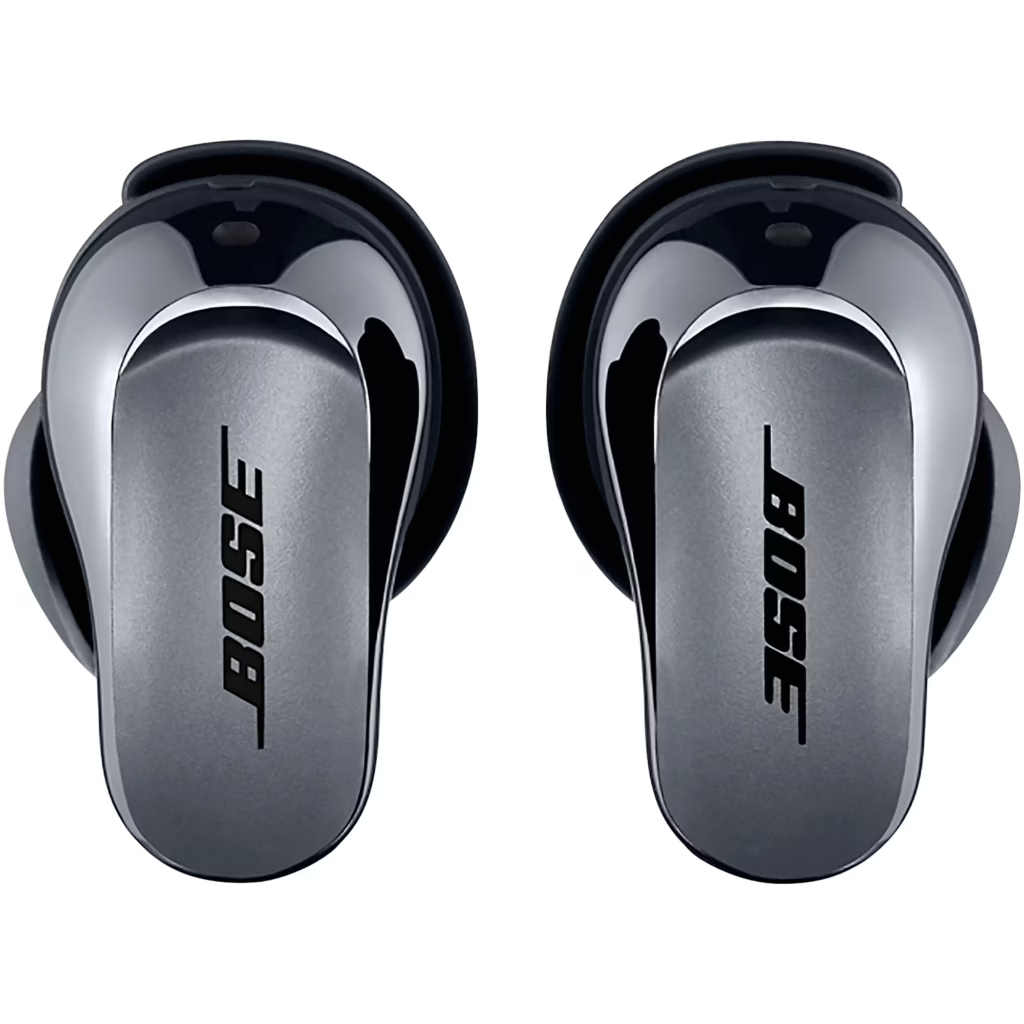
- Bose QuietComfort Ultra Earbuds (2nd Gen)
- Technics EAH-AZ1000
Why these four in particular? Quite simply: They are considered benchmarks in their respective segments. Sony and Bose have been vying for the ANC crown for years, Sennheiser is the top dog in hi-fi sound, and Technics wants to prove with its new generation that it also has premium ambitions in this area.
Why this is crucial for your mix:
If your song sounds too harsh, muffled, or bass-heavy on in-ear headphones, it's usually not the headphones' fault – but the mix.
A professional mix analysis We'll investigate why your track sounds different on different systems.
Alternatively, we can take care of your entire Online mixing services or cause in mastering for maximum translation reliability.
Test methodology
So that In-ear headphones comparison To remain practical and realistic, I tested all four models in the same scenarios:
- Everyday: Phone calls, walks in the city, shopping
- Studio use: Mix references, Fine listening to vocals, assessment of the stereo width
- Commute: Trams, train journeys, waiting times
- Sports: Gym, jogging, stretching
- Telephony: Voice notes, calls in quiet and noisy environments
- Battery test: Complete emptying with ANC activated, charging speed in the case
In addition to my personal listening experience, I also took technical aspects such as codecs, app functions and processing into account.
The following demonstrates why our perception of sound depends heavily on volume and frequency distribution. Fletcher-Munson Curves.
Especially in the streaming age, LUFS values and True Peak a crucial role for clean playback on in-ear headphones.
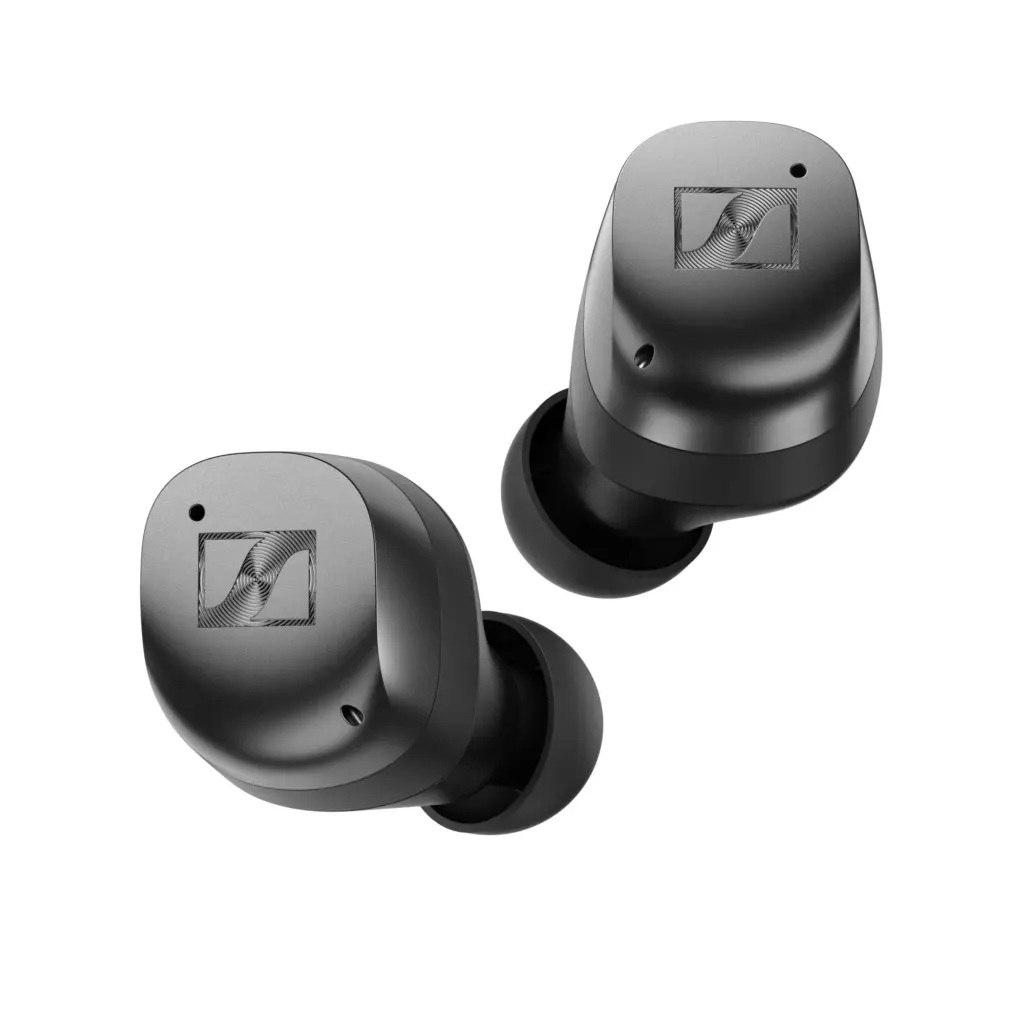
Sennheiser Momentum True Wireless 4 review
Design & processing
The Sennheiser Momentum TrueWireless 4 They look classy and robust. The case is covered in fabric and feels high-quality, but also a bit bulky compared to the competition.
comfort
For me, with rather small ear canals, they fit surprisingly comfortably. The silicone rings provide additional support. After extended studio sessions, there's no feeling of pressure—Sennheiser is ahead in this regard.
sound quality
This is where Sennheiser's hi-fi DNA shines. A very balanced sound:
- Basses: controlled, not exaggerated
- Middle: natural, voices excellent
- Heights: clear, without sharpness
- Stage: wide and stable stereo image
With the 5-band-EQ The app allows for very fine-tuning of the sound. A real highlight for audiophiles, especially since aptX Adaptive and aptX Lossless are supported.
Noise canceling
The ANC is strong, but not quite as good as Bose. Especially with the Anti-wind mode Very good performance. Transparency mode adjustable in several levels – although there's a bit more inherent noise than with Bose.
Battery life & charging case
7,5 hours with ANC, a total of 30 hours with the case. Fast charging works reliably. The case is a bit large, though.
Operation & App
The app is clear, offers numerous configuration options, firmware updates, and flexible gesture control. Multipoint works seamlessly.
Price-performance
Around €189 – a fair offer considering the sound quality and app features.
Pro: Balanced sound, Hi-Res streaming, best app in the test.
cons: largest case, telephony with audible ambient noise.
Personal conclusion
In everyday use and during my tests, the Sennheiser headphones certainly demonstrated their strengths, but ultimately, their weaknesses outweighed them in crucial situations. I was particularly disappointed with phone calls: my voice sounded tinny and unnatural, and as soon as there was significant background noise, my conversation partner had great difficulty understanding me. I also felt that the ANC (Active Noise Cancellation) caused more problems than it solved in such situations. Instead of clear speech transmission, a muffled, distorted sound remained – a decisive failing grade in my practical test.
During sports use, the ANC was generally fine, but the attenuation was less than I would have liked. While jogging or working out in the studio, I was still clearly aware of ambient noise even without music. I would have hoped for stronger attenuation in such scenarios – but Sennheiser fell short of my expectations here.
I would still like to highlight the app as a positive: It's very intuitive and allows you to create your own presets for every situation. I found it particularly useful that I could program the touch controls individually for the left and right earbuds. I really liked this flexibility in everyday life and it makes using the headphones much more convenient.
If the soundstage seems too narrow or too wide when using in-ear headphones, this is often due to the stereo distribution in the mix.
How you can do that with a Goniometer correctly analyze and sufficiently headroom We explain in detail here what you plan to do.
For a balanced sound on all systems, clean mixing crucial.
Technics EAH-AZ1000 sound quality review
Design & processing
Very high-quality workmanship, the case appears sturdy and is the most compact in the test. Clean lines, unobtrusive design.
comfort
They sit securely, but not as comfortably as Bose or Sennheiser. They're a bit less comfortable for longer sessions.
sound quality
The sound is warmly tuned:
Basses: powerful, but tend to cover the lower mids
Middle: solid, but less differentiated
Heights: partly slightly pointed
Stage: decent, but not outstanding
OK for pop and EDM, but not differentiated enough for critical listening in the studio.
Noise canceling
Continuously adjustable, flexibly customizable. However, overall weaker than Sony, Sennheiser, and Bose.
Battery life & charging case
Up to 12 hours without ANC, 36 hours with the case – top results. The case is very sturdy.
Operation & App
The app is feature-rich, but confusing. The advantage is that the buttons are freely assignable. The disadvantage is that there is no German voice guidance.
Price-performance
Approximately €280. For those who value a robust case and flexible ANC. However, the sound quality is inferior to other models.
Pro: compact case, continuous ANC, multipoint for three devices.
cons: Nasal-sounding voice quality, app confusing.
Personal conclusion
In my test, the Technics EAH-AZ1000 headphones gave me very mixed feelings. On the one hand, I was impressed by the design and, above all, the compact, sturdy case – it feels robust and fits in any pocket. I also initially considered the ability to continuously adjust the ANC to a plus, as it allowed me to respond flexibly to different environments.
However, my experience with voice memos and phone calls was significantly more negative. My voice sounded tinny, thin, and unnatural, almost as if I were speaking into the microphone from far away. Especially in loud background noise, I was barely understandable to the person I was speaking to. This severely limited the practical use for me, as the core function of making phone calls simply wasn't fulfilled reliably—and it was far from the quality I've come to expect from Technics.
The sound didn't really convince me when listening to music either. Instead of a rounded, balanced sound, the upper mids dominate, while there's a distinct lack of bass foundation. Without significant equalizer adjustments, everything seemed unbalanced and lacking in musicality. Only with manual adjustments could a more natural result be achieved, which is what you'd want for relaxed listening. However, it wasn't sufficient for detailed or critical listening, as precision and differentiation remained noticeably limited.
The ANC ultimately presented a mixed picture in the practical test. The continuous control was positive, but the actual attenuation fell short of expectations. Especially in traffic or on public transport, many noises continued to penetrate clearly. For concentrated work or undisturbed music listening, I would have preferred significantly stronger attenuation.
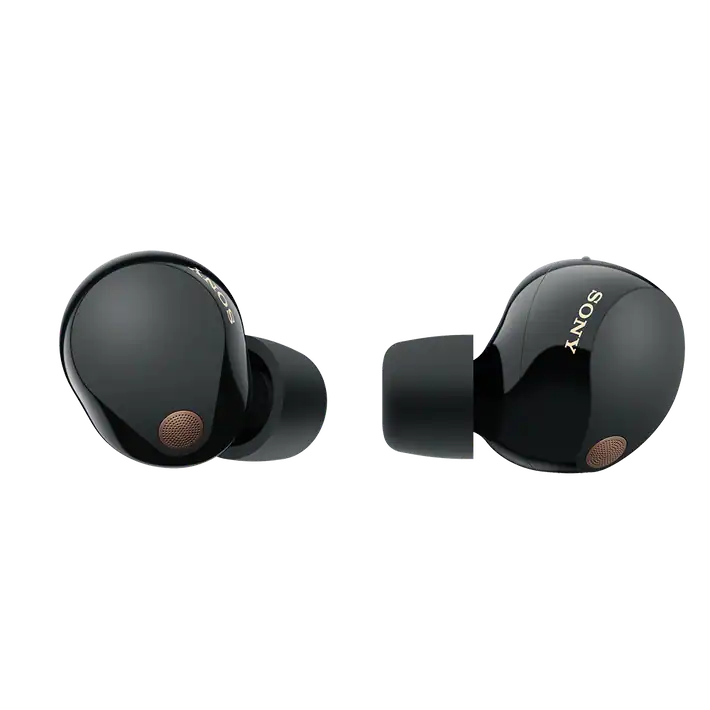
Sony WF-1000XM5 review
Design & processing
Sony has made the earbuds smaller and lighter. The build quality feels solid, and the case is pleasantly compact.
comfort
The foam tips take some getting used to. They feel a bit tight for me over time. Overall, though, the fit is OK.
sound quality
Very clear and detailed:
- Basses: less present, somewhat thin
- Middle: strongly emphasized, voices come to the foreground
- Heights: brilliant, but can appear sharp
- Stage: sehr breit
The 6-band EQ allows for a lot of balancing. Overall, the sound is rather analytical.
Noise canceling
Sony remains strong here. Low-frequency noise is excellently reduced, while high frequencies remain easily audible. Transparency mode sounds very realistic.
Battery life & charging case
8 hours with ANC, 24 hours with case. Fast charging is very efficient (3 minutes = 1 hour of playback).
Operation & App
The app offers a huge number of features (360 Reality Audio, Adaptive Sound Control, Speak-to-Chat). However, it's convoluted and confusing. The touch controls are very sensitive.
Price-performance
Approximately €189. Technically strong, but not the most comfortable.
Pro: best feature set, excellent ANC.
cons: Mid-range sound, sensitive operation.
Personal conclusion
My experience with the Sony WF-1000XM5 was very mixed. Sound-wise, they delivered impressive detail and a wide soundstage, but I found the overemphasized upper mids and weak bass distracting. They're well-suited for analytical listening or detailed work, but for relaxed music listening, I felt they lacked warmth and naturalness.
A clear shortcoming also became apparent during phone calls: While my voice sounded quite natural in a quiet room, the ANC didn't work convincingly in louder background noise. My call partner overheard a lot of ambient noise, and I noticed small reverb artifacts myself, which gave the impression of unstable filtering. This was a clear step backwards compared to Bose and Sennheiser.
I also didn't really get used to the Sony earbuds when wearing them. The foam tips felt strange, and without the stabilizing ring, they were less secure in my ear. After longer sessions, I found them uncomfortable. The compact design of the case and the app's wide range of features remained positive. However, the controls on the ear were overly sensitive, and the app itself was confusing—a clear disadvantage for me in everyday use.
The bottom line is that the Sony headphones land in the middle of the pack: stronger than the Technics, but noticeably behind Bose and Sennheiser, which clearly had the edge in my tests in terms of sound perception, telephony, and wearing comfort.
Especially with highly compressed streaming formats, high-quality in-ear headphones quickly show weaknesses in the mix.
We explain which loudness standards platforms like YouTube or Spotify use in our current streaming guidelines 2025.
You can find professional customization in our Mixing and mastering prices.
Bose QuietComfort Ultra Gen. 2 Earbuds
Design & processing
Elegant appearance, compact design. The case appears somewhat thinner, but otherwise high-quality.
comfort
The most comfortable earbuds in the test. Comfortable fit, hardly any pressure.
sound quality
Bose focuses on fun tuning:
- Basses: strong, partly bloated
- Middle: somewhat reserved
- Heights: solid, but less detailed
- Stage: very impressive with Immersive Audio
Immersive audio is fun, but it's not suitable for every genre.
Noise canceling
Absolute reference: filters out road and engine noise most effectively. Only minimal high-frequency residue is audible. ANC cannot be completely switched off, but is continuously adjustable.
Battery life & charging case
6 hours with ANC, 24 hours with case. Wireless charging included.
Operation & App
The app is modern, but the EQ is limited (only 3 bands). Mode switching is only possible with a long press. Multipoint is a bit cumbersome.
Price-performance
Approximately €250. Expensive, but with the best ANC and high everyday usability.
Pro: best ANC, very high comfort, immersive audio.
cons: limited EQ, no ANC off switch.
Personal conclusion
I had the most harmonious overall experience with the Bose QuietComfort Ultra Earbuds in my test. I found them to be the most pleasant sounding, as they don't emphasize any distracting frequencies, making them suitable for long listening sessions. While the bass was a bit over-the-top at times, it suited many modern genres and created a fun sound. While they lacked fine resolution in the highs compared to Sennheiser, I still found the sound to be more musical and relaxing.
I was particularly impressed by the ANC. In noisy environments like traffic or trains, the Bose headphones blocked out almost everything and created a level of quiet that no other model in my test could match. This made them the perfect companion for me when traveling and commuting. The only downside is that the ANC can never be completely turned off, which would sometimes be desirable in a quiet room.
The QC Ultra also delivered the best results during phone calls. My caller heard virtually no background noise, and my voice came across clearly and with presence. Only with the ANC turned up to full could slight artifacts be heard, but with the setting turned down, the voice sounded more natural again. For me, this was the most convincing performance in the entire test.
There were minor criticisms regarding handling: The case's lid felt a bit flimsy, and the earbuds weren't particularly easy to remove. However, these details didn't change the fact that, overall, the Bose headphones rank at the top for me. They combined the best all-around sound with outstanding ANC and the best phone calls – making them my clear test winner.
Especially in the bass range, in-ear headphones quickly reveal problems such as too much subwoofer or a lack of assertiveness.
Our guide shows you how to cleanly separate kick and bass. Kick and bass mixing.
Also the Crest Factor This plays a central role in terms of pressure and clarity.
In-ear headphones comparison – overall overview
| Model | Price | Sound | ANC | Comfort | App | Battery |
|---|---|---|---|---|---|---|
| Bose QC Ultra | ~ 250 € | strong, fun | Excellent | very high | solid, limited | 6 h + 24 h |
| Sennheiser MTW4 | ~ 189 € | neutral, HiFi | very well | very high | Excellent | 7,5 h + 30 h |
| Sony WF-1000XM5 | ~ 189 € | analytical, mid-range | top | medium | very extensive | 8 h + 24 h |
| Technics AZ1000 | ~ 280 € | warm, bassy | weaker | medium | overloaded | 12 h + 36 h |
Do you want to know how your song sounds on these in-ear headphones?
With our mix analysis We'll check your track for translation, loudness, and frequency balance. Optionally, we can also handle your... professional mastering – transparently calculable in our praise.
Conclusion & recommendation
After many hours of practical testing, a clear ranking emerges:
- Bose QuietComfort Ultra Earbuds – Test winner for commuters, frequent phone users and anyone who wants the best ANC.
- Sennheiser Momentum TrueWireless 4 – Recommended for audiophiles and studio users who prefer neutrality and hi-res.
- Sony WF-1000XM5 – Recommendation for technology lovers and feature fans.
- Technics EAH-AZ1000 – solid, but behind the competition in terms of sound and ANC.
Ultimately, however, it's not just the headphones that matter, but the quality of the mix.
A professional one mixing and precise mastering They ensure that your song sounds great on any system – whether studio, car or in-ear.