How do I find the right studio headphones?
Find the best studio headphones for mixing and mastering
When it comes to choosing the right studio headphones, you are faced with a variety of options and criteria that need to be taken into account. In this article we'll go over what different types of studio headphones there are, what you should pay attention to when buying them, and how important frequency response is. We also provide recommendations for different price ranges so that you can find the perfect headphones for your mixing and mastering needs.
Monitoring in context: Good headphones are the foundation – our guide shows you how to use them to correctly assess balance, stereo, and dynamics in a mix.
Mixing Guide in the structured overall process.
Types of studio headphones
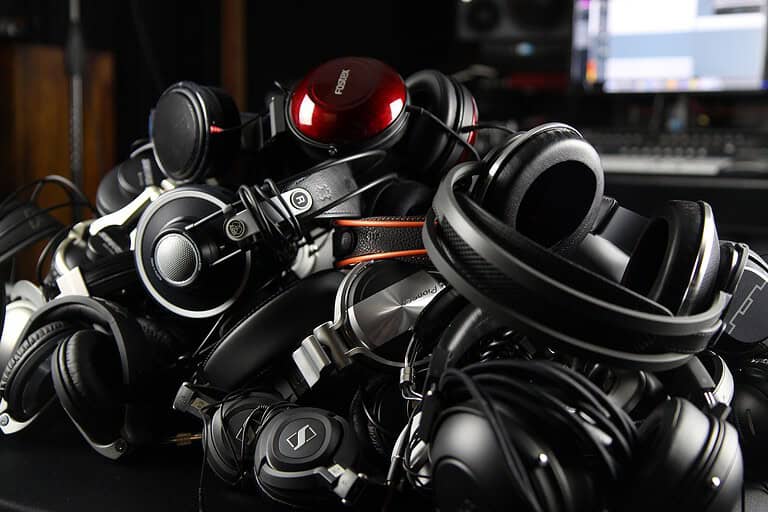
Studio headphones can basically be divided into three categories:
Open studio headphones: These headphones have an open back that allows for natural and spatial sound. They are ideal for mixing and masteringbecause they deliver a realistic sound.
Closed studio headphones: These headphones are completely closed and offer excellent isolation from outside noise. They are particularly useful in noisy environments or when recording where crosstalk is not desired.
Semi-open studio headphones: These models combine elements of open and closed headphones. They offer a good compromise between natural sound and sound isolation.
Do you want the best possible sound for your song on all streaming portals?
What should you pay attention to when buying?
When purchasing studio headphones, there are several important factors to consider:
Comfort: Since you will often wear the headphones for long periods of time, they should be comfortable. Look for well-padded ear cups and an adjustable headband.
frequency response: A flat and wide frequency response is crucial for precise mixing and mastering. Studio headphones should reproduce the sounds neutrally and unadulterated, without emphasizing or attenuating certain frequencies.
processing and durability: Studio headphones are an investment, so they should be robust and durable. Look for high-quality materials and solid workmanship.
impedance: The impedance of the headphones should match your amplifier or audio interface. Higher impedance values require more powerful amplifiers, but often deliver better sound quality.
The importance of frequency response
The frequency response of a headphone describes how well it reproduces different frequencies. An ideal studio headphone for mixing and mastering should have as flat a frequency response as possible to ensure that no frequencies are overemphasized or attenuated. This allows for precise assessment of the audio material and helps to make informed decisions during mixing and mastering.
Are you still finding mixing difficult and don't know which decisions are the right ones?
Studio Headphone Recommendations
Up to €300
- Audio-Technica ATH-M50x: Known for their clear and detailed sound as well as their robust workmanship.
- Beyerdynamic DT 770 Pro: Closed headphones with excellent isolation and comfortable ear cushions.
Up to €500
- Sennheiser HD 660 S.: Offers very natural sound reproduction and is ideal for mixing and mastering.
- Shure SRH1540: Closed headphones with balanced sound and high wearing comfort.
Up to €1000
- Audeze LCD-1: Planar magnetic headphones known for their excellent detail and precision.
- Beyerdynamic DT 1990 Pro: Open studio headphones with very precise sound and high workmanship.
Over €1000
- Sennheiser HD 800 S.: Reference headphones with exceptional clarity and a wide, open sound.
- Audeze LCD-X: Planar magnetic headphones that offer impressive sound fidelity and detail resolution.
Your mix is finished and you are still unsure whether you did everything right?
Conclusion
Choosing the right studio headphones depends on your specific needs and budget. Whether for mixing, mastering or general studio work, it is important to pay attention to comfort, frequency response and build quality. With the recommendations above, you should be able to find the right studio headphones for your studio that impress with both sound quality and durability.