Many beginners struggle to learn a clean and consistent alternation on the bass, but this is essential when it comes to bass recording, be it with a band or on your own. Therefore we would like to offer you help, exercises and mixing tips to make progress quickly and easily.
You are currently viewing placeholder content from YouTube. To access the actual content, click the button below. Please note that data will be passed on to third parties.
More informationFirst of all, important: We use the index and middle fingers for the alternate stroke with two fingers! With these the string is struck alternately. It is important to one even Attention to stop. This brings us to the first exercise. At first we only hit the open strings, i.e. 4 bars the E-string, then the A-string, the D-string and the G-string and back again. We try to keep the pace constant at first and then gradually increase it.
Now let's try to implement this technique in a few riffs.
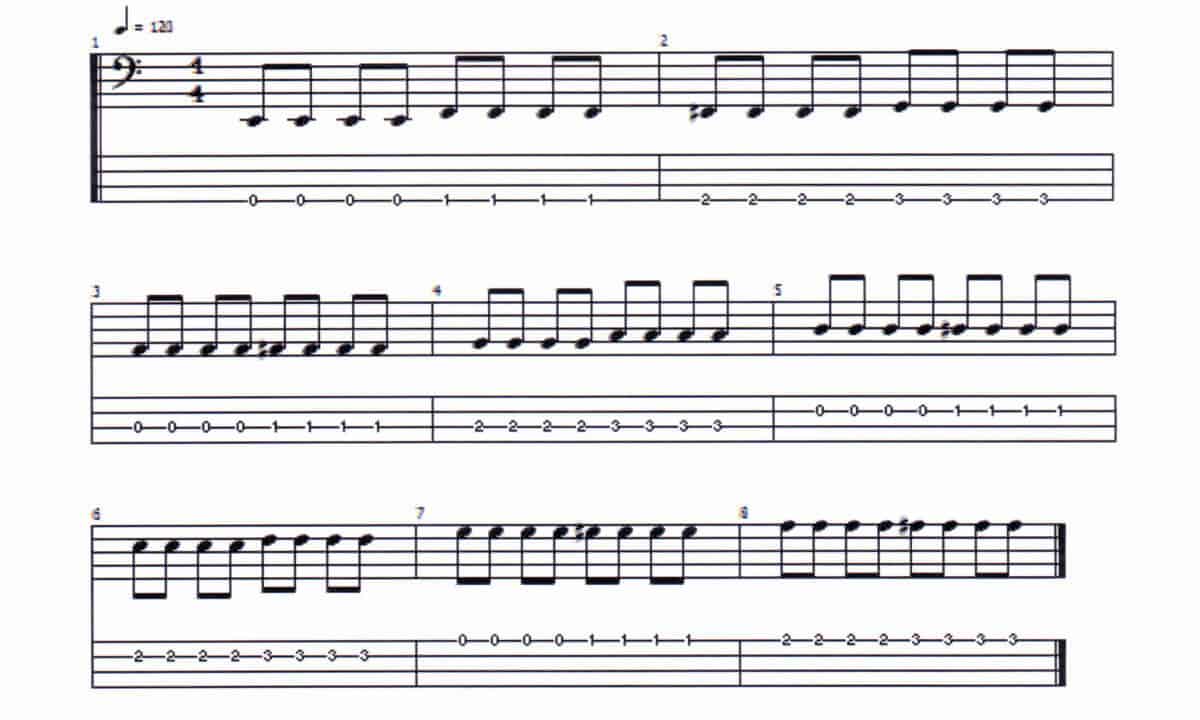
Reef. 1
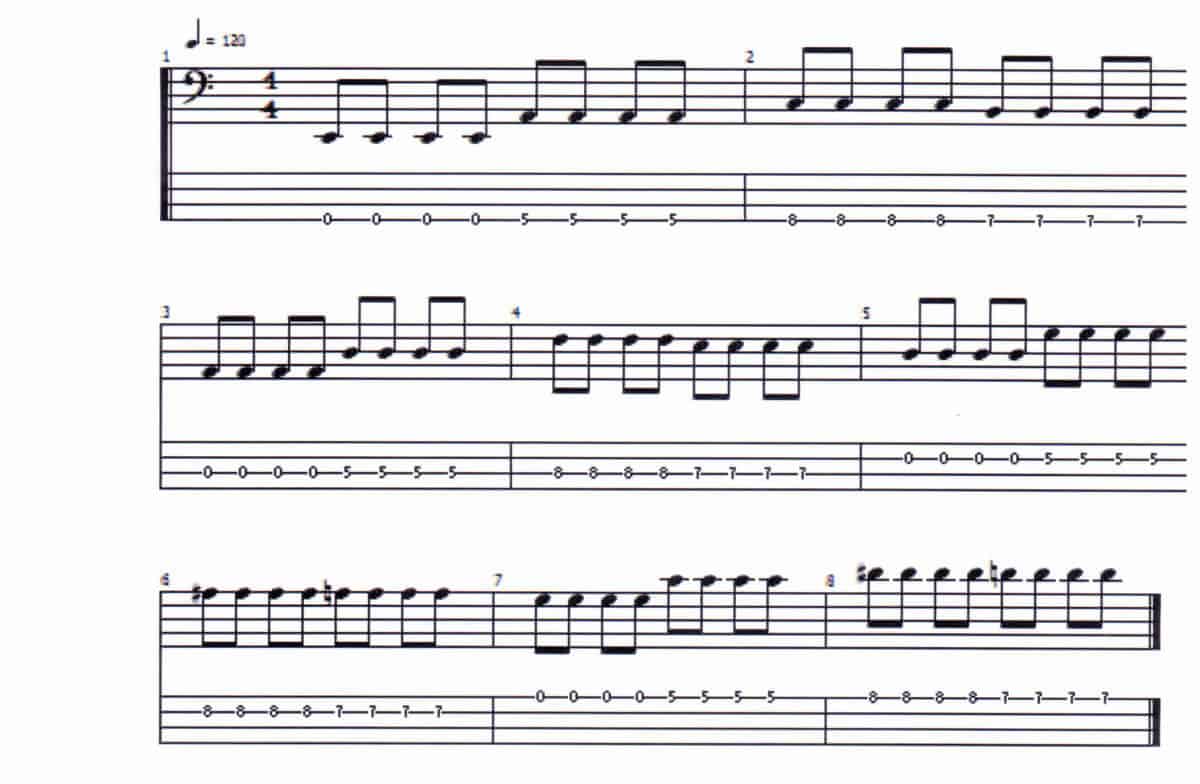
Reef. 2
Riffs one and two can be played in a similar way to the exercise on the open strings, but here the left hand is added. You should especially make sure that the tones sound clean! These three exercises are particularly suitable for increasing the stamina in the alternating stroke. Practice this daily for several minutes at a time and after a short time you will notice that your stamina and the attack speed have increased noticeably.
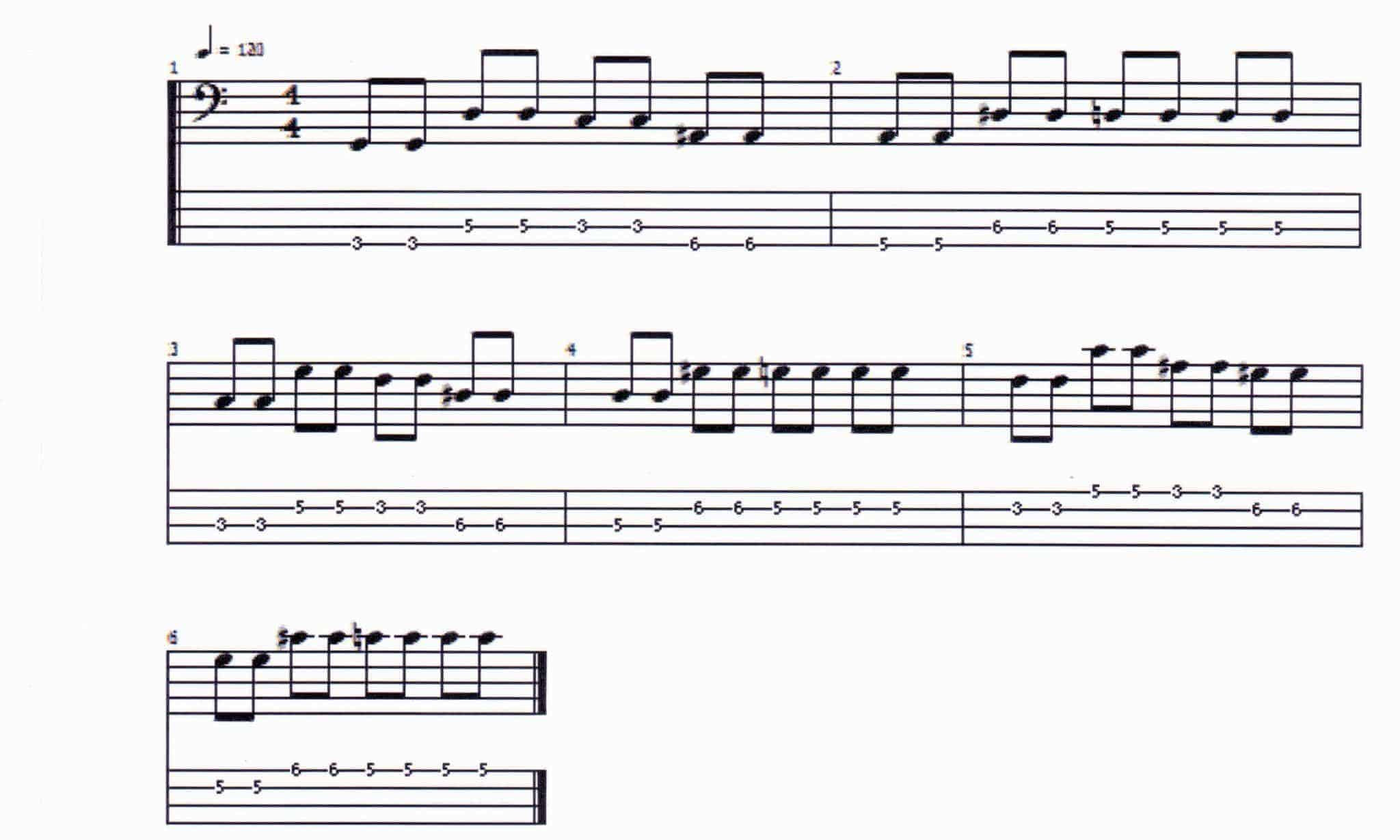
Reef. 3
Riff three is more complicated because it is about changing the strings with continuous alternating beats. Tip: Start very slowly at first and try to play a little faster with each round. The last exercise is about learning to alternate between two strings. The index finger plays the lower string and the middle finger plays the upper string. Here, too, at first slowly and make sure to play as cleanly as possible.
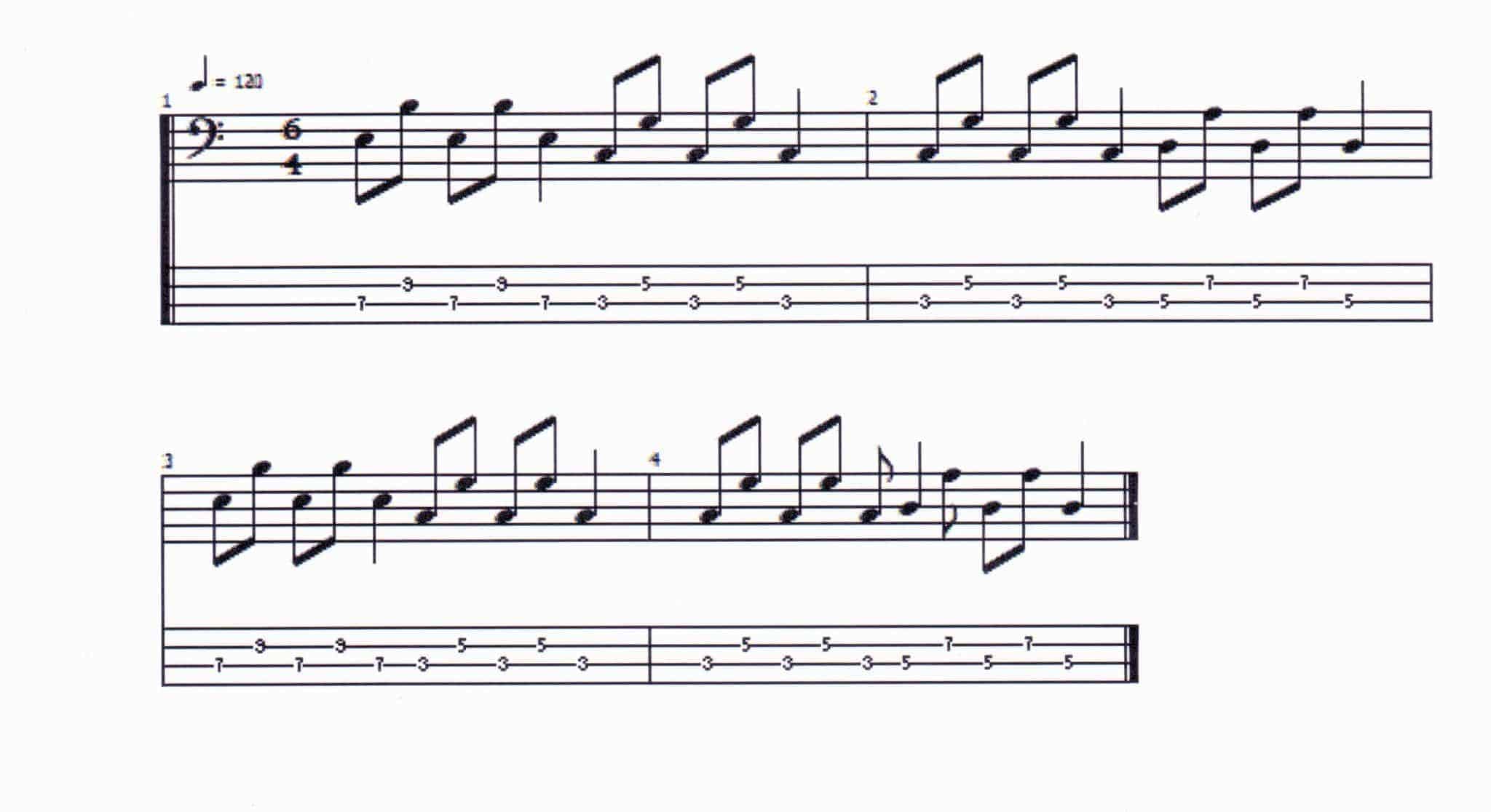 Reef. 4
The bass mix
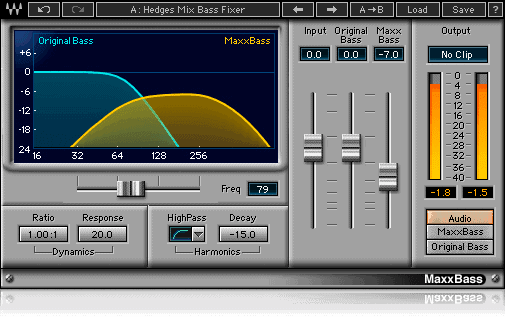
Since we are a mixing and Mastering studio we would like you to do that in this little blog Mixing the bass guitar bring it a little closer. Without bass, the music lacks depth and foundation. For a good mix it is important to know that each instrument has its own place. The bass takes up the frequency range of 60-90 hz. A low-pass filter can be used up to around 10 kHz, as this frequency range is unnecessary for the bass and space is made for other instruments. Space for the sub-bass is between 20-60 hz. All frequencies that are further down can be deleted with a high-pass filter. 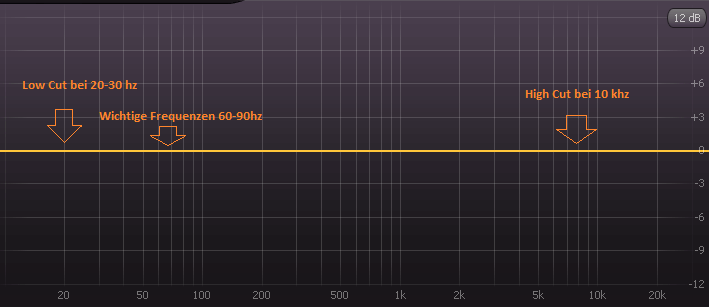 So as a compression guide you can try a ratio of 2:1 – 4:1. It is very important that one Bass always in mono is mixed! That means it's in the middle of the mix. Effects such as reverb, delay or phaser should also be avoided as a matter of principle, as they quickly make the bass seem powerless and pressureless. If a bass doesn't have enough overtones, there are a number of good plugins on the market that will help you to create them. Such a plugin would be MaxxBass from Waves (Maxbass from Waves)
  Layering of bass sounds Especially in the Electronic music you can hardly avoid layering. No matter if leading synths, pads, drums or the bassline. A typical layering looks like this: 1. A triangle or sinus shape is used for the depth of the bass. 2. A saw shape is used for the overtones. 3. The bassline is played on two different octaves to create the layering effect. If you have created such a bassline and have difficulty mixing the kick and bassline, try the sidechain technique, which you can find a tutorial about with us.