
Autotune: How automatic pitch correction works
What is Autotune?
Autotune (English) auto tune, deutsch automatic pitch correction() refers to the computer-aided correction of a voice's pitch. The term originates from the plug-in released by the company Antares in 1997. auto tune back, but today it is used generically for almost any automatic pitch correction – similar to how “Tempo” is used for paper tissues.
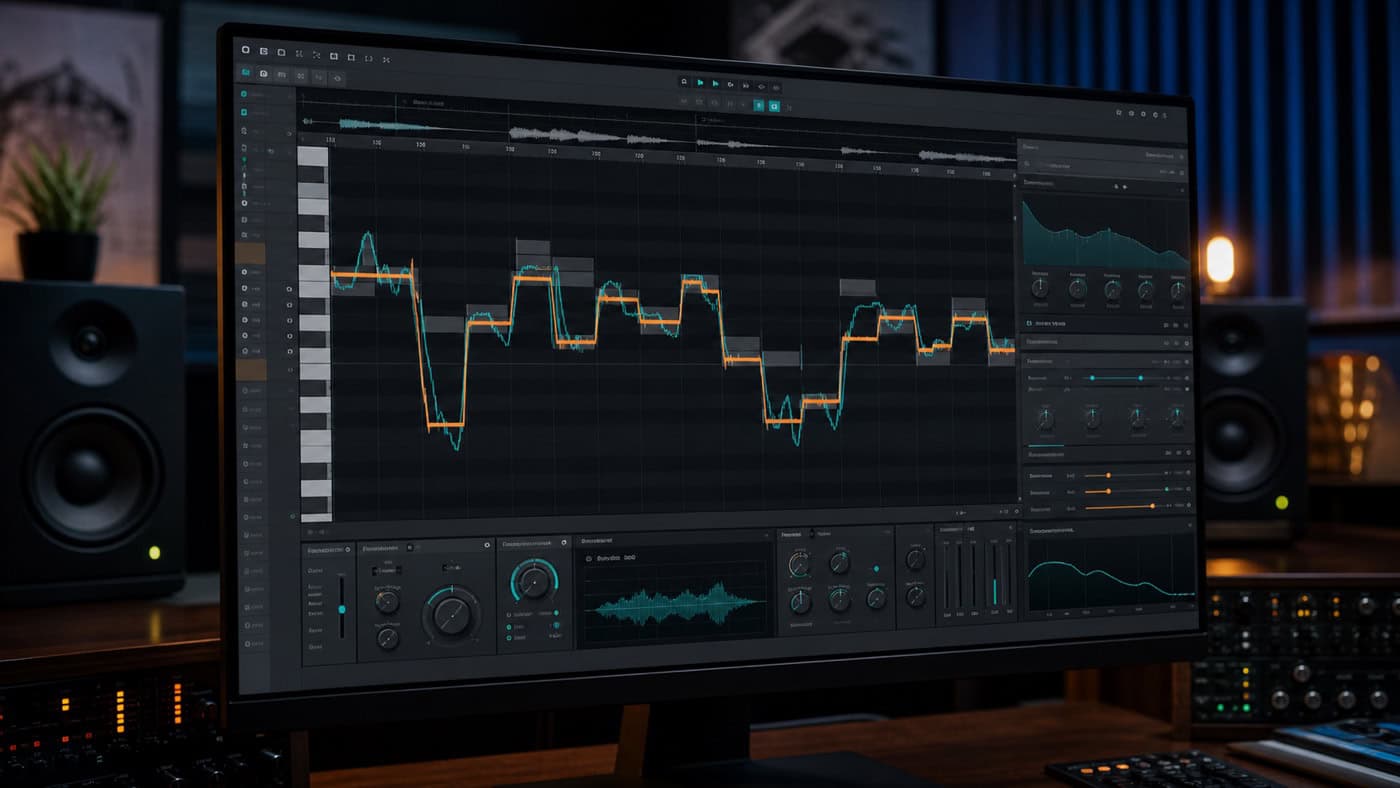
At its core, Auto-Tune does two things: It recognizes which note a voice is currently singing and shifts it to the next "correct" note of a previously selected key. This allows minor inaccuracies to be corrected without having to re-record the song.
How does Autotune work?
Technically, Autotune works in three steps:
- Pitch Detection: The software analyzes the frequency of the input signal and determines the sung note.
- Compare to the target scale: The nearest "allowed" note is determined based on the selected key or scale.
- Shift pitch: The voice is drawn to this target note.
The most important parameter here is the Retune Speed (Retune speed). This determines how quickly a note "clicks" onto the target note: A slow retune speed sounds natural and remains inaudible, while a very fast one (approaching zero) produces the characteristic, "clicked" sound. Other typical settings include the Key/Scale, the Forming-Preservation (so that the voice does not sound artificially "like Mickey Mouse" when there is a greater shift) and a humanize control for more naturalness.
Subtle correction or audible effect?
Autotune has two fundamentally different uses:
- Transparent correction: With a slower retune speed, only individual outliers are smoothed out. The listener notices nothing – the voice simply sounds cleaner.
- Deliberate stylistic device: Setting the retune speed to zero creates the harsh, robotic "autotune effect" that Cher ("Believe") popularized and which has been used ever since. Hip-hop, Trap and influences pop culture.
Both approaches are legitimate – what matters is that the attitude aligns with the artistic intention.
The most common mistakes
The biggest misconception is seeing Auto-Tune as a cure-all. It doesn't replace a good recording: poor timing, incorrect phrasing, or a lackluster performance remain audible even after correction. garbage in, garbage outThe second classic is a incorrectly set keyIf the scale isn't correct, Auto-Tune pulls notes onto the wrong pitches, and the vocals sound more off-key than before. And thirdly, overly aggressive correction smooths out natural sounds. vibrato and smooths out subtle pitch nuances – the voice then sounds lifeless and artificial, often with audible formant artifacts, when the effect is not intended at all.
Autotune in professional vocal mixing
In a professional production, pitch correction is just one component. Automatic tuning is often used with manual correction (e.g., in Melodyne) combined with timing editing and a well-thought-out Vocal chain with EQ, compression, and effects. Especially when AI-generated vocals – for example from Suno or similar tools – precise tuning is crucial to ensure the voice sounds natural and convincing. We handle precisely this fine-tuning for you. mixing At Peak-Studios: We tune with a discerning eye rather than according to a formula – sometimes imperceptibly corrected, sometimes as a deliberate effect, always fitting the song.
Book vocal tuning as an additional service
At Peak-Studios, vocal tuning isn't a separate booking, but rather an add-on to your online mixing service: We subtly correct the pitch and timing of your vocals – or deliberately use the tuning effect as a stylistic device, depending on what your song needs. Depending on the scope of the work, vocal tuning (pitch correction, autotune) costs between €50 and €120, in addition to the mixing price. You can find our current mixing prices on our website. price page.
Conclusion: What matters when tuning
Autotune is neither a miracle cure nor a flaw – it's a tool. Used subtly, it can imperceptibly improve good takes; deliberately overused, it becomes a stylistic device. Crucial factors are the right key, a suitable retuning speed, and the ability to distinguish between correction and character. For those who want their voice professionally tuned and mixed, we offer both services under one roof.
Get your vocals professionally tuned and mixed now
Whether subtle correction or deliberate effect, whether sung or AI-generated voice: We bring your vocals cleanly into pitch and timing and embed them in a professional mix. Get your song mixed at Peak-Studios.
FAQ – Frequently Asked Questions about Autotune
Is Autotune the same as Auto-Tune?
"Auto-Tune" is the brand name of Antares; "Autotune" is a colloquial term used generically for any automatic pitch correction. It usually refers to the same principle, even though other manufacturers offer their own products.
What is the difference between Autotune and Melodyne?
Autotune automatically corrects the pitch in real time – ideal for quick fixes and an audible effect. Melodyne works graphically and note by note: you move each syllable individually, which sounds more natural but requires more effort. In professional productions, both methods are often combined.
Can you always hear autotune?
No. With a slow retune speed, the correction remains inaudible – you only perceive a cleaner voice. The typical "robotic" sound only occurs with very fast correction.
What does Retune Speed mean?
The retune speed determines how quickly a note is drawn to the target note. Slow results in a natural and subtle effect, while very fast produces an audible autotune effect.
What is important when setting up Autotune?
Focus on three things: the correct key or scale, a suitable retune speed (slow for a natural sound, fast for the desired effect), and formant preservation – otherwise, the voice will quickly sound artificial, like it's been soaked in helium. When in doubt, it's better to make subtle corrections than to overdo it.
Can AI vocals be improved with autotune?
Yes. AI-generated voices are often slightly off in pitch – subtle tuning, combined with professional mixing, makes them sound significantly more natural and higher quality.