Three mastering myths that can cost you sound quality
Many musicians invest weeks or even months in their songs and still make small mistakes shortly before release, which ultimately cost sound quality unnecessarily. Especially when it comes to... mastering Half-truths, old forum tips, and misunderstandings have been circulating for years and persist stubbornly.
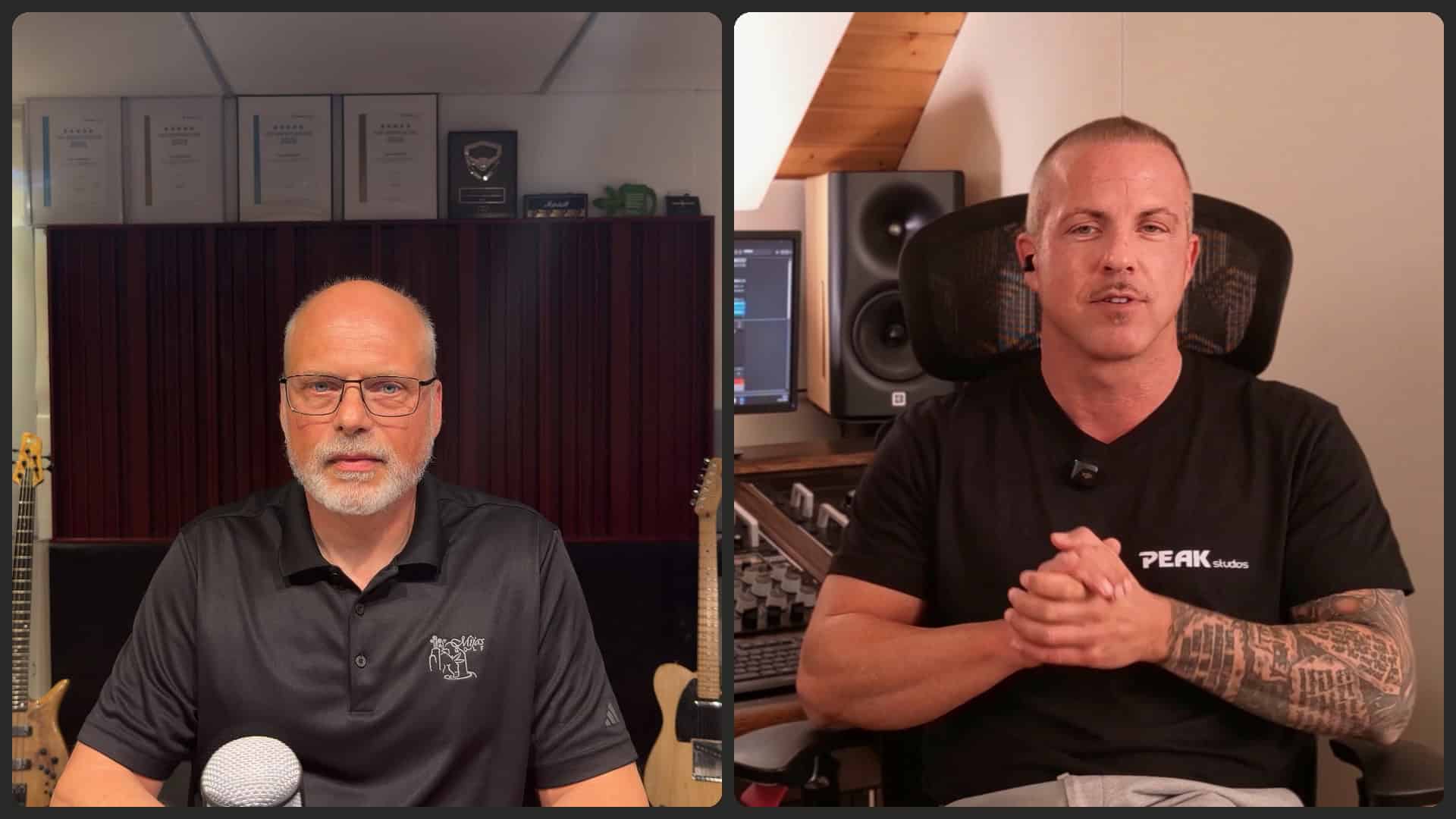
In our latest YouTube video, we therefore discuss three typical mastering myths that we hear again and again at Peak-Studios and why these assumptions often do more harm than good in practice.
Myth 1: The mix must be extremely quiet before mastering.
A sentence that one still reads constantly today:
"Be sure to export your mix at minus 6 dB."
The problem is that many people misunderstand this tip and artificially turn down their entire mix, even though this isn't actually necessary.
The following is particularly important when exporting:
The mix must not clip.
No distortions should occur.
The sum should not already be completely accounted for by one Limiter zerstort werden
The export should be carried out in a technically sound manner.
Whether the highest peak ends up being minus 6 dB, minus 3 dB or minus 1 dB is significantly less important than many people think.
The real problem usually arises when aggressive limiters or clippers are applied to the master bus before mastering, causing the mix to lose its dynamics. Because once something has been compressed or distorted, it's difficult to correct later.
You can find more information about headroom here:
Myth 2: An MP3 is perfectly sufficient for mastering.
Yes, you can use an MP3 file in an emergency. However, it's not ideal.
MP3 files are compressed. This means that information was removed during export to make the file smaller. This is precisely why strong compression often results in artifacts, muddy highs, or reduced detail.
And this is exactly where the problem lies:
If you base the final quality step before publication on an already compressed file, you are not starting with the best possible source material.
For professional mastering, you should therefore always:
WAV files
AIFF files
the original resolution
and the original sample rate
use.
This gives the mastering engineer significantly better opportunities to work cleanly and get the most out of your mix.
If you are unsure how to export your files correctly, you can find more information here:
👉https://www.peak-studios.de/checkliste-so-bereitest-du-deinen-mix-perfekt-fuer-das-mastering-vor/
Myth 3: The mastering engineer doesn't need any information
Another common misconception:
"He can already hear it."
Of course, a good one recognizes mastering engineer A great deal. Nevertheless, mastering is not just about technique, but also interpretation and goal setting.
Because a song can be mastered in many different ways:
warm and analog sounding
modern and aggressive
open and dynamic
loud and club-friendly
or consciously more natural and transparent
That's why information is extremely helpful:
Is there Reference songs?
Is it a single or part of a Albums?
Should the song remain more modern and loud, or more dynamic?
Where is the music primarily released?
What sound aesthetic is desired?
The better the briefing, the more targeted the mastering can be in the right direction.
Because two technically good masters can sound completely different, depending on the goal being pursued.
Why good preparation is so important for mastering
Many people think of mastering only as loudness or "the final touch." In reality, however, the preparation often determines how good the final result can be.
A well-prepared mix with properly exported files and a clear target briefing not only saves time, but usually also directly improves the final result.
That doesn't mean you have to do everything perfectly. But small things like:
no unnecessary limiters on the total amount
no MP3 files
clean exports
a short briefing
and reference tracks
can already make a huge difference.
Conclusion: Mastering doesn't begin with the mastering process.
Many problems do not arise during the mastering process itself, but beforehand:
incorrectly prepared exports
Data-reduced files
missing information
or unnecessarily destroyed dynamics
Avoiding these typical mistakes creates significantly better conditions for a professional end result.
Because good mastering doesn't begin with the engineer, but rather with the preparation of the song.
AI is a tool, but not a replacement for quality control.
One of the most important insights from the discussion is that AI should currently be understood as a tool.
AI can inspire.
AI can quickly make ideas audible.
AI can help with songwriting.
AI can generate musical sketches.
AI can enable people to turn their own stories into music.
But AI does not automatically replace experience, critical listening, technical evaluation, and professional post-production.
A song needs to work on various systems: headphones, car, smartphone, Bluetooth speakers, studio monitors, and streaming platforms. This is precisely where the differences between a generated demo and a professionally produced release become apparent.
Anyone wanting to release AI-generated music should therefore not only ask: "Does this sound good?" but also:
Is the song technically sound?
Is the voice understandable?
Is the bass controlled?
Does the track sound stable on different devices?
Does the song have enough energy without sounding unpleasant?
Does the loudness meet modern streaming standards?
Do all the songs on an album work together sonically?
The generator alone cannot answer these questions. Experience in mixing, mastering, and music production is required.
FAQ: Mastering myths and typical mistakes
Does my mix really need to be exported at minus 6 dB?
No. The most important thing is that the mix doesn't clip and is exported technically cleanly. A fixed magic number is less crucial than is often claimed.
Is it possible to master an MP3?
Yes, in principle. However, for a professional result, WAV or AIFF files are much better suited because they do not contain lossy data compression.
Does a mastering engineer need references?
Yes, references are extremely helpful in better assessing the desired sound direction and in making the mastering more targeted.
Should a limiter be applied to the master tape before mastering?
In many cases, probably not. Strong limiters on the master bus can destroy dynamics and limit editing possibilities during mastering.
What are the benefits of professional mastering?
Mastering ensures, among other things, better translation to different systems, loudness control, sound balance, dynamics management and a more professional overall result.